Even Admiral Nelson got seasick: how to beat motion sickness at sea
Seasickness — kinetosis — is no sign of weakness; even history's most famous admiral suffered from it his whole life. Here is why it happens, who is most at risk, and how to avoid it: from free tricks to medicines you must take before departure. With an honest note on what really helps and what does not.
Admiral Horatio Nelson won the Battle of Trafalgar and became the most celebrated seaman in history. Yet every time his ship set sail, he felt ill — Nelson was seasick his whole life. So if your stomach starts to turn on the night ferry to Stockholm or in a fishing boat on the Gulf of Riga, you are in very good company.
Why your stomach turns
Seasickness — doctors call it kinetosis — is not a sign of weakness. It comes from a sensory conflict: the inner ear, our balance organ, feels the ship rocking, while the eyes, fixed on a cabin wall or a phone, see a motionless scene. The brain receives two contradictory signals and responds with nausea, cold sweats, dizziness and fatigue. According to the US Centers for Disease Control (CDC), those most affected are children aged 2 to 12, pregnant women and people prone to migraine.
How to prepare before departure
- Choose your spot wisely. The ride is calmest in the middle of the ship, on lower decks, closer to the waterline — the motion is smallest there.
- Travel neither hungry nor stuffed. A light meal beats fasting or a heavy feast; leave the alcohol ashore.
- Take medication in time. Anti-motion-sickness drugs only work if taken before symptoms start.
On deck: what to do once it begins
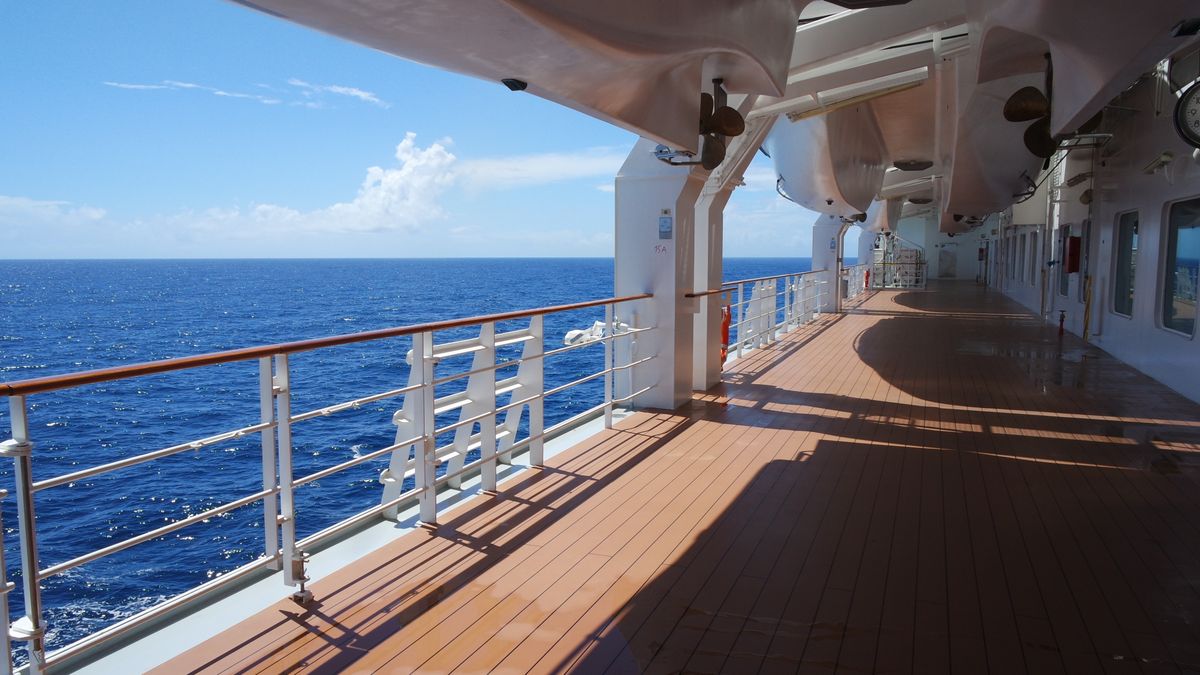
- Look at the horizon. Fix your gaze on the farthest fixed point — the horizon line. It is the simplest free remedy and lets the eyes and inner ear agree again.
- Get fresh air. Cool wind on your face, away from engine fumes, often helps more than anything else.
- Put the phone away and stop reading. Close-up screen focus deepens the sensory conflict — the opposite of what you need.
- Lie down mid-ship and close your eyes. A horizontal position with a still head eases symptoms.
Ginger and wristbands — do they really work?
Ginger tea, sweets and acupressure wristbands are often praised as natural cures. Honestly: the evidence is weak. The CDC calls the evidence for ginger "weak and contradictory," while acupressure bands proved "no more effective than placebo" in lab tests. They are cheap and harmless — worth a try, but do not expect a miracle in a real storm.
Medication — what to know
The most effective options are antihistamines (such as dimenhydrinate) and scopolamine skin patches. They work best taken before departure, not once nausea has begun. The downside is drowsiness and a dry mouth, so avoid them if you must drive afterwards. Scopolamine is unsuitable for pregnant women, small children and people with glaucoma or prostate problems. Read the leaflet and ask a pharmacist or doctor first.
For most people seasickness passes within a couple of hours of stepping ashore. If vomiting is prolonged and signs of dehydration appear, seek the ship's medical staff. For everyone else, remember Nelson: even the finest seamen sometimes "feed the fish" — and still reach their destination.
This article is general information and does not replace medical advice. Sources: CDC, NHS, Mayo Clinic.