How to Get a Christmas Cactus to Bloom: Expert Advice
Zane Purne, head of the greenhouse at the National Botanical Garden in Latvia, explains how to prepare the Christmas cactus houseplant for flowering. The key factors are a rest period, correct watering and careful repotting.
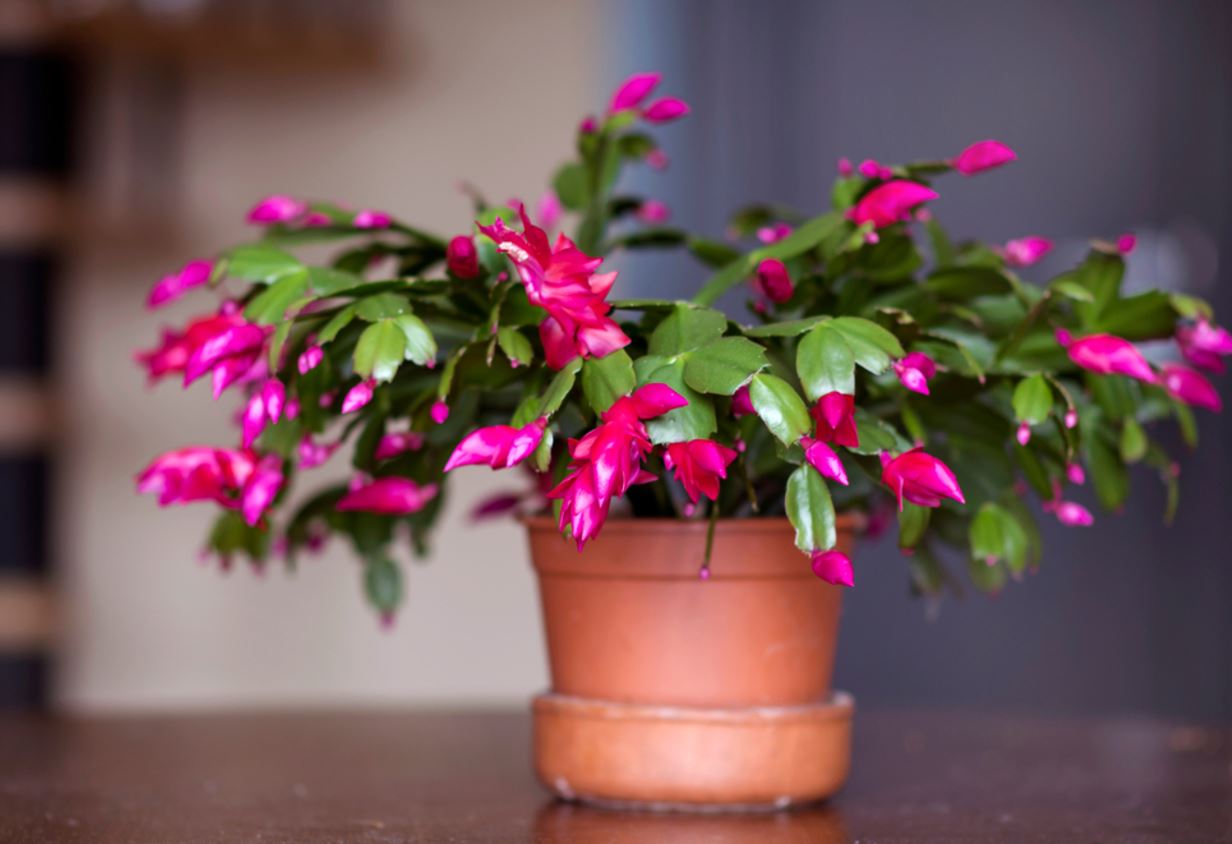
The Christmas cactus, a houseplant that bears white, pink, orange, red or even yellow flowers, does not always bloom on time. Zane Purne, head of the greenhouse at Latvia's National Botanical Garden, has outlined the conditions that growers need to provide for the plant to flower in winter.
Rest period
For abundant blooming, the plant must go through a rest period. For the Christmas cactus it lasts about a month, from mid-October to mid-November. During this time the plant needs a bright, cool spot at 15–18 °C. It is not fertilised and is watered very sparingly.
When small bud beads appear, the plant has woken up. It is then gradually watered with warm, soft water, and fertilising slowly resumes. A fertiliser meant for succulents with reduced nitrogen content is suitable.
Watering
This cactus is an epiphyte: in the wild it grows in hollows of tree trunks and branches or in rock crevices. Air always reaches its roots there, and water drains away, so the plant never sits in a puddle. At home these conditions should be imitated: water when the soil has dried out, and pour away any water the plant has not absorbed from the saucer within an hour.
Which cactus do you have
Three species can be told apart by sight, but there are very many crosses between them. The differences show in leaf shape, flower appearance and flowering time.
- The Thanksgiving cactus (Schlumbergera truncata) blooms earliest, in October–November. Its leaves are very pointed, with claw-like projections along the edges.
- The Christmas cactus (Schlumbergera bridgesii) blooms in December–January, and its leaves have no sharp projections.
- The Easter cactus (Rhipsalidopsis gaertnerri) comes from a different plant family. It flowers in March–April, its leaf edges have several smaller rounded projections, and its flowers resemble stars rather than trumpets.
Repotting
Epiphytes dislike having their root ball disturbed. When repotting, the plant is therefore moved to a slightly larger pot without loosening the roots. If given rest and suitable conditions, the cactus can bloom repeatedly. If the leaves look shrivelled, the plant has most likely been overwatered rather than left thirsty.