How Ukrainians stay silent about the war's cost, mobilization problems and humiliation in the army
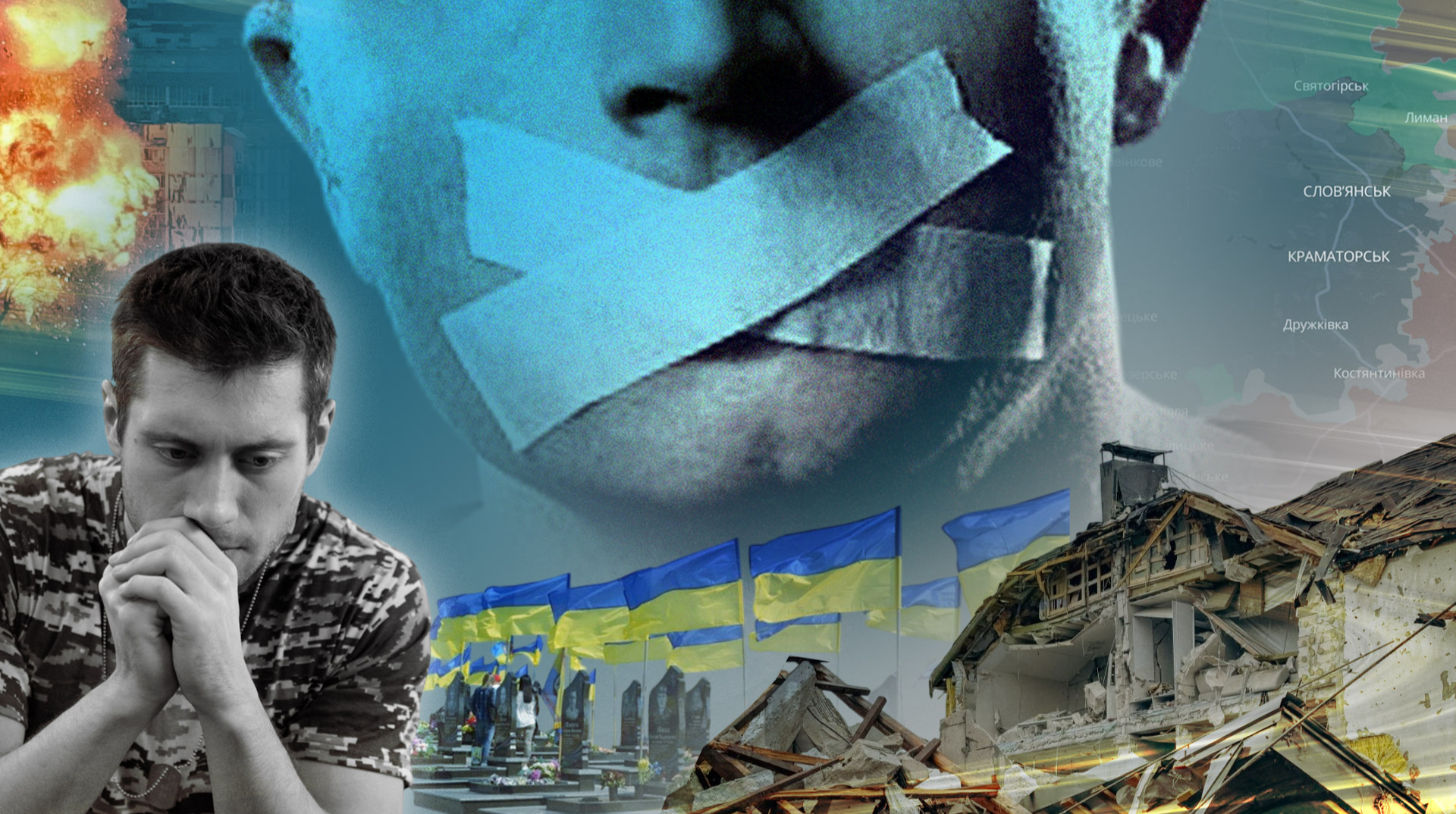
Since the full-scale invasion began, Ukrainian society and the military have built up a system of taboo topics — from casualty numbers to abuse within the army. Psychologists and a soldier explain why people choose silence or self-deception.
Since February 24, 2022, Ukraine's information space has developed a set of topics society avoids discussing openly, ranging from corruption in government to crimes within the army. During the war's first year an unspoken moratorium existed against criticizing state leadership, but it faded over time as corruption scandals became public and hopes for a quick end to the war collided with harsh frontline reality. According to the Kyiv International Institute of Sociology, in autumn 2023, 70% of Ukrainians said criticizing authorities during wartime was necessary; two years later that figure rose to 90%.
Ukrainska Pravda identified five topics civilians find hardest to discuss: the true cost of the war in human and material losses, the possibility of defeat, territorial concessions as a condition for any peace deal, problems with mobilization and army supply, and uncertainty about the future in a prolonged war.
Self-censorship and censorship in society
Political psychologist Svitlana Chunikhina explains the difference between self-censorship — avoiding topics one personally finds undesirable — and censorship, where a topic is formally restricted. Mobilization, she says, is a topic where both overlap: society is split between those who view draft evasion as shameful and those who justify it, with tolerance toward evasion slowly growing over time. Data on human and material losses is officially classified, and society itself avoids thinking about it, since such information could undermine hope and the will to resist. Similarly, no one openly discusses what concessions Ukraine might actually be willing to make for peace.
Why civilians deceive themselves
Psychoanalyst Yurii Prokhasko points to two roots of self-deception: the instinct of self-preservation and a sense of tact toward fellow citizens, both intensified by war. People often simultaneously acknowledge mobilization's necessity while hoping it won't affect them or their loved ones. The hardest thought to confront, he says, is that the war might not end within their lifetime — a possibility that complicates decisions about the future, starting a family, or staying in the country.
Silence in the military
Soldiers, too, have taboo subjects: criticism of command, troop safety, humiliation and violence within units, private services for commanders, and illicit arrangements with senior officers. An anonymous volunteer soldier says troops filter what they share for security reasons, often conceal their real role in the army, and fear criticizing commanders since their service conditions depend entirely on leadership.