Second wind farm planned in Kabile as residents demand guarantees
The first public hearing on the planned Kabile wind power station has been held in Kabile, in western Latvia's Kuldīga area. Residents raised concerns about the landscape, birds, roads and dismantling of the turbines after use.
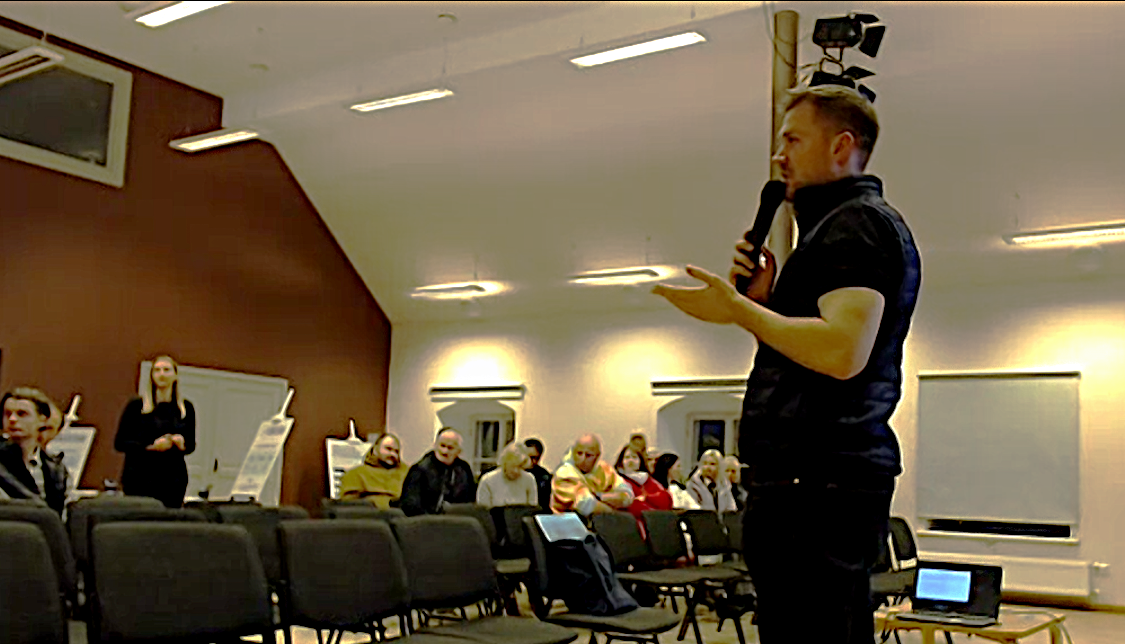
The first public hearing has taken place in Kabile on the planned "Kabile" wind power station and its supporting infrastructure. About 15 locals attended in person, and roughly as many followed the developer's presentation online. The hearing marks the start of an environmental impact assessment, and the final decision on construction will be made by the local municipality.
What is planned
The project was submitted by SIA EWE Neue Energien 7, owned by Eurowind Energy, one of Denmark's largest renewable energy producers, and the German company Neue Energien Ingenieurplanungen GmbH. Up to 13 latest-generation turbines are envisaged, with a total rotor height of up to 280 metres and a diameter of 170 metres or more. Capacity could reach 104 MW, although the existing power line cannot take a connection that large. The study area extends up to 2.5 km from the wind park and includes 41 private properties northwest of the village centre; there are no homes there, mostly farmland and forest.
Another wind park, "Vārme", is already under way in the area: its environmental impact assessment was completed late last year, and SIA SP Venta plans to build it. Both assessments are carried out by the consultancy Estonian, Latvian & Lithuanian Environment. Its representative Oskars Beikulis said the cumulative impact, which builds up over time, would also be examined this time. Working groups open to residents will be formed, and a second public hearing will follow once the report is ready.
Residents' concerns
Locals voiced worries about the landscape, quality of life, road conditions during construction, birds and nature, and the location in a UNESCO buffer zone. They questioned the need for 50 years of operation and demanded guarantees that the turbines would be dismantled and the land restored, including concrete foundations, in case of bankruptcy. Project manager Kalvis Lauskis promised to try to include this in contracts.
The developers noted that Cabinet regulations require payments of 2,500 euros per installed megawatt, split equally between the parish and residents within 2 km. As the project is still at the research stage, estimates of the benefits remain general. Some residents doubted the money would reach those most affected.