Cape Verde votes for president, with incumbent José Maria Neves favoured
Cape Verde, an island nation off West Africa, is holding a presidential election in which incumbent José Maria Neves is seeking a second term against five challengers. They include Joana Rosa Amado, the first woman ever to run for the office in the country.
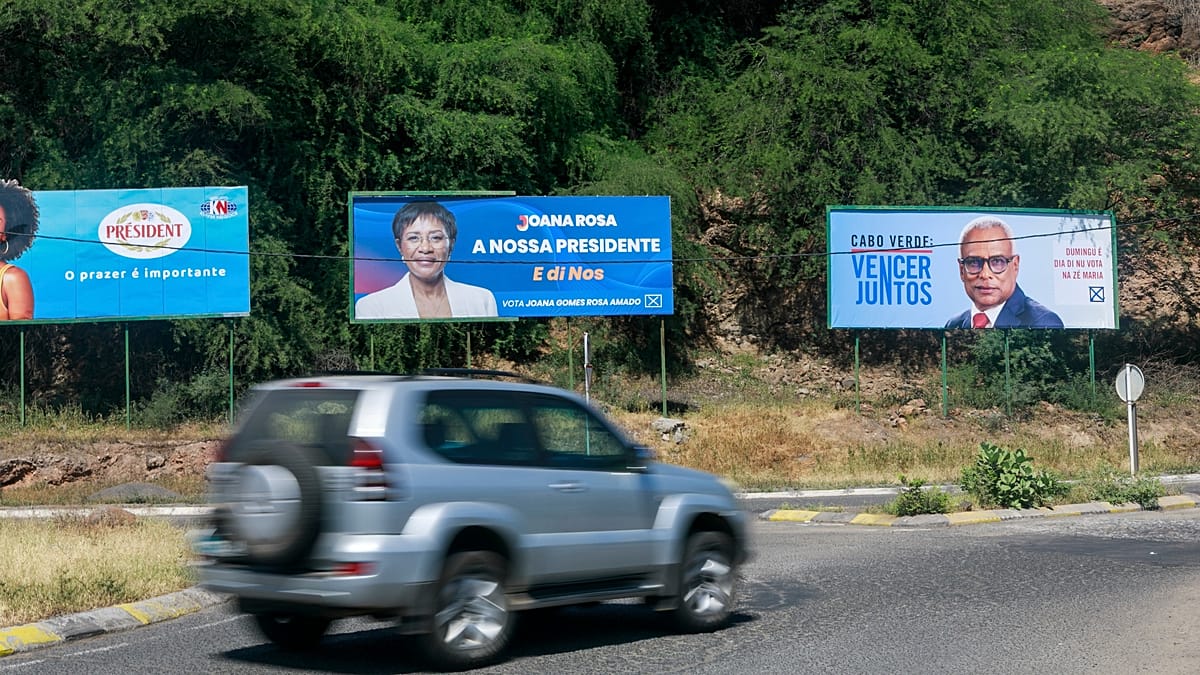
Cape Verde, an island country off the coast of West Africa, is holding a presidential election on Sunday, 15 November. Incumbent President José Maria Neves, seen as the favourite for a second term, faces five challengers. One of them, Joana Rosa Amado, is the first woman in the country's history to stand for the presidency.
Voting opens at 8 am and runs for ten hours. Provisional results are expected overnight. If no candidate wins an absolute majority, a runoff will be held on 29 November.
The candidates
Amado, a 61-year-old lawyer and former justice minister, is backed by the opposition Movement for Democracy (MpD) and is campaigning under the slogan "Listen to Cabo Verde". Her platform centres on maintaining a balance of power: she argues the country needs a counterweight to the African Party for the Independence of Cape Verde (PAICV), which supports Neves, runs the government and controls most municipalities. She has said that electing a woman would show young women and girls that no government job is closed to them.
Neves, 66, won the 2021 presidential election with around 52% of the vote. From 2001 to 2016 he served as prime minister and as leader of the PAICV. He has pledged to build cross-party support to improve housing, healthcare and education, as well as to create jobs and raise wages.
Also running is Gilson Alves, a 45-year-old surgeon, who promises to fight corruption, allow gun ownership and reinstate the death penalty.
Country context
Cape Verde has roughly half a million inhabitants and lies about 600 km from Senegal. It is known for democratic stability, with a record of peaceful transfers of power and competitive elections. In July, the World Bank officially classified it as an upper-middle-income country, citing growth in tourism and a 16.8% rise in gross national income per capita between 2023 and 2024.
The country still faces social inequality, geographic isolation and a lack of affordable travel options between its islands. Residents' main concerns are the rising cost of living, fuel prices and youth unemployment.