Tens of thousands protest housing costs across Portugal
On Saturday, more than 30 Portuguese cities saw the largest protests so far against soaring housing costs, with tens of thousands taking part. Activists want a cap on rent increases and stronger legal protection for tenants.
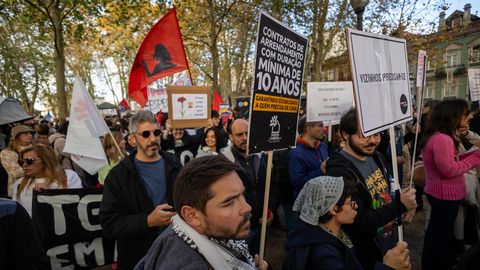
Tens of thousands of people took to the streets in more than 30 cities across Portugal, in southern Europe, on Saturday, 15 November, in the largest protests yet against high housing costs. Participants ranged from teenagers to pensioners. The demonstrations are part of several weeks of unrest over the housing affordability crisis and show growing public pressure on the government.
The march slogan was "We will not let them take away our right to housing". In Lisbon, the procession was accompanied by drums, music and chanting, and marchers carried large banners and flags. Activists want a limit on rent increases, better legal protection for tenants against eviction, and more affordable housing.
Protests have been under way for weeks. Some activists have camped in central squares in Lisbon and Porto, the country's two largest cities. Police using dogs have dispersed some protests and have been criticised for overly harsh tactics. The Portuguese demonstrations were inspired by similar protests that began last month in neighbouring Spain.
Prices rising faster than incomes
Eurostat, the European Union's statistics office, said last week that between 2015 and 2025 Portugal recorded the largest increase in the ratio of house prices to incomes in the bloc, at 61%, followed by the Netherlands at 34%. Portugal's national statistics office reported that house prices rose by almost 20% between the first quarter of last year and the first quarter of 2026. Rents have climbed 68% since 2020.
Foreign buyers and investment funds have helped push prices up. The country is popular with so-called digital nomads, other remote workers and retirees, and tourism has grown, with many city-centre flats turning into short-term rentals.
Government response
The government has cut taxes on new construction, restricted short-term lets and promised to build 145,000 new homes, but acknowledges the effect will not be immediate. President António José Seguro, whose role is largely ceremonial but who holds political influence, convened the advisory Council of State earlier this month to discuss the protests and on Friday met some of the protesters.