California scientist finds 10,000-year-old mastodon tooth
A geomorphologist in California discovered a remarkably well-preserved fossilized mastodon molar at a nature preserve, which will now be studied at Stanford University.
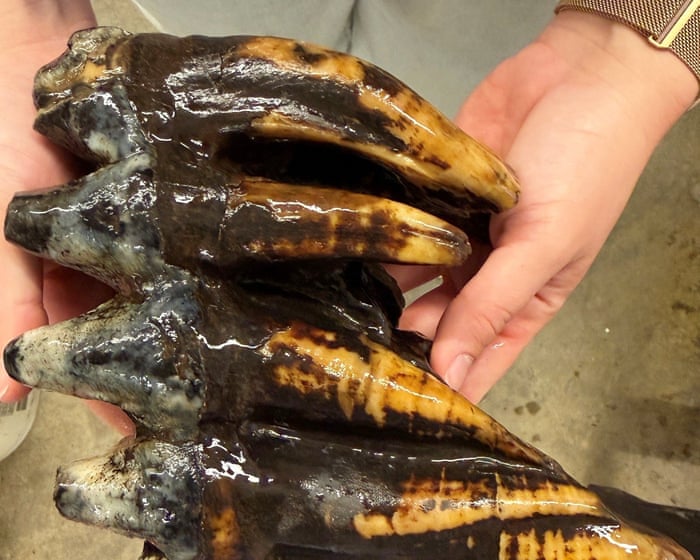
Geomorphologist Brigid Lynch was working at a preserve in San Mateo county, California, when she came across an unusual-looking rock. Paleontologists later determined it was not a stone at all, but a well-preserved molar from an adult Pacific mastodon.
Paleontologist Wayne Thompson described the find as the most complete mastodon molar recorded in the area and among the most impressive he has personally encountered. He said the discovery adds another piece to understanding the Ice Age period. The Midpeninsula Regional Open Space District announced the find in a news release on Wednesday.
A species lost to climate change and hunting
Pacific mastodons, relatives of modern elephants, roamed much of the American West, including present-day California, Oregon, the northern Rocky Mountains, and parts of Mexico. The herbivorous mammals existed in North America for roughly 2.5 million years before going extinct over 10,000 years ago, a disappearance attributed to a combination of climate-driven habitat loss and hunting pressure from early humans.
Headed to Stanford for dating
The fossil has been donated to Stanford University, where researchers from the school of sustainability plan to use carbon dating to pinpoint its exact age. Christine Garcia, curator of the university's geoscience specimen collection, said fossils offer a rare window into past biodiversity, helping scientists understand historical ecosystems and informing decisions about protecting biodiversity going forward.
The discovery follows a string of similar finds in recent years, including a mastodon jaw uncovered under a New York homeowner's lawn in 2024, and a foot-long mastodon tooth found protruding from sand on a beach along California's central coast the year before that.

/nginx/o/2026/09/11/17910621t1h8d01.jpg)