Canadian Wildfire Smoke Blankets U.S. Midwest
Smoke from wildfires in Canada and the northern U.S. has deteriorated air quality across the Midwest, prompting hazardous air warnings.
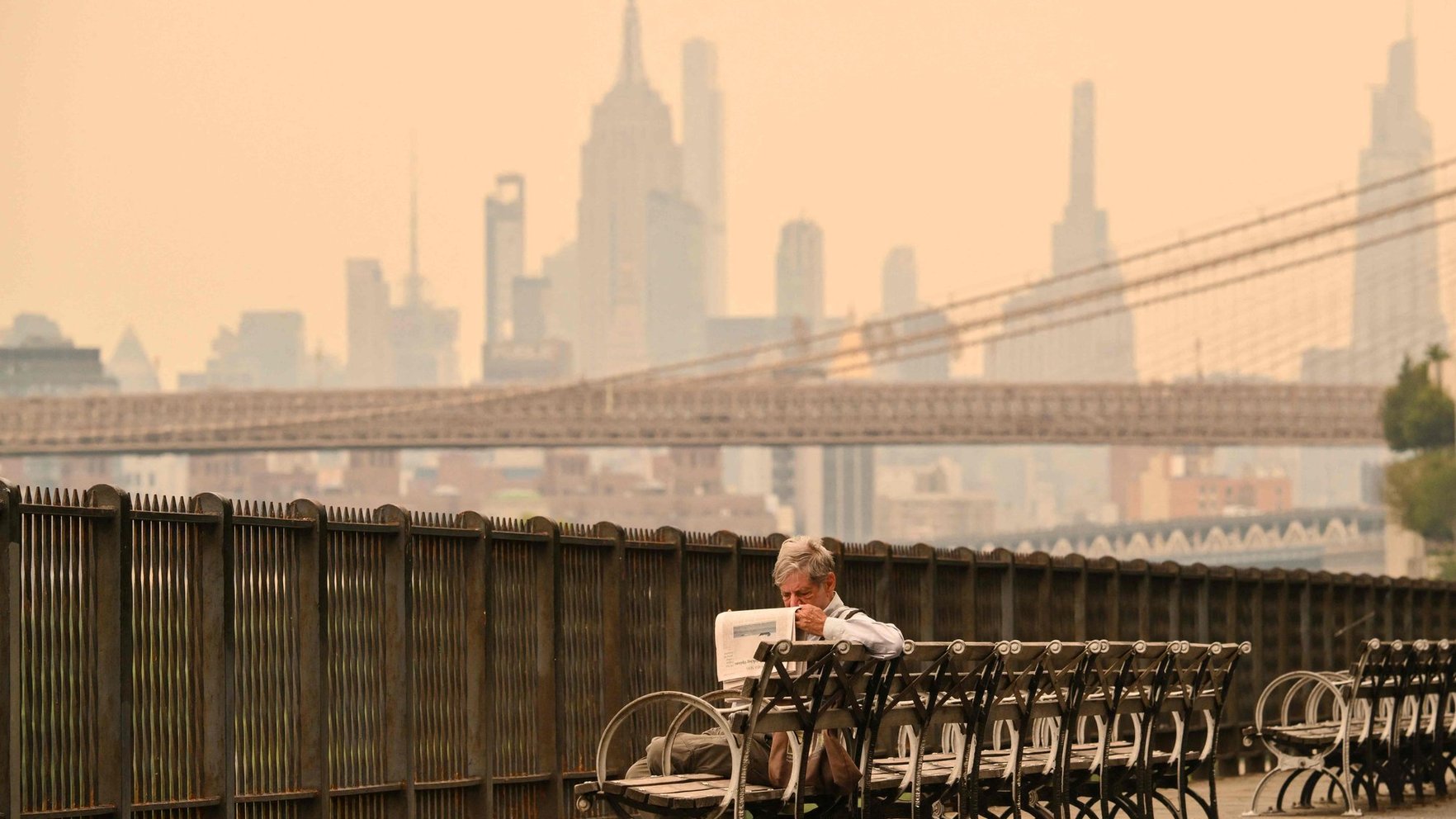
Smoke from dozens of wildfires in Canada and northern Minnesota has blanketed the U.S. Midwest, causing dangerous air quality in many cities. The worst conditions are in Detroit, where a persistent high-pressure system is trapping the smoke, said Steven Freitag, a meteorologist with the U.S. National Weather Service. According to Freitag, smoke concentrations are very high, and visibility in some areas has dropped to about 800 meters.
Across the Great Lakes region, air quality ranges from unhealthy to hazardous, meaning it is harmful to everyone regardless of health status. Microscopic particles can penetrate deep into the lungs and bloodstream, leading to heart and lung problems as well as other long-term health issues. Air quality warnings have been issued for the entire state of Michigan, most of Minnesota, and parts of Chicago and its surroundings.
Meteorologist Jake Petr said that although northwesterly winds later this week may provide some relief, smoke could periodically return until the fires are fully extinguished, which may take several weeks. In St. Paul, Minnesota, the air has turned bright yellow, according to Brent Williams, a professor at the University of Minnesota.
In and around New York City, thick haze has painted the skies orange and yellow, partially obscuring the Manhattan skyline. New York State has begun distributing face masks at public transit hubs and other key locations. Officials in Philadelphia are also urging residents to stay indoors and wear masks if they go outside.