Qatar's PM meets Iran's Araghchi in Tehran to push de-escalation over Hormuz
Qatar's Prime Minister and Foreign Minister Sheikh Mohammed bin Abdulrahman Al Thani visited Tehran on Thursday for talks with Iranian Foreign Minister Abbas Araghchi, the first high-level Qatari visit since the war began on 28 February.
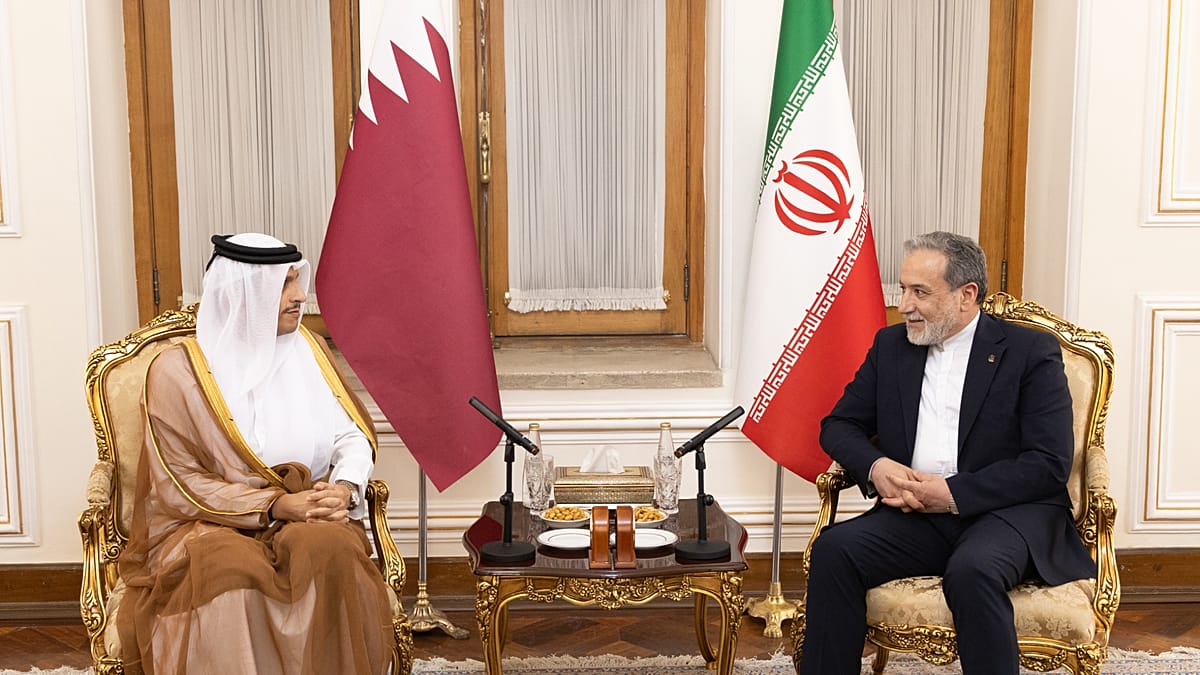
Qatar's Prime Minister and Foreign Minister Sheikh Mohammed bin Abdulrahman Al Thani travelled to Tehran on Thursday for talks with his Iranian counterpart Abbas Araghchi, marking the first high-level Qatari visit to Iran since the war broke out on 28 February.
According to Qatar's state news agency QNA, the discussions centred on lowering tensions and laying the groundwork for renewed dialogue between Iran and the United States. The two also reviewed a proposed phased arrangement for the Strait of Hormuz, including a temporary shipping corridor and a joint effort to clear mines from the waterway. Sheikh Mohammed emphasised respect for the sovereignty of neighbouring states and freedom of navigation, while Araghchi thanked Doha for its mediating role.
Hormuz remains central sticking point
The Strait of Hormuz continues to be one of the main obstacles to a wider Iran-US settlement. Before the war, roughly a fifth of global oil supplies passed daily through the narrow waterway separating Iran and Oman. Flows through the strait have since collapsed, falling to around five million barrels a day on Monday from about 20 million before the conflict. Risks persist as well — another tanker was struck by an unidentified projectile in the strait this week, though its crew was reported unharmed.
The war has taken a heavy toll on Qatar, which normally supplies about a fifth of the world's LNG. Over the past six months Qatar has shipped just 18 LNG cargoes, down from 509 in the same period a year earlier. Attacks on the Ras Laffan facility have cut production by 17%, with full recovery expected to take up to five years.
Iran and Oman have separately been negotiating a temporary shipping arrangement for the strait. Iran's Revolutionary Guard said this week that Tehran and Muscat had reached an understanding on control of the waterway and its revenues, though an Iranian official later said no final deal had been struck.
Diplomacy still stalled
US President Donald Trump has said he is in no rush to resume negotiations, and his administration has imposed further sanctions on Iranian economic networks, which Tehran has called an economic war. Other regional powers, including Pakistan and Oman, have also stepped up diplomatic efforts to prevent a renewed round of fighting, with Qatar insisting that dialogue remains the best path out of the crisis.