Kyiv Learns to Live Between Air Raid Alerts After Two Months of Near-Constant Attacks
Since late August, Russia has attacked Ukraine's capital day and night, with air raid alerts constantly disrupting daily life. Ukrainian journalist Denys Trubetskyi describes how Kyiv residents cope and what the coming winter may bring.
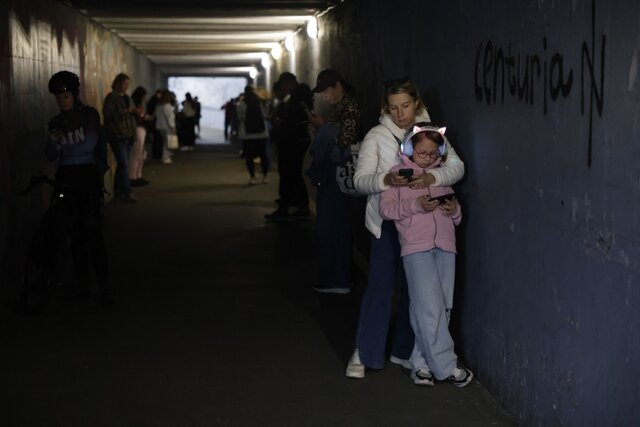
Since late August, Russian forces have struck Kyiv, the capital of Ukraine, and the surrounding region almost without pause, both at night and during the day. Air raid alerts constantly upend residents' plans. Dozens of civilians have been killed in the capital over these months and hundreds injured. As winter nears, Kyiv residents are preparing for power cuts and heating problems. The outlet Meduza discussed the situation with Ukrainian journalist Denys Trubetskyi, who writes about Ukraine for German-language media, including Die Zeit.
Why Kyiv is the main target
Trubetskyi argues that since last winter Russia has concentrated on Kyiv, having found it very hard to plunge half the country into a weeks-long blackout after repeated strikes on energy infrastructure. Kyiv and its metropolitan area account for roughly 15% of the population in Ukrainian-controlled territory. Last winter was the harshest in 20 years, with temperatures falling to minus 25 degrees Celsius, and entire districts, especially on the Dnipro's left bank, went weeks without electricity or heating.
This summer was the hardest in the city's history, he says. Weapons shortages affected air defense: in July, Ukraine was receiving small batches of 15 to 20 PAC-3 MSE missiles for Patriot systems. At the same time, Russia raised ballistic missile production from about 60 to 75 a month. Jet-powered Geran-4 and Geran-5 drones, which fly at up to 650 km/h, are very difficult to shoot down on a large scale at an affordable cost.
Daily life and the economy
From May to the end of summer, ballistic strikes came on average every third night, often before an alert was even issued. Trubetskyi says several people are killed and dozens wounded each day. Many people around him are at their limit, and the number of those taking sedatives or seeing a psychologist has multiplied several times over.
Universities have moved to remote learning, while schools have been unable to resume in-person teaching since September 1. Russia has recently hit gas stations and data centers; at one point around 100,000 subscribers in Kyiv and the region lost internet access. The journalist notes that Ukraine has about a thousand internet operators, making its network highly decentralized.