China battles fake AI video crisis amid natural disasters
Chinese authorities face an additional challenge during natural disasters: misleading AI-generated videos spreading panic and disinformation. Arrests have been made and stricter regulations introduced, but experts warn of a growing misinformation crisis.
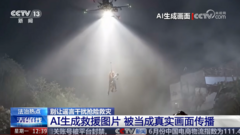
As Typhoon Noul made landfall over the weekend, Chinese officials are acutely aware that they must contend not only with the aftermath of the storm but also with deceptive AI-generated videos. Over recent months, powerful storms and floods have seen fake videos inundate social media, including images of dead bodies, false depictions of flooding in unaffected areas, and fabricated details of emergency responses.
Some videos caused panic – false reports of power outages led residents to rush to buy emergency supplies. Others capitalized on real events: in July, flooding in Hengzhou, Guangxi, caused hundreds of snakes to escape a farm, followed by fake images of crocodiles being released into a river.
Deputy Chief Huang Zhihua of Zhejiang Police told state media that many content creators use disaster news to gain followers, deliberately fabricating information. Recent weeks have seen arrests and punishments ranging from detention to fines.
Experts warn of an unprecedented misinformation crisis. Professor Chen Bin noted that AI dramatically lowers the barriers to producing false information – anyone can easily create convincing but entirely fabricated content. Professor Gao Fuping from East China University of Political Science and Law told the BBC motivations range from amusement to causing panic or social unrest.
Calls to stamp all AI-generated content have been made, but markings can be removed. Professor Xu Xiaoke from Beijing Normal University stresses the need to verify geographic locations and image sources, but acknowledges detection technology lags behind generation.
China is heavily investing in AI to become a leading tech superpower. However, instances of official sources downplaying disasters have eroded trust: in July, the Liulan Dam breach was described as an "opening," leading to at least 26 deaths; in 2021, Henan officials were arrested for concealing 139 deaths. This trust vacuum facilitates the spread of fake content.
Police urge the public to trust accredited sources and be skeptical of unknown information. On July 23, the Cyberspace Administration announced a nationwide crackdown on fake internet content related to floods, ordering platforms to strengthen content review.
Professor Gao advocates public education combined with law enforcement, but others warn AI evolves faster than legal frameworks. Lawyer Peter Pang argues platforms should be held accountable alongside content creators. Professor Xu predicts AI-generated misinformation will grow in volume and speed, threatening elections, health emergencies, conflicts, and natural disasters.