China's economic slowdown appears to deepen in July, pressuring Beijing
China's industrial output and retail sales grew slower than expected in July, according to new official data, adding pressure on the government to introduce support measures.
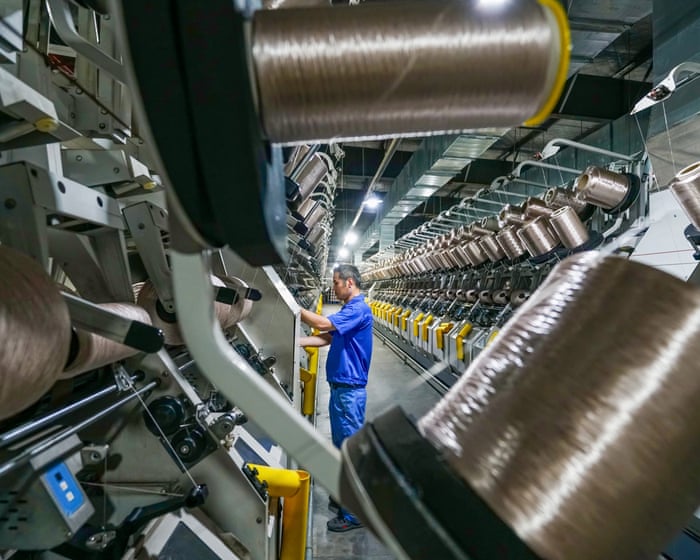
China's National Bureau of Statistics (NBS) released figures on Monday indicating that the slowdown in the world's second-largest economy likely continued into July. Industrial output rose 4.5% year-on-year, down from 5.3% in June and below the 4.8% growth forecast in a Reuters poll of analysts.
Retail sales also slowed, rising just 0.6% compared with a 1% increase in June, despite summer holiday tourism spending. Economists had expected a 1.5% rise. The NBS attributed the disruption in market supply and demand to extreme weather, including high temperatures and heavy rainfall.
Pressure on policymakers
The latest data is likely to increase pressure on Chinese policymakers to accelerate tax and spending measures aimed at supporting economic activity. Premier Li Qiang indicated on Monday that weak domestic demand could be offset by boosting overseas demand for Chinese goods. Speaking at a State Council meeting, according to the state news agency Xinhua, Li acknowledged that insufficient domestic demand remains a prominent problem, that difficulties are growing for many industries and enterprises, and that uncertainties in the external environment are rising. He called for stabilising external demand and expanding mutually beneficial international trade cooperation.
Analysts, however, expect growth to pick up modestly in the second half of the year, supported by fiscal stimulus from Beijing. Julian Evans-Pritchard, head of China economics at the consultancy Capital Economics, noted that part of the weakness stemmed from temporary disruptions caused by recent typhoons, while investment in AI continues to have a positive effect on manufacturing.
From April to June, China's economy grew 4.3%, one of the weakest quarterly readings since official GDP reporting began in the early 1990s, and below the government's target range of 4.5% to 5%.


