Chinese physicists find compelling evidence for long-sought glueball particles
Scientists at the BES III experiment in Beijing have published new data pointing to the existence of glueballs, particles made entirely of gluons that had long been predicted but never confirmed. The finding could close one of the last remaining gaps in the Standard Model of particle physics.
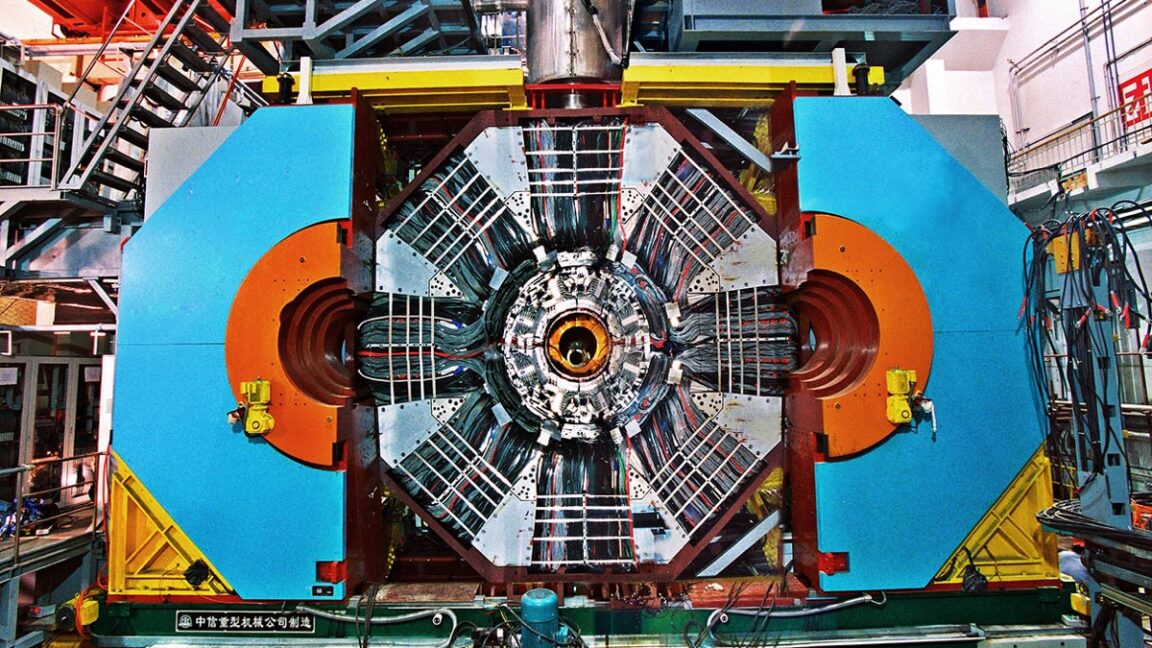
Researchers with the Beijing Spectrometer III (BES III) experiment have published new evidence supporting the long-theorized existence of glueballs, composite particles made up entirely of gluons. The findings appeared in a preprint posted to arXiv last month and were presented at the International Conference on High Energy Physics (ICHEP).
Why glueballs matter
Ordinary matter consists of quarks bound together by gluons, the carriers of the strong nuclear force, forming the protons and neutrons at the core of every atom. Unlike the Higgs boson, which gives particles mass through the Higgs field, most of the mass of protons and neutrons doesn't come from the quarks themselves but from the energy tied up in the gluon "glue" holding everything together. Because gluons interact not only with quarks but also with each other, theory allows for a particle built entirely out of gluons, with no quarks at all — the glueball.
A long search
Quantum chromodynamics, the theory describing the strong nuclear force, predicts glueballs should exist if the Standard Model is correct, and that several varieties should exist. Physicists have long focused on the decay of the J/ψ particle, discovered in 1974, as the best place to look, since its decay produces large numbers of gluons and composite particles called hadrons. According to astrophysicist Ethan Siegel, a candidate glueball must have zero spin, no electric charge, and odd parity, among other required properties.
Confirming glueballs would close one of the remaining gaps in explaining how matter acquires its mass and would offer further validation of the Standard Model of particle physics.