China's SpaceSail project challenges Starlink's dominance in satellite internet
China's state-backed satellite internet project SpaceSail, though far behind Starlink in satellite numbers, is starting commercial operations and deliberately targeting markets where Starlink faces political or regulatory hurdles.
SpaceSail, officially known as the SpaceSail Constellation or Qianfan (Thousand Sails) in Chinese, is a state-backed satellite internet project launched in 2023. It is operated by Shanghai Spacecom Satellite Technology (SSST), which received initial funding of 6.7 billion yuan (approximately $943 million) from the Chinese Academy of Sciences and the Shanghai Municipal Government. The project is entirely Chinese-funded, with investment restricted to mainland China-based entities, excluding Hong Kong and Macao.
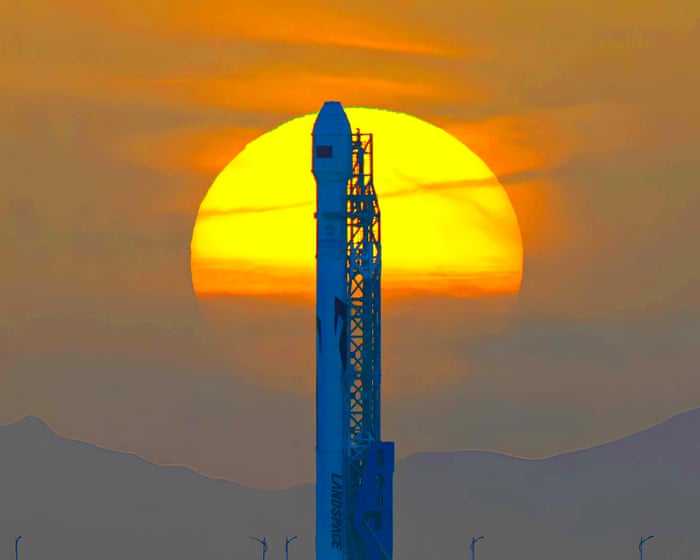
SpaceSail launched its first batch of 18 flat-panel satellites in August 2024 aboard a Long March 6A rocket. As of the 12th launch in June 2025, there are at least 200 active satellites in orbit. The company says it now has enough satellites to begin its first commercial application: tracking maritime vessels. It aims to have 648 active satellites by the end of 2026 and eventually more than 15,000 for global coverage.
In comparison, Starlink operates over 10,000 satellites and has more than 12 million active users across 160 countries. SpaceSail lags significantly but plans to have over 10,000 satellites in low Earth orbit by the end of 2030. According to analyst Blaine Curcio of Orbital Gateway Consulting, SpaceSail is deliberately targeting countries where Starlink has faced political or regulatory issues. For instance, SpaceSail secured a major contract in Brazil after clashes between Elon Musk and Brazilian authorities in 2024 over content moderation, and it registered a subsidiary in Kazakhstan in January 2025 after Starlink talks broke down over data storage requirements. In December 2024, it signed a deal with European aircraft manufacturer Airbus to offer SpaceSail as an in-flight Wi-Fi option.
However, SpaceSail's success is not guaranteed. It faces competition from within China, notably from state-owned rival SatNet, which is building its own constellation called Guowang. While SatNet focuses primarily on domestic telecoms and national security, SpaceSail is a more direct competitor to Starlink. The company is reportedly in negotiations with 30 countries to launch its service and has already found success as an alternative where Starlink agreements have faltered.
/nginx/o/2026/02/16/17450973t1hb27f.jpg)