Chinese rocket upper stage breaks apart dangerously close to Starlink constellation
The upper stage of a commercial Chinese rocket, Zhuque-2E, has fragmented in orbit, creating a debris cloud that threatens SpaceX's Starlink satellites.
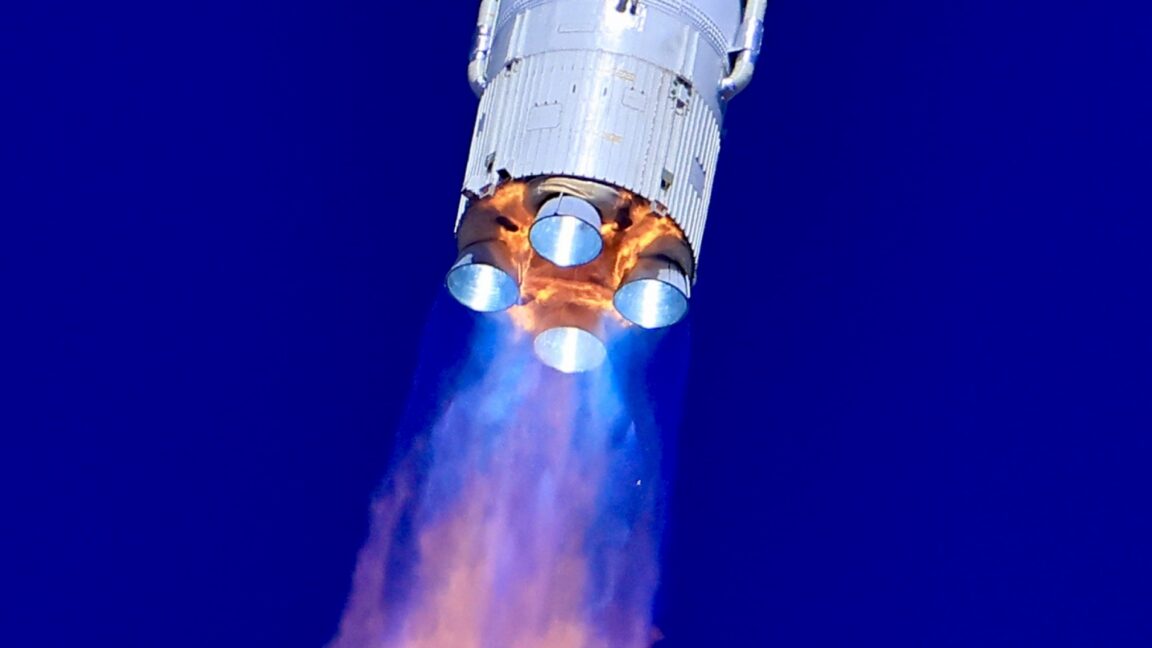
The upper stage of a commercial Chinese rocket that launched last week has broken apart in space, scattering debris in a heavily trafficked region of low-Earth orbit home to the International Space Station (ISS) and a significant portion of SpaceX's Starlink broadband network. The breakup occurred shortly after the Zhuque-2E rocket reached orbit on June 9 with two direct-to-cell communication satellites, possibly around the time the upper stage was expected to perform a disposal burn.
Debris tracking
The US Space Force confirmed the event in a post on space-track.org, a website used by the military to distribute orbit data to the public. "The tracked pieces are being incorporated into routine conjunction assessment to support spaceflight safety," the Space Force wrote in an advisory. "There are currently no threats to human spaceflight. Analysis is ongoing." So far, the Space Force has not added any of the debris fragments to the official catalog of human-made space objects.
Darren McKnight, a senior technical fellow at orbital intelligence company LeoLabs, told Ars that the fragmentation event likely generated 100 to 150 pieces of debris. The second stage of the Zhuque-2E rocket, made by LandSpace, measures between 25 and 30 feet (about 8 meters) long and 11 feet (3.35 meters) in diameter. The main body of the rocket's upper stage is now orbiting between 208 and 263 miles (335 by 424 kilometers) at an inclination of 54.5 degrees to the equator.
Potential impact on Starlink
The uppermost part of this orbit crosses the ISS's orbit, but aerodynamic drag will quickly pull all debris fragments below the ISS. However, the debris could pose a greater threat to hundreds of Starlink satellites, particularly those providing direct-to-device connectivity and newly launched satellites, which fly at lower altitudes than the bulk of the Starlink constellation.