Ghost of far-right paramilitaries hovers over Colombia’s presidential runoff vote
Two candidates whose lives are deeply intertwined with Colombia's paramilitary forces face off in the presidential runoff, reflecting the country's violent legacy.
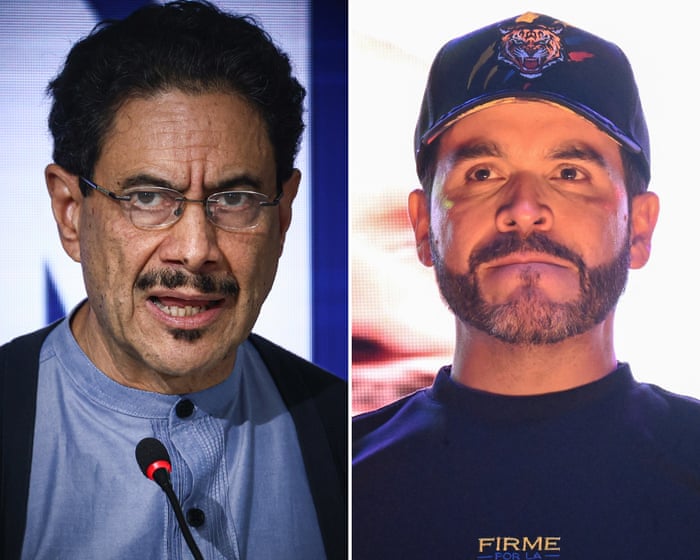
Colombia's presidential runoff on Sunday brings together two candidates whose personal histories are closely linked to the paramilitary groups that have fueled decades of armed conflict, claiming nearly half a million lives.
Iván Cepeda, 63, a leftwing senator and human rights activist, saw his father, senator Manuel Cepeda, assassinated by army officers tied to paramilitaries in 1994. He since built a career exposing these groups' crimes and is the main architect of President Gustavo Petro's "total peace" strategy, which advocates negotiations with all armed factions.
Abelardo de la Espriella, 47, a far-right admirer of Donald Trump, launched his legal career defending leaders of the United Self-Defence Forces of Colombia (AUC), the country's main paramilitary organization. He leads in polls after winning the first round and promises an iron-fist approach to crime, including building private "mega-prisons" in the Amazon.
Paramilitary groups emerged in the 1960s to fight leftist guerrillas, often colluding with the military. By the 1990s, they were notorious for massacres involving torture, dismemberment, and "social cleansing" targeting LGBTQ+ people, sex workers, and others. At their peak, they had over 30,000 members.
Although the AUC disbanded, its legacy continues through groups like the Gulf Clan. De la Espriella's businesses have minority shareholders who are relatives of a convicted paramilitary leader. Eleven Democratic US lawmakers urged the Trump administration to examine his ties to the AUC, which the US designated a foreign terrorist organization in 2001.
Cepeda filed a criminal complaint alleging de la Espriella acted as a "possible recruiter" for the AUC through a foundation. De la Espriella dismissed the accusations as a "smokescreen" and accused Cepeda of having a "narco-political" alliance with guerrilla groups.
Violence has surged since the 2016 peace deal, with many Colombians feeling the country has returned to its worst moments. Some voters support de la Espriella's tough stance, downplaying his paramilitary links. "The paramilitaries kept the guerrillas in check," said one former businesswoman.
Security experts note that current violence levels are far below pre-peace deal peaks, but public perception of insecurity remains high. The winner takes office on August 7, inheriting a country deeply shaped by its paramilitary past.