Kõlvart: Rail Baltic a Symbol of Incompetence and Irresponsibility of Reform Party
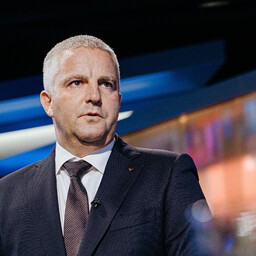
Mihhail Kõlvart, chairman of the Centre Party, criticized the Reform Party-led government for its management of the Rail Baltic project, citing incompetence, cynicism, and irresponsibility.

Mihhail Kõlvart, chairman of the Centre Party, stated in his political address at a meeting of the party's council of authorized representatives that the developments surrounding the Rail Baltic construction characterize the Reform Party's governance of the state: incompetence, cynicism, and irresponsibility prevail everywhere.
According to Kõlvart, none of the ministers, including the prime minister, have bothered to understand the actual state of the Rail Baltic project both in Estonia and in other countries. He pointed out that during the discussion of the state budget, no government member could state what amount is allocated for the project's implementation this year.
Kõlvart recalled that the current government rejected the Centre Party's proposal to conduct a risk analysis in case Latvia faces difficulties in implementing the project. The coalition claimed that only one scenario exists and that anyone who dares to doubt it is spreading Kremlin narratives. He noted that the current Latvian prime minister has repeatedly warned that Latvia will not be able to complete Rail Baltica construction by 2030, but the Estonian prime minister refuses to acknowledge this, as if living in a parallel world.
In Kõlvart's view, even if the Rail Baltic section in Estonia is ever completed, it will not meet the country's internal needs. For cost-saving reasons, the construction of ten viaducts was abandoned, and only one pair of tracks will be laid in the first phase. Moreover, this railway will effectively not connect different populated areas – for example, the station in Häädemeeste will be located 15 kilometers from the actual settlement of Häädemeeste.
Initially, the cost of Rail Baltic was supposed to be €3.7 billion, and the project was planned to be completed last year. However, today the cost is estimated at €15 billion, and the deadline has been moved to 2035, with Estonia itself unable to finish its part of the project by 2030. The prime minister does not see a problem, claiming that the state can allocate an additional €200 million per year to speed up construction, increasing annual spending from €500 million to €700 million. Such irresponsibility characterizes the Reform Party's attitude towards Estonian residents and public finances: at a time when many people are struggling to make ends meet and state finances are in deep crisis, the prime minister is ready to squander hundreds of millions of euros without thorough analysis and understanding of long-term prospects.
Kõlvart sees the Rail Baltic project implementation as another example of the Reform Party's management style. The same happened with the car tax: contradictory and unclear arguments were given for its introduction, and ultimately the tax did not achieve any of its stated goals. Car tax revenues were significantly lower than expected, the car market fell into crisis, and people's living standards worsened. However, criticism was met with the response that the question of how people would cope with the car tax was of tertiary importance.