Kremlin Talks of Peace While Threatening Europe With Nuclear Weapons
At the Valdai forum, Putin urged people to live in friendship, yet declared that European military infrastructure supporting Ukraine is a legitimate target. Kremlin propagandists and officials simultaneously stepped up nuclear threats against Europe.
Russian President Vladimir Putin and Kremlin propagandists continue to blame the West for the war against Ukraine while threatening Europe ever more openly. In Putin's address to the Valdai Club forum on 1 October, claims of peaceful intentions alternated with warnings that Russia would use every weapon at its disposal.
Peace rhetoric and threats
Putin's message was a familiar one: the war was imposed on Russia, and the West and Ukraine's leadership are to blame for its continuation. He called on people to "live in friendship" and claimed Russia has no intention of attacking anyone. At the same time, he said European military infrastructure that helps Ukraine is a legitimate Russian target. He justified Russian strikes on Kyiv by pointing to Ukrainian attacks on Russian ships.
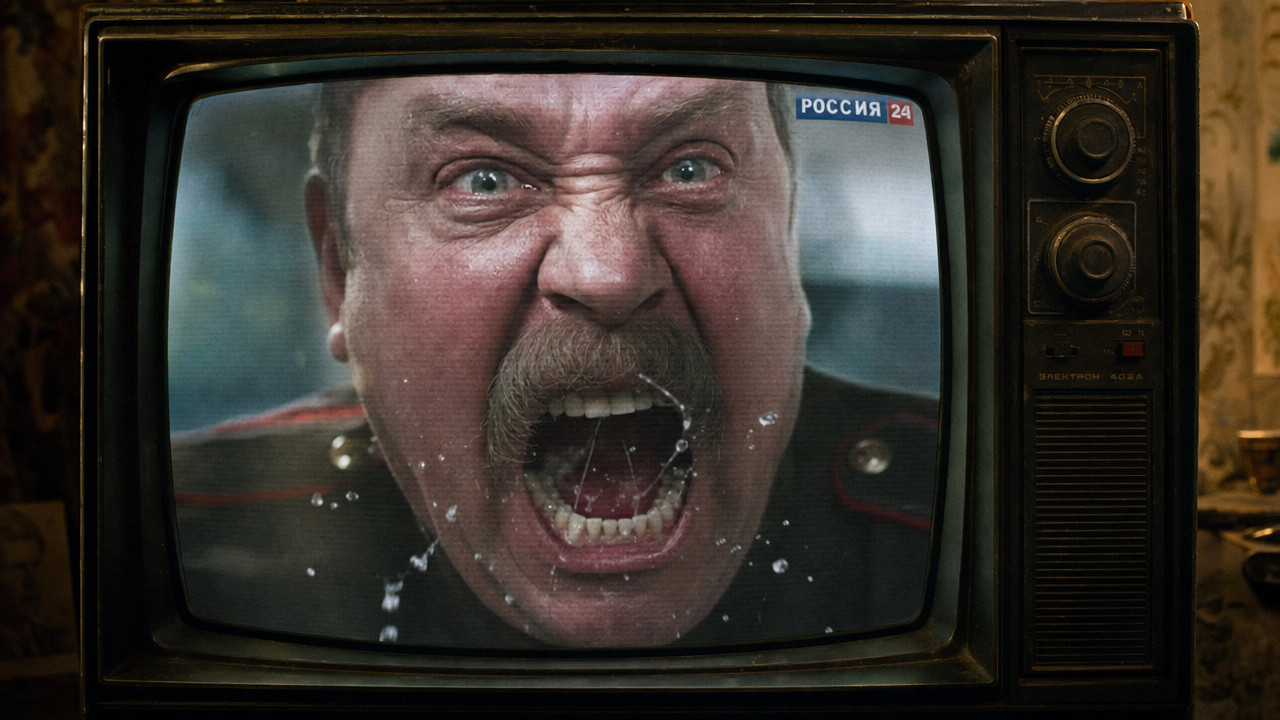
Propagandist Vladimir Solovyov used state airwaves to voice hateful slogans against Ukrainians and demanded that they overthrow their government. Propagandists also warned that attacks on Kyiv would continue and intensify, placing the blame on Ukrainian President Volodymyr Zelensky. Dmitry Medvedev, deputy chairman of the Security Council, responding to Zelensky's request that the US block Russian satellites, threatened war in space and claimed Starlink satellites would be brought down.
Kaliningrad and nuclear weapons
Citing NATO exercises near Kaliningrad, Putin said that in the event of a direct attack Russia would consider using all weapons available to it, though he added that the Foreign Ministry's warning did not specifically mention nuclear arms. Propagandists made the hint more explicit: attempts to blockade Kaliningrad could lead to the use of nuclear weapons. Foreign policy strategist Sergey Karaganov said on television that strikes with conventional weapons could be followed by nuclear attacks if Europe does not "give in".
Assessments
Jānis Garisons, a former State Secretary of Latvia's Ministry of Defence, told the newspaper Diena that Russia can only be deterred if it understands it will face a counterstrike. Otherwise, escalation may continue.
Analysts at Defence24 believe Putin is trying to present Ukraine as just one front in a broader confrontation. That would allow Moscow, in possible peace talks, to demand not only territory but also a redistribution of spheres of influence and a new security order in Europe. Deliberate ambiguity lets the Kremlin decide for itself what counts as an attack or provocation.