Russia Sentences Exiled Buryat Activist to 20 Years in Absentia
A Russian military court has sentenced U.S.-based Buryat activist Marina Khankhalaeva to 20 years in prison in absentia on extremism and terrorism charges. The activist said the ruling would not deter her work and instead confirms her movement is on the right path.
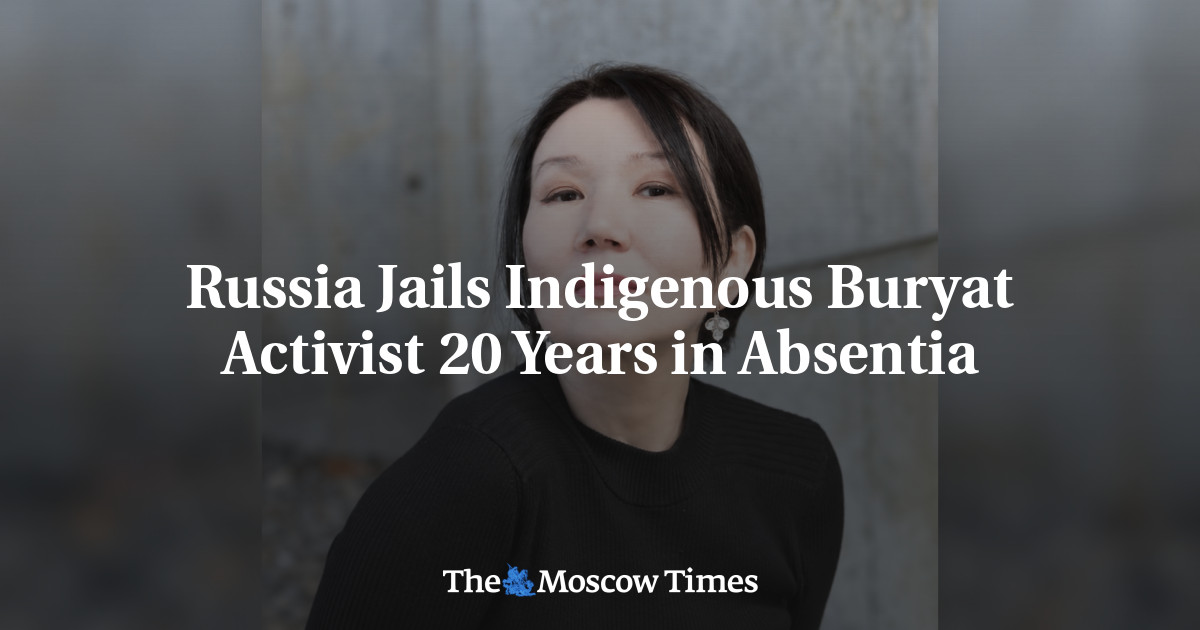
A military court in Russia's Zabaikalsky region has sentenced Indigenous Buryat activist Marina Khankhalaeva to 20 years in prison in absentia, convicting her of organizing an extremist group and participating in a terrorist organization. Buryatia's Interior Ministry announced the ruling on Friday.
Khankhalaeva, 53, is an opera singer based in the United States and the founder of Tusgaar Buryad-Mongolia, an exiled movement campaigning for the independence of the Siberian republic of Buryatia from Russia. Authorities accused her of "active anti-state activities" aimed at Buryatia's secession and of inciting "social and ethnic discord."
Buryatia is a resource-rich region of roughly 970,000 people sharing a border of over 1,000 kilometers with Mongolia. Nearly one in three residents identify as Buryat, a Mongolic ethnic group native to the area.
The Chita military court actually issued the sentence in August, but the decision was only made public now. Khankhalaeva said she learned of her own sentencing through news reports, noting that while she is listed among Russia's designated extremists and terrorists, details of the case against her had been kept classified.
She described the ruling as "high praise" for her and her movement, saying it confirms that what they have been saying is true. Khankhalaeva said she had anticipated some response from Russian authorities after her movement held its second Congress of Supporters of Buryatia's Independence in the U.S. last month, adding that as the full-scale invasion of Ukraine enters its fifth year, support for Buryatia's independence continues to grow.
Tusgaar Buryad-Mongolia was among 172 ethnic, Indigenous rights and decolonial groups and media outlets that Russia designated as "terrorist" in 2024, and was separately added to Russia's "extremist" organizations list over alleged ties to a nonexistent "Anti-Russian Separatist Movement." Khankhalaeva has rejected the accusations, insisting her movement has never called for violence and pursues its goals exclusively through nonviolent means.