Fuel Rationing Returns in Russia as 'Second Wave' of Shortages Hits Market
Gas stations in Moscow and other Russian regions are reimposing purchase limits as fuel shortages persist following months of Ukrainian drone strikes on refineries. Analysts warn supplies will stay tight until peak travel demand eases.
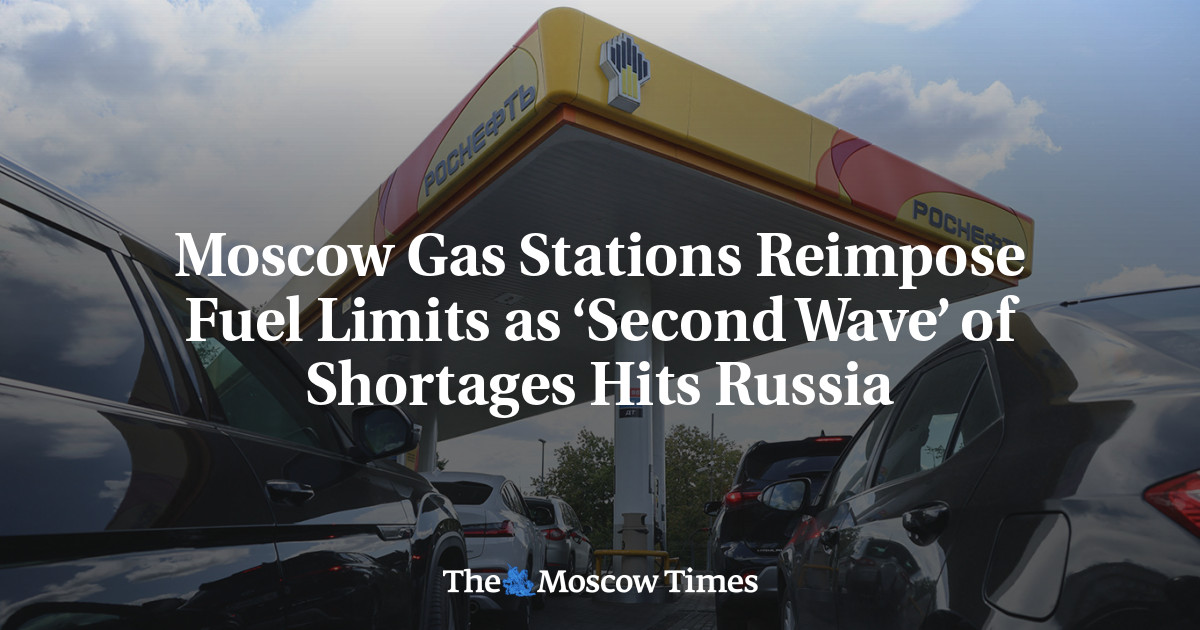
Fuel purchase restrictions are returning to parts of Russia in what local media are calling a "second wave" of the summer fuel crisis, driven by prolonged shortages after months of Ukrainian drone strikes on oil refineries.
In Moscow and its surrounding region, Gazprom Neft gas stations have reinstated a 60-liter cap on regular gasoline purchases per customer. The move reverses a brief easing of restrictions the company introduced across 13 regions earlier this month. Another major fuel supplier, Tatneft, has capped sales in Moscow at 50 liters of regular gasoline and 60 liters of diesel per vehicle, according to business outlet RBC.
Dozens of Russian regions have struggled with fuel shortages this summer following repeated Ukrainian drone strikes on refineries and storage facilities. Industry analysts expect supply to remain constrained across much of the country while peak summer travel demand persists.
The reintroduction of limits comes despite Deputy Prime Minister Alexander Novak's statement last month that the domestic fuel market was showing "partial stabilization." To safeguard domestic supply, the government has extended a temporary ban on gasoline and diesel exports through early next year.
While some stations have lifted their caps, shortages never fully disappeared in Siberia, the Far East, or annexed Crimea, where the deficit remains acute.
Strikes on refineries continue
Ukrainian forces continue long-range strikes on Russian oil infrastructure. On Wednesday, authorities in Bashkortostan reported that a Ukrainian drone set part of an oil refinery on fire, with repairs expected to take several days.
In July, the average gasoline price in Russia had risen nearly 20% since the start of the year, though it has since eased slightly to 76.04 rubles per liter (about $3.38 per gallon) as of Aug. 10. Energy Minister Sergei Tsivilev acknowledged on Tuesday that long lines continue to form at gas stations, but insisted fuel remains available while the government works on logistics issues. He claimed diesel is available "everywhere" in the country.

