Russia installs trench electronic warfare systems on warships to counter drones
Russian forces have begun mounting Peroyed-M anti-UAV systems on naval vessels, systems previously used as trench-based electronic warfare equipment.
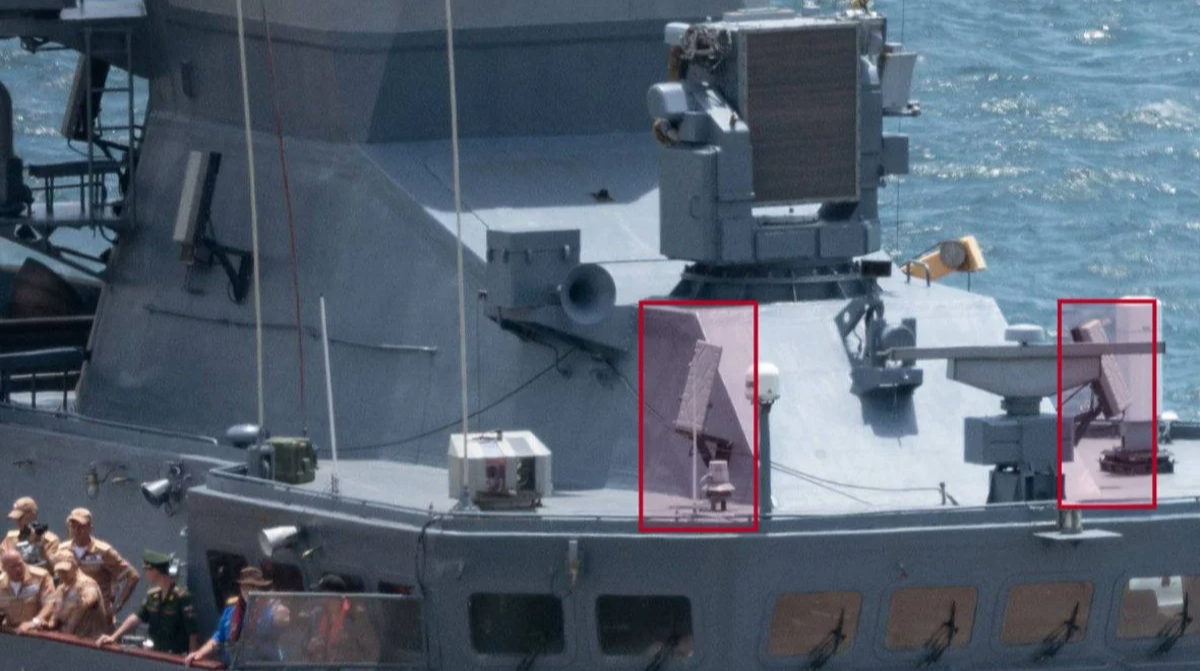
Russian forces have begun installing Peroyed-M anti-UAV systems on Russian Navy vessels – systems previously used as trench-based electronic warfare equipment. This was reported by Defence Blog, citing images from Russian Telegram channels.
The systems have been spotted on four Russian fleet vessels: the Project 1164 missile cruiser Varyag, the Project 20380 corvette Steregushchiy, the Project 1155 large anti-submarine warfare ship Udaloy, and the Project 11540 patrol ship Neustrashimy.
According to the outlet, Peroyed-M electronic warfare systems are being installed on surface ships in an attempt to counter Ukrainian drone attacks. Images of the systems on the vessels were published by Telegram channels linked to the Russian military.
Peroyed-M combines a drone-detection system with electronic jamming equipment, and it is built primarily to counter small unmanned aircraft, particularly FPV drones and reconnaissance quadcopters – the same category of cheap, mass-produced systems that Ukraine has used with growing effectiveness against Russian ground forces and, increasingly, against Russian ships far from any front line.
This electronic warfare system had previously been observed only in the arsenal of Russian infantry units. In August 2023, Serhii "Flash" Beskrestnov, an adviser to the Ukrainian defence minister and radio technology expert, reported that the Russian forces had received these systems. He stated that the electronic warfare system operates in the frequency range from 900 MHz to 5.8 GHz. The Peroyed-M is equipped with a 12-volt, 22 amp-hour battery with a stated battery life of 40 minutes. As of August 2023, the system cost around US$3,500.
In September 2024, Ukrainian forces captured this electronic warfare system as a trophy. Flash explained at the time that the antenna configuration of the Peroyed system creates more of a "shield" than a "dome" of protection against Ukrainian UAVs. The estimated range of the station is around 15–50 metres, but the system does not provide 100% protection against drones.
Background: Russian forces previously began installing anti-drone metal structures on patrol boats in temporarily annexed Crimea.