Russian strikes on railways turn Ukraine's train schedules into a lottery
Persistent Russian attacks on Ukraine's rail infrastructure have caused massive train delays, in some cases up to 17 hours, and claimed several lives.
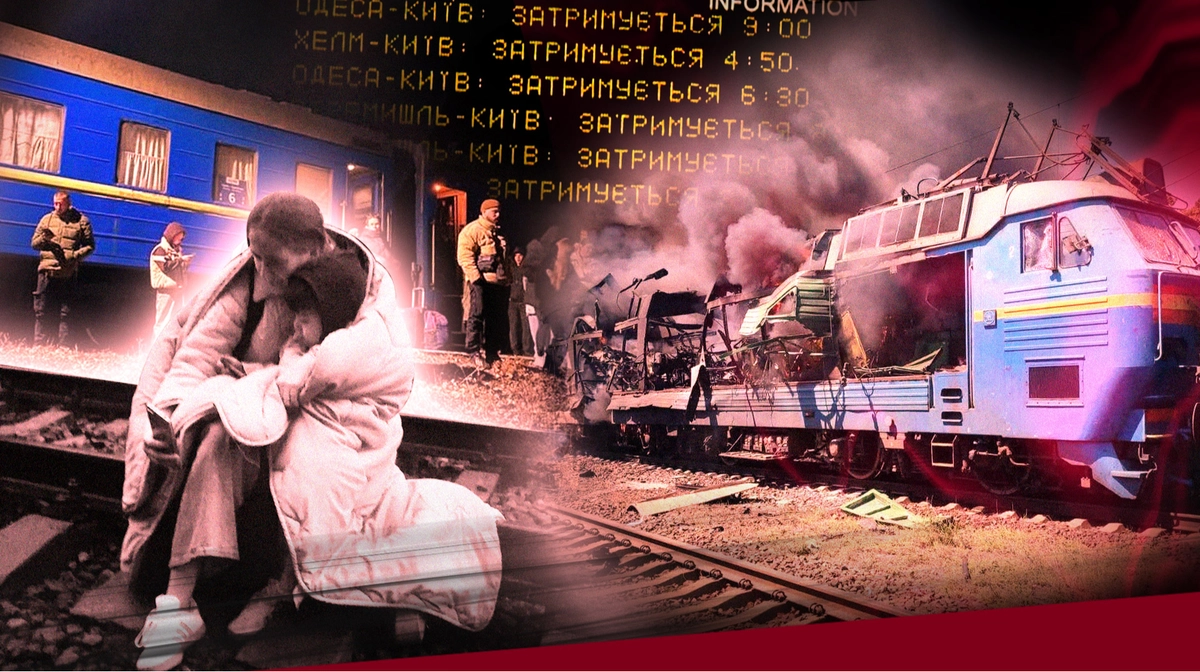
Rail travel in Ukraine has grown increasingly unpredictable this summer and early autumn due to regular Russian strikes on trains and railway infrastructure. Ukrainska Pravda analyzed data on 363 train routes from August 21 to September 9, along with attacks on the railway from July 1 to September 9.
From early July through September 9, at least 14 strikes hit trains in Ukraine — four in July, six in August and four since the start of autumn. The attacks killed at least four passengers, with several more injured. On September 9, two women died in hospital after an attack on the Kyiv–Sumy train. People waiting at stations are also at risk — on August 5, a missile strike near Kvitneva station in Kyiv region killed eight people waiting for the last evening train. At least 17 railway workers, including three conductors, have died over the past two months.
Most frequently targeted routes
Russia most often attacks trains on the Kharkiv, Sumy, Dnipropetrovsk, Zaporizhzhia, Mykolaiv and Odesa directions — regions close to the front line. Rail transport is currently one of the most effective ways to supply the front with military equipment, ammunition and fuel, which is why Russia is trying to disrupt this logistics network.
Delays in numbers
Analyzing a 20-day period, researchers recorded 2,334 delay cases among the 363 tracked trains. Of 436 checked routes, 400 were delayed at least once — meaning regular delays are now the norm rather than the exception. The longest single delay, 17 hours 15 minutes, was recorded on the Sumy–Kyiv train on August 26. Ukrainian Railways said most trips run one to nine hours behind schedule, but on crisis days the number of delayed trains per day reached 40 to 90.
The railway operator began evacuating passengers from trains during air raid alerts in early 2026, when monitoring teams detect a direct threat. People are advised to move at least 200 meters away from the train. If a delay exceeds five hours, passengers are offered free snacks, and refunds are available for missed tickets due to delays. The operator currently has no plans to cancel long-distance trains, though it acknowledges that recovery after each attack takes longer than the last.