Paul Krugman backs temporary rent caps in Europe to curb housing speculation
Nobel-winning economist Paul Krugman told Euronews he accepts temporary rent regulation while Europe builds more homes. He also warned about French public debt and the risk of European deindustrialisation.
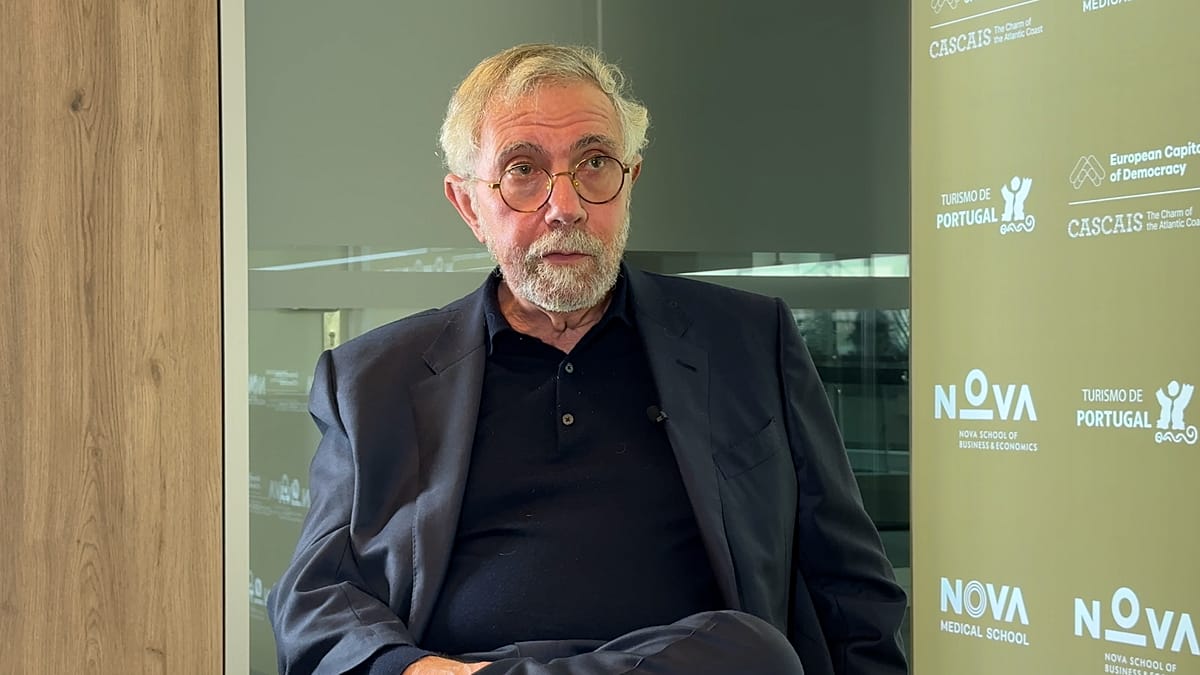
American economist Paul Krugman, the 2008 Nobel laureate in economics, has told Euronews he supports temporary rent caps in Europe. In his view, they can quickly curb housing speculation at a time when the cost of living is fuelling public discontent across the continent.
Protests over housing costs
For around two months, protests over the cost of living have taken place in several European countries, including Albania, Italy, France, Belgium, Germany, Portugal and Spain. For younger people in particular, one of the main grievances is housing costs, which have been worsening since 2010. The European Commission put forward a legislative proposal on the issue only last September.
A 21-year-old Italian student quoted by AFP said a single room in Rome has reached 1,200 euros. The European University Association says students who do not live with their parents spend almost 40% of their monthly income on housing. The European Students' Union warns that speculative practices are excluding thousands of young people from higher education.
Building and rent regulation
Krugman argues that, economically, the answer is simple: build more homes and remove restrictions that hinder construction. Where building has been liberalised, he says, property prices have fallen significantly. Because new housing takes at least three to five years to build in several European countries, he backs second-generation rent stabilisation models.
In New York, annual rent increases are tied to an index, while private developers receive tax exemptions of up to 40 years in return for placing a substantial share of new units under the regulated regime. Berlin's model, extended until 2029, limits rent rises to 10% above the comparable local average and exempts homes first occupied and let after October 2014.
French debt and industry
Krugman voiced concern about France, whose public debt stands at 119% of gross domestic product. He says the French problem is relatively straightforward because the retirement age is absurdly low. He warns that a French crisis could bring down the whole euro system, as France, accounting for 20% of euro area GDP, has gone from "too big to fail" to "too big to be saved".
He also says Europe risks some deindustrialisation amid US trade tariffs and Chinese overproduction. While he still supports free trade, he recommends playing defence in the current geopolitical climate, with some temporary protectionism.


