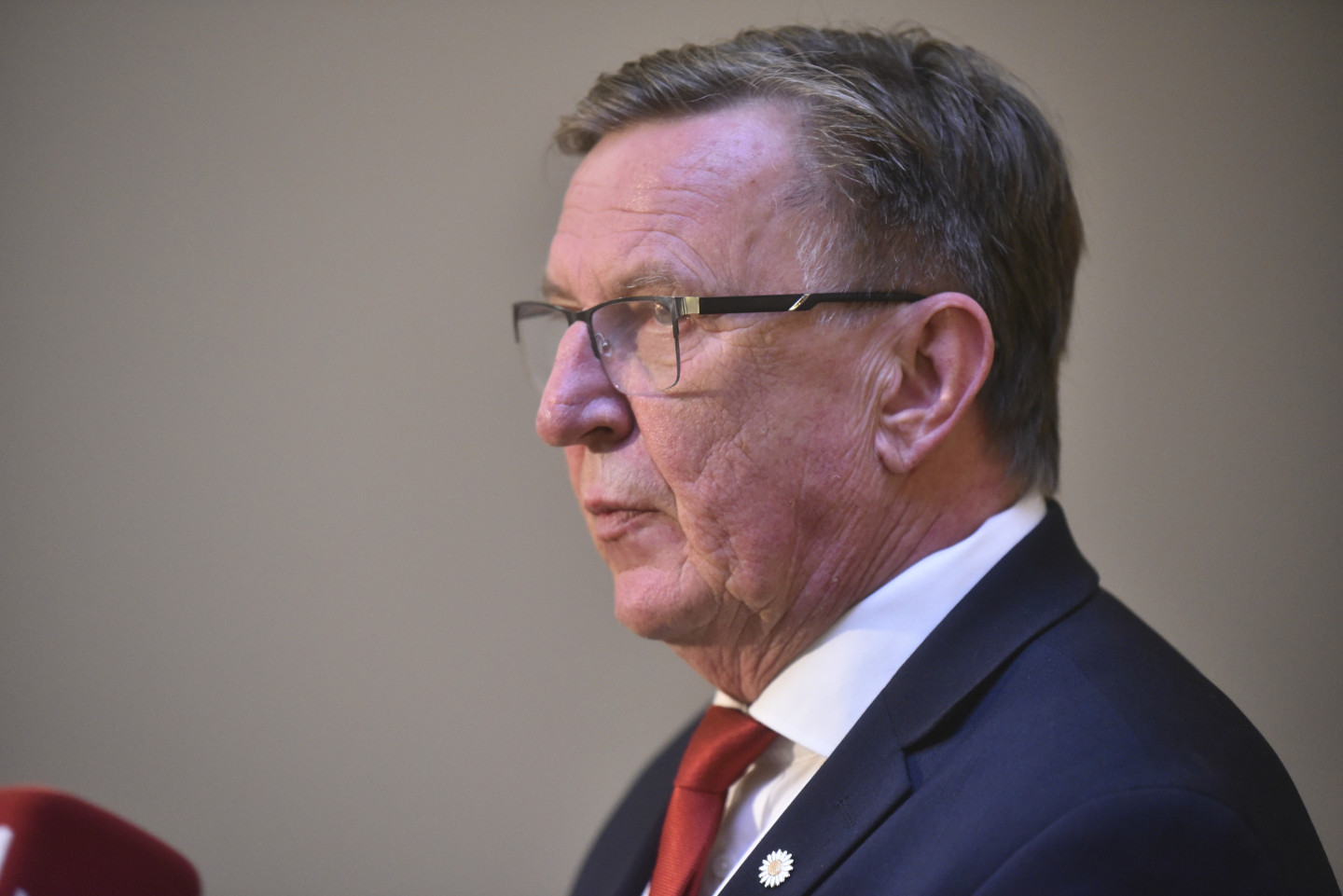
Kučinskis: Next Year's Budget Must Include Reforms, No Tax Increases Planned
Latvian Finance Minister Māris Kučinskis told the LETA news agency that the 2027 budget package must contain reforms enabling a gradual cut in spending of up to 500 million euros. He said no tax reform or tax increases are needed next year.

Latvian Finance Minister Māris Kučinskis, who will lead the United List faction in the new parliament, outlined in an interview with the LETA news agency what needs to be done in preparing next year's state budget. In his words, the package must include reforms with effects in later years, so that spending can be reduced step by step by up to 500 million euros.
Reviewing expenditure
The minister said decisions worth 400 million euros are currently under review to determine what goes into the budget, what gets an extended deadline and what is cut. As an example, he cited the teachers' pay schedule, which has more than 50 million euros allocated; the next minister will need to discuss whether to shift the schedule or find funds from internal reserves. Health funding will not be cut, but the new health minister will have to explain where previous investments went and why waiting lists are longer.
Kučinskis believes that next year all institutions, and possibly state-owned companies, should be audited with the help of artificial intelligence to find overlapping functions. He estimates this could save at least tens of millions of euros.
Merging ministries
On merging ministries, the minister said the fiscal effect would be small. A merger of the Ministry of Smart Administration and Regional Development, the Ministry of Climate and Energy and the Ministry of Economics is currently being considered. Merging the Welfare and Health ministries from 2028 is also possible. He does not currently consider combining the Transport and Economics ministries advisable.
Fiscal space and defence
According to the minister, a budget gap of 500–600 million euros must be expected for 2030. Defence spending, set by law at 5% of gross domestic product (GDP), will be somewhat higher next year because GDP forecasts have improved. The Sēlija training ground might not be financed through a public-private partnership, as that would be roughly twice as expensive.
There will be no tax reform for now, and tax increases are not needed next year. Economic growth is slightly above 2%, while Kučinskis says 4% would be needed.