Kučinskis Says Rail Baltica Could Be Frozen if Latvia Cannot Afford It
Māris Kučinskis told the news agency LETA that the Rail Baltica railway project could be frozen if Latvia cannot cover its costs. He said the state can contribute about 150 million euros a year, and no more than 200 million.
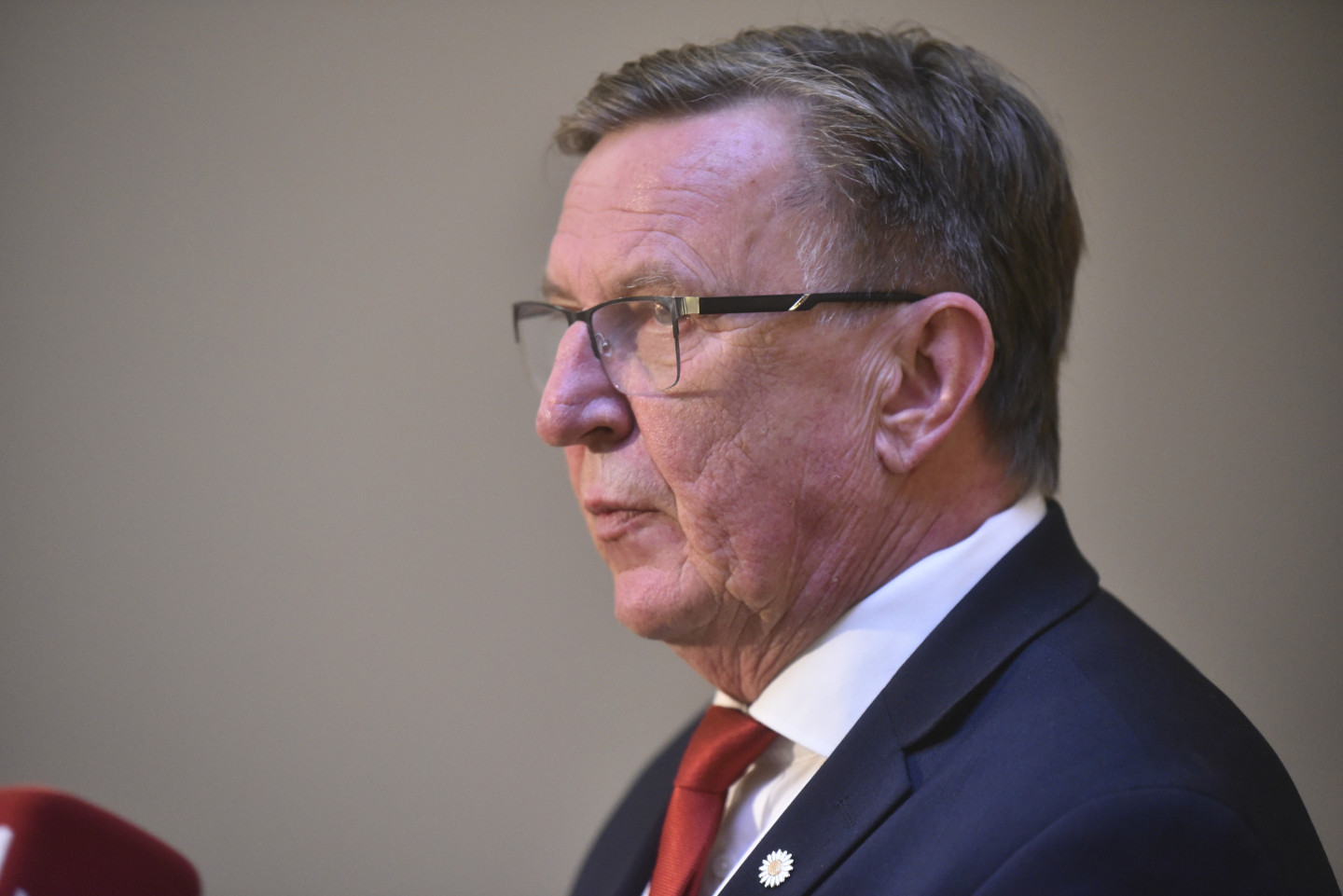
The Rail Baltica international railway project could be frozen if Latvia cannot afford its costs, Māris Kučinskis, a former head of the Latvian government, said in an interview with the news agency LETA. He stressed that the state can neither increase railway funding without limit nor take money from roads, schools and other investments to get the line finished. The question of freezing arose when he was asked whether the project might not be built without European funding.
“If we cannot afford it, there is an option to freeze the project. There is such an option, I won’t hide it,” Kučinskis said.
How much the state can invest
According to him, the Ministry of Transport and the Ministry of Finance have calculated what the state can afford: 150 million euros a year in national co-financing, provided that European Union support comes from the Connecting Europe Facility (CEF). A few tens of millions of euros could be added for extra costs such as oversight of the process, bringing the total to 200 million euros a year. “We cannot do more,” Kučinskis said.
He explained that 150 million euros as a 15% co-financing share, together with EU money, would add up to roughly one billion euros a year. By his estimates, the required total could be reached by 2041 at that pace. Kučinskis believes either greater support must be secured or it must be admitted that the project is too expensive for Latvia.
Taxes and structural funds
He does not support an extra tax burden on residents for the sake of the railway, citing a possible rise in value-added tax as an example. He also objects to diverting all remaining EU structural fund money to the route at the expense of other needs. “You can’t bear what you can’t bear,” Kučinskis added.
Criticism of how the project went
Kučinskis criticised the order of work: “Our problem is that we started from the wrong end – with the pile, the airport and the station.” He allowed that it should have been considered whether to stop earlier, but said the contract already signed will have to be dealt with.
In his view, the economic rationale has also changed. While he was prime minister, an option was discussed to transfer cargo arriving via Belarus for onward carriage on the European-gauge railway to Scandinavia, but that idea later became unworkable. Kučinskis doubts the project can be profitable from passenger traffic alone and believes the military component should now be the main focus, especially connecting military training grounds and access to them.
Freezing is a scenario Kučinskis described in case of financial constraints. He has not announced any decision to halt the project.


