Kulbergs Government Plans Two Billion in Savings but a Fund to Borrow Another Two Billion
Latvia's new government plans to cut spending by two billion euros over four years and raise another billion, while creating a state-company fund that would borrow up to two billion euros. That borrowing would count toward public debt.
The Latvian government led by Prime Minister Andris Kulbergs (United List), approved by parliament this week, plans to cut state spending by two billion euros over four years and raise at least one billion more in revenue. It justifies this by the burden of public debt. At the same time, it intends to create a Latvian Development Fund that would borrow up to two billion euros through bonds, and that debt would be counted in total public debt. The government was approved a month and a half after the parliamentary election.
Savings and revenue
Spending is to be cut by abolishing or shrinking state institutions, reforming the hospital and school networks and reviewing expenditures that are indexed every year. The declaration does not specify what the revenue-raising measures will be. Earlier, the prime minister mentioned spare funds of Latvia's State Forests, a new import customs duty and freezing increases in the tax-free minimum.
The government also promises tax breaks: capital gains tax will fall from 25.5% to 17%, large investments will receive tax rebates, and wealthy foreigners will get a fixed-tax regime. The State Audit Office, meanwhile, has recommended reviewing existing tax reliefs, which cost the budget about 2.5 billion euros a year.
Development fund
The fund will receive shares in seven state companies: Latvenergo, Latvia's State Forests, Augstsprieguma tīkls, Valsts nekustamie īpašumi, Latvijas Loto, Tet and LMT. Their capital value is 7.5 billion euros. Riga International Airport, Latvijas Pasts and Altum could be added later. The money is to be invested in defence companies, robotisation, and housing construction or renovation. Bonds are planned for issue at the end of next year.
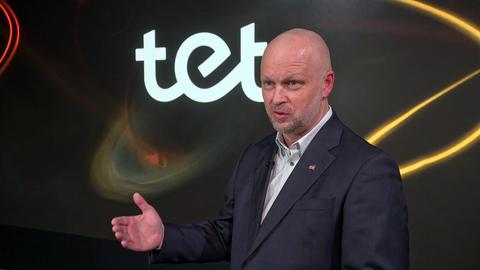
Finance Minister Kārlis Purgailis acknowledged that the borrowing will initially count as public debt, but hopes to persuade the European Commission within a year or two that the fund is independent. Uldis Tatarčuks, chairman of Tet's board, who is to be nominated as the prime minister's deputy, will lead the fund's creation. How the fund will repay the loan is not yet clear.
Both Tatarčuks and Purgailis were asked about a conflict of interest; neither sees one.