Kulbergs Presents 2027–2030 Fiscal Plan and State Development Fund
Latvian Prime Minister Andris Kulbergs presented a 2027–2030 plan on 10 November to stabilise public finances, with a target impact of about €2.9 billion. It also proposes a State Development Fund that could mobilise around €6 billion in investment.
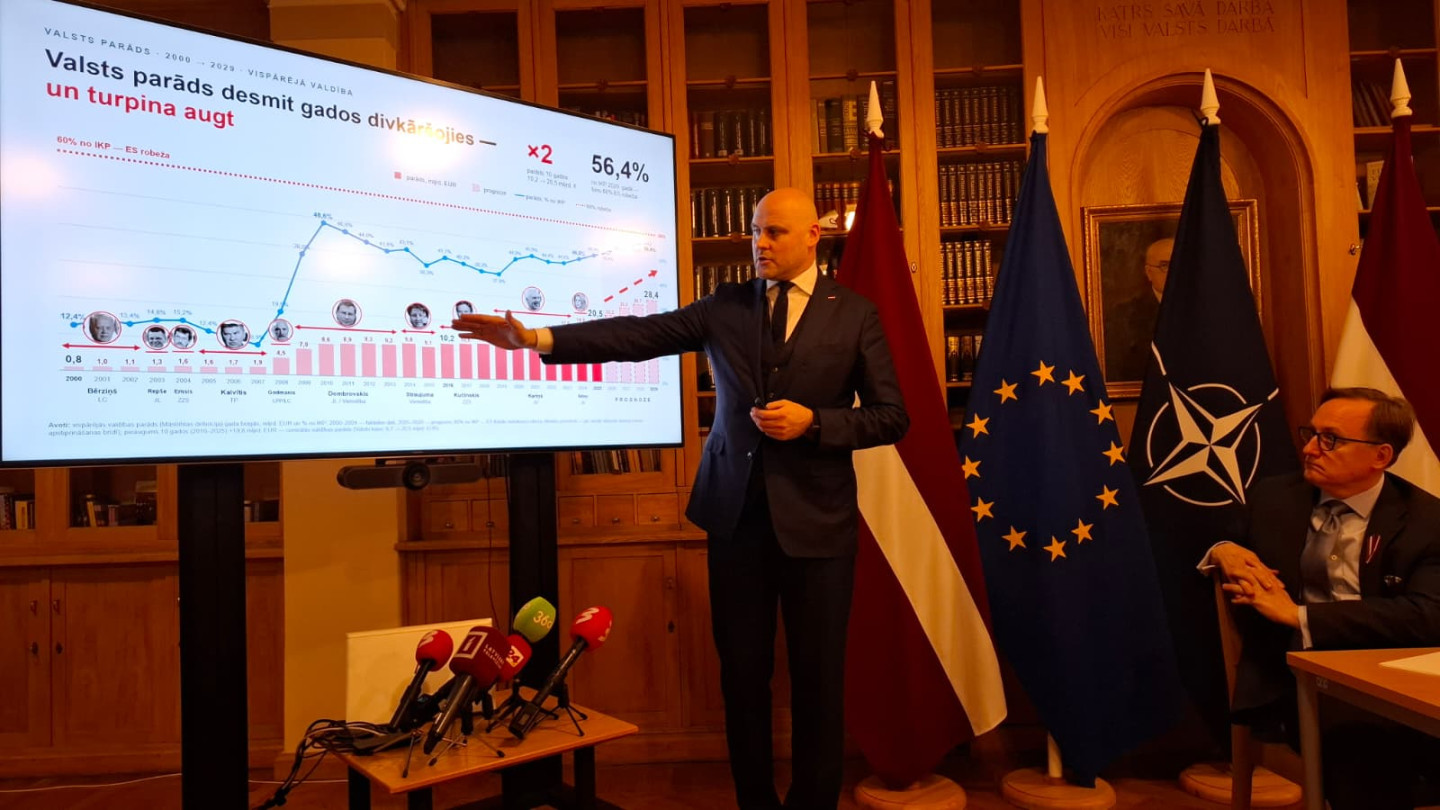
Latvian Prime Minister Andris Kulbergs presented a plan to put public finances in order and boost economic growth for 2027–2030 at a press conference on 10 November. It combines spending reviews and revenue measures with a total target impact of roughly €2.9 billion over four years, and proposes creating a State Development Fund. The plan aims to ease pressure on the state budget and speed up economic development.
State Auditor Edgars Korčagins and Bank of Latvia Governor Mārtiņš Kazāks also took part in the press conference. The assessment of the current situation is said to match the views of the State Audit Office and the central bank.
Debt trend
Data from the Central Statistical Bureau show that general government debt at the end of 2025 stood at €20.2 billion, or 46.2% of gross domestic product (GDP). It rose by €1.4 billion over the year.
Spending review
The main direction is a review of the costs of public administration and institutions, with a four-year target of about €1 billion. Proposals include cutting the number of posts, centralised procurement of standardisable goods and shared administrative services. Centralised procurement is expected to save about €40 million a year, and shared services about €35 million a year. The plan also covers sectoral reforms, stronger budget discipline, better targeting of support and curbs on automatically growing expenditure.
State Development Fund
Under a single governance model, the fund would bring together the state's holdings in seven companies initially. It would have a professional, independent board, and the state would keep control over strategic enterprises. The fund would issue €1.5 billion in bonds: about €600 million for housing affordability and building renovation, €150 million for defence production and €450 million for business development, with €300 million held in reserve. With funding from banks, institutional investors and companies, total investment could reach about €6 billion.
In the baseline scenario, GDP in 2030 would be about 1.7% higher than without the fund, and additional tax revenue in 2027–2030 would total about €0.8 billion. This is modelled impact that depends on investor participation, project delivery and the fund's financing terms.
Growth targets
For economic activation, 37 proposals from social partners and experts were compiled into 25 measures. They include shorter approval times for investment projects, a lighter administrative burden and more predictable conditions for connecting production sites to energy networks. The goal for 2030 is 4% real economic growth a year and about 909,000 people in employment, roughly 26,000 more than in 2025.
Kulbergs said there are currently no plans to raise taxes.