Book on sculptor Līvija Rezevska launched in Kuldīga for her centenary
An art publication titled "Zila, zila debess" was presented in Kuldīga at the exhibition hall of sculptor Līvija Rezevska, an honorary citizen of the town, to mark 100 years since her birth. It is not a biography but a look at her work through the eyes of several women.
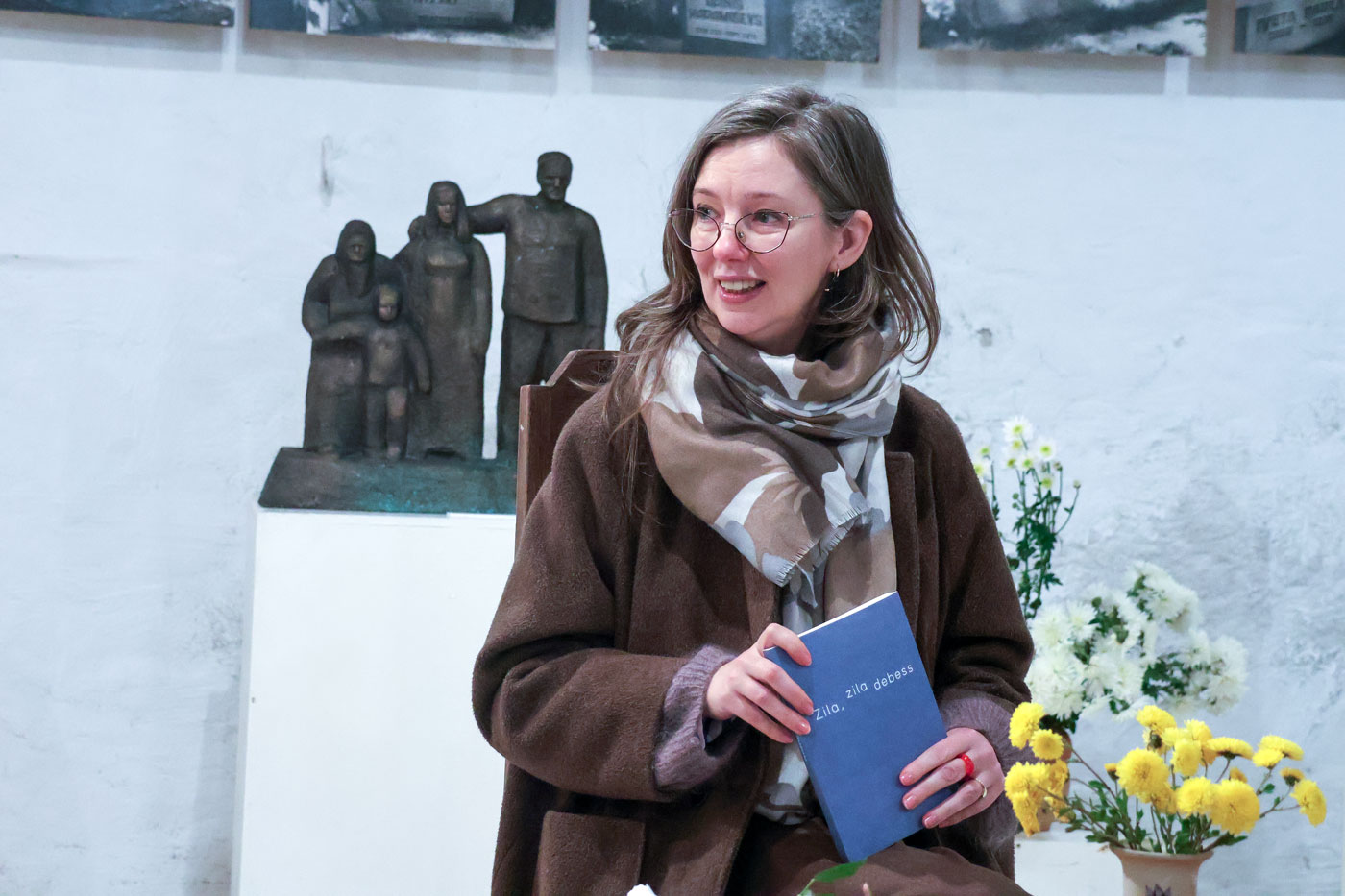
In Kuldīga, a town in western Latvia, an art book called "Zila, zila debess" ("Blue, Blue Sky") was presented at the exhibition hall of sculptor Līvija Rezevska on Mucenieku Street. The book marks the centenary of Rezevska, an honorary citizen of Kuldīga, and aims to draw renewed attention to her legacy. A first launch had taken place the previous day at the Kuldīga library.
Perspectives of several generations
The idea came from art historian and curator Maija Rudovska, who brought together the views of women of different generations. The publication includes a text by writer and former Kuldīga resident Andra Manfelde, reproductions of artworks by Inga Meldere, a countrywoman living in Finland, essays by art historian Alise Volanska, and an introduction by Rudovska herself. Photographs from the Kuldīga District Museum and private archives complement the book.
The publisher is the association Blind Carbon Copy, the literary editor is Ingmāra Balode, and the designer is Paula Buškevica. The project was supported by the State Culture Capital Foundation, Kuldīga Municipality and the copyright agency AKKA/LAA.
Not a biography, but a space for imagination
Rudovska, who was born and raised in Kuldīga, got to know the sculptor at school, when she interviewed her for a student research paper. Five years ago, while taking part in events for the sculptor's 95th anniversary, she met Antoņina Valeiņa, the hostess of the exhibition hall, and other contemporaries of Rezevska. The idea of a lasting tribute for the centenary arose then. It gained momentum when it turned out that Manfelde had already written a text about the sculptures.
Rudovska stressed that readers should not expect an exhaustive biography. The book is conceived as a space for imagination, and Manfelde wrote from the perspective of the sculptures, giving them a voice. Rudovska said she wanted a book that a 25-year-old could pick up and read in a café.
She also said that the contemporaries of artists should be heard in time, and that Soviet-era works should be assessed by learning the circumstances in which they were made.
The next launch is planned for 29 October in Riga, at the ExLibris cultural space in the Veldze creative factory.