Kuldīga ceramicist Monta Plaude on avoiding conflict with herself while searching for her path
Ceramicist Monta Plaude from Kuldīga, Latvia, describes her route from teaching to her own studio in the former Padure ceramics factory. She runs workshops and is slowly building the BoLu Ceramics brand.
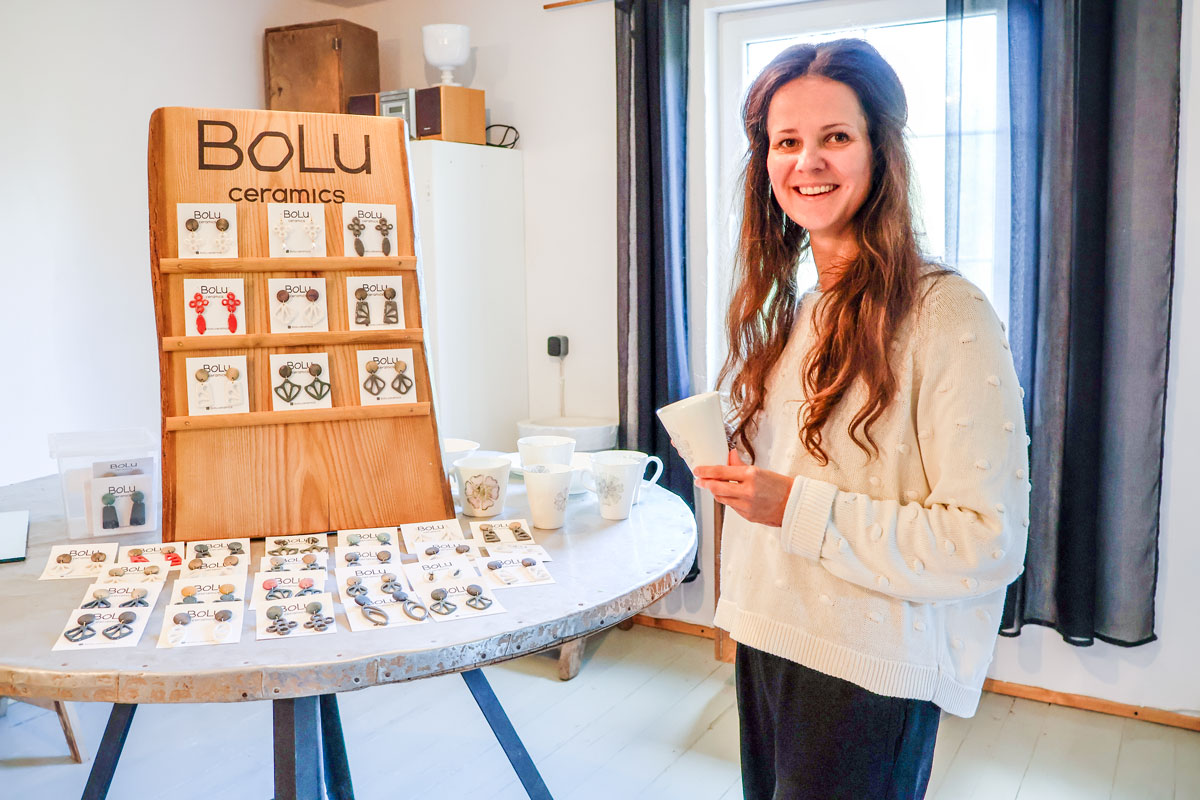
Monta Plaude, a ceramicist living in Kuldīga in western Latvia, told the regional paper Kurzemnieks how she came to ceramics and how she organises her work today. Her studio is in the former Latvian ceramics factory at Padure, where she leads workshops and is gradually developing the BoLu Ceramics brand.
An accidental start
At the Riga Design and Art Secondary School, Plaude wanted to study in the glass department. She had scored enough points in the entrance exams, but the school's director offered her ceramics instead. She agreed, and later earned bachelor's and master's degrees in ceramics at the Art Academy of Latvia. She says she values being able to take her ideas all the way to a tangible result.
Teaching and the return to ceramics
Plaude worked in education for nine years, teaching ceramics, drawing, painting and composition at a general school, a professional pre-education art school and a hobby education institution. For a time she worked a 1.5 workload with 40–45 contact hours a week and burned out. After a year at the Kuldīga municipality and a brief spell at a technical school, she met Inga Bermaka, manager of the Laidi manor, who invited her to work in the manor's ceramics studio. While looking for plaster moulds, Plaude contacted Mārtiņš Puķis, owner of the Padure factory, and agreed on premises for her own studio. She and her husband Roberts spent about a year renovating it.
Daily work in the studio
Plaude devotes roughly half of a full-time schedule to ceramics, as being self-employed lets her set her own hours. She makes earrings and tableware, using plaster moulds available at the factory and interpreting them in her own way. She recently led a workshop for 40 wedding guests, but concluded that no more than ten participants is optimal. By her estimate, about a third of her working time goes on cleaning and washing at the sink.
In her search, she says, it matters to find a middle ground between what others would like and what pleases her.