Kuldīga art school adds new ceramics kiln to expand workshop capacity
Kuldīga's Art and Humanities Primary School has acquired a new ceramics kiln with support from the State Culture Capital Foundation and the local municipality, bringing the workshop's total to three kilns. The new equipment offers far more program options than the older kilns and should speed up work for the school's more than 200 students.
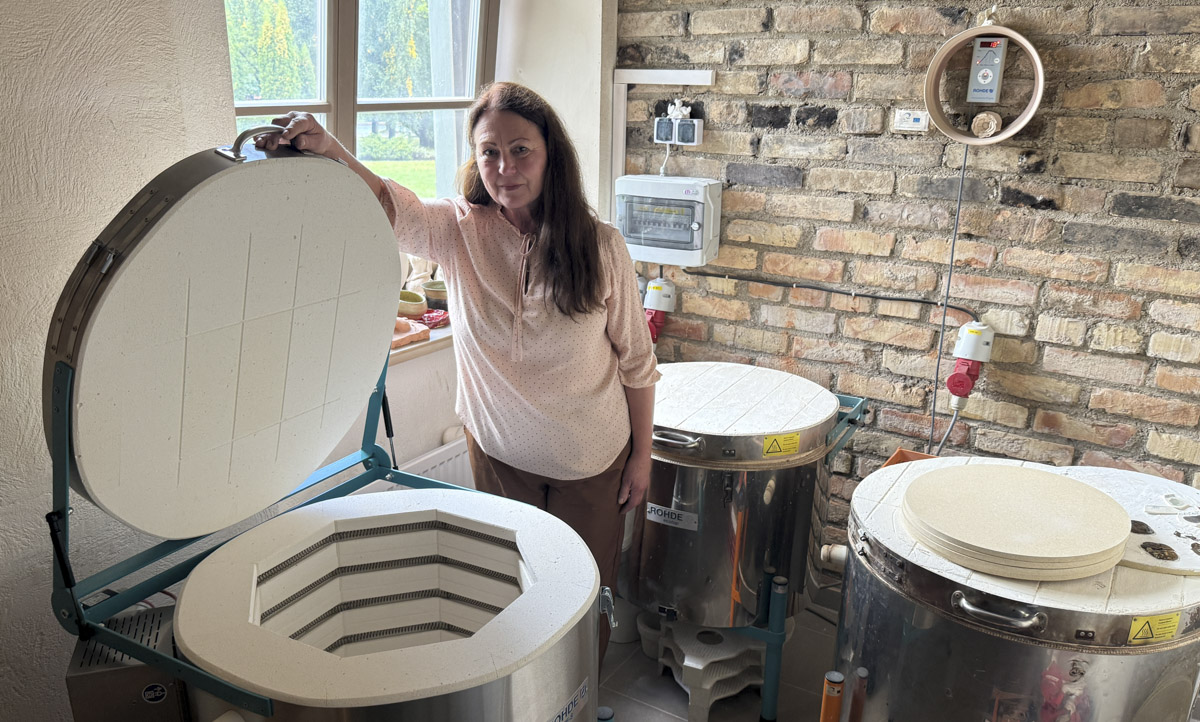
The ceramics workshop at Kuldīga's Art and Humanities Primary School now has a third kiln after the school acquired a new one with funding from the State Culture Capital Foundation and the Kuldīga municipal government.
Teacher Danute Sīle explains that more than 200 children study at the art school, and the existing kilns could not keep pace with the volume of student work. One of the older kilns has a damaged internal coil, making it unsafe to use until the part is replaced.
More capability, remote control
According to Sīle, the new kiln is technologically far more advanced than the old ones: it offers 36 programs compared to five on the older units, and its modes can be controlled remotely via a control unit, including from home. Staff plan to gradually learn the full range of its features.
Ceramics equipment specialist and school alumnus Īvs Liškovskis has taken on the kiln's first technical maintenance; he previously repaired the old kiln as well. He has been involved with ceramics since his school years, including work at the Padure ceramics workshop, although his actual profession is auto mechanic.
The workshop earlier acquired a clay-kneading machine, used by more than 200 students to press air bubbles out of the clay before work. Because of its size, the machine is kept in the school's basement and is also maintained by Liškovskis.
Beyond ceramics
Ceramics classes have already begun for the year, taught in part by teacher Agnese Fogele. Sīle notes that students cannot work with ceramics exclusively all year, since the kilns could not handle that load, so the workshop also uses other materials such as glass, including glass-melting techniques students have practiced in earlier assignments.


