Ladybird browser releases first downloadable alpha
The independent Ladybird browser project put out its first alpha build for macOS and Linux on November 23. Its engine was written from scratch rather than forked from an existing one.
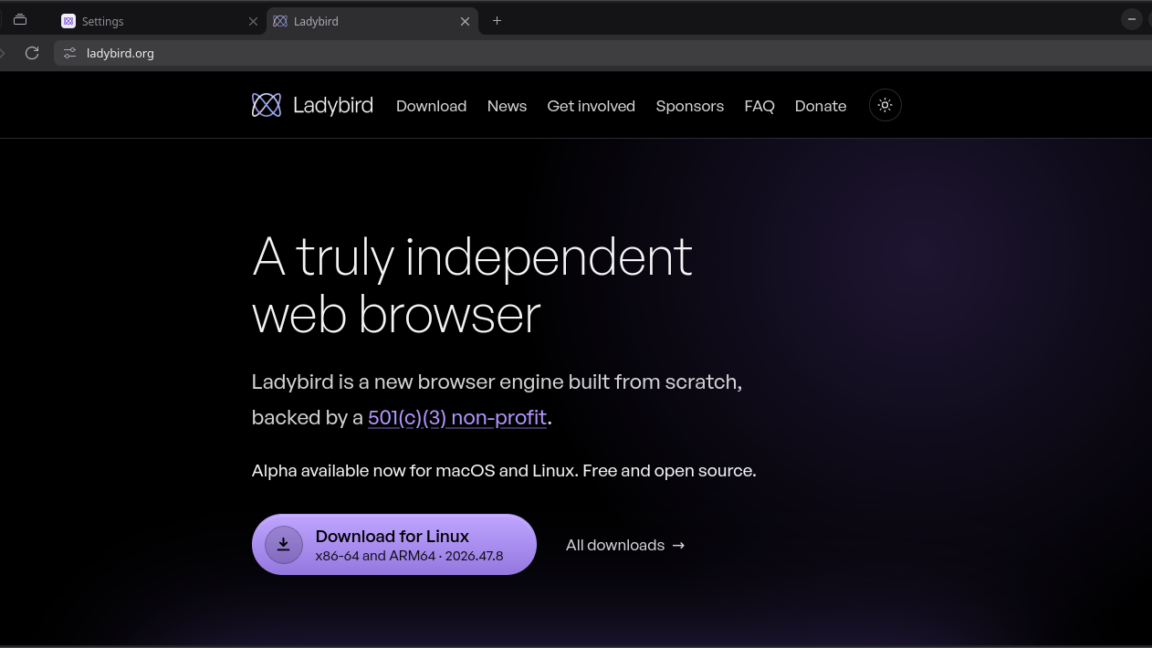
After four years of work on a browser engine built from the ground up, the Ladybird project released its first downloadable alpha on November 23. Prebuilt versions are available for macOS and Linux. Until now, anyone curious about the browser had to compile it from source code; it now comes as an installable package with automatic updates.
What sets Ladybird apart is that it is not a fork of another browser. Chrome, Edge, Brave and Opera all run on Google's Blink engine, while Firefox relies on Gecko. Ladybird's rendering engine and its LibJS JavaScript engine were both written from scratch. Project lead Andreas Kling said in Monday's announcement that the engine is the project's own, built from the ground up, and that the browser around it is modest but functional.
A fourth engine
Almost the whole modern web runs on three browser engines: WebKit (Safari), Gecko (Firefox) and the largest, Blink (Chromium). With so few options, web developers often optimize sites specifically for Chromium, where most traffic is, and the wider web platform tends to follow whatever the dominant engine supports.
An independent implementation of web standards is valuable not only as extra competition. It can also expose places where sites depend on Chromium behavior instead of published specifications. Ladybird is unlikely to shift the market any time soon, but each new engine adds another implementation that standards can be tested against, which can reveal Chromium-specific assumptions.
Background
Ladybird grew out of Kling's SerenityOS project, an effort to build a new independent operating system from scratch, before separating into its own project. Kling set up the Ladybird Browser Initiative, a 501(c)(3) nonprofit in the United States funded by sponsorships and donations. The project's website states that it has no sponsored search engine deals, unlike many other popular browsers, and that sponsors have no say in the roadmap.