Bank of Latvia forum discusses supervision of sustainability risks in the financial sector
On 29 October the Bank of Latvia brought together financial and other sector representatives at a sustainability forum on implementing EU sustainability requirements in banking. Participants also assessed banks' responsibility and the supervisory approach.
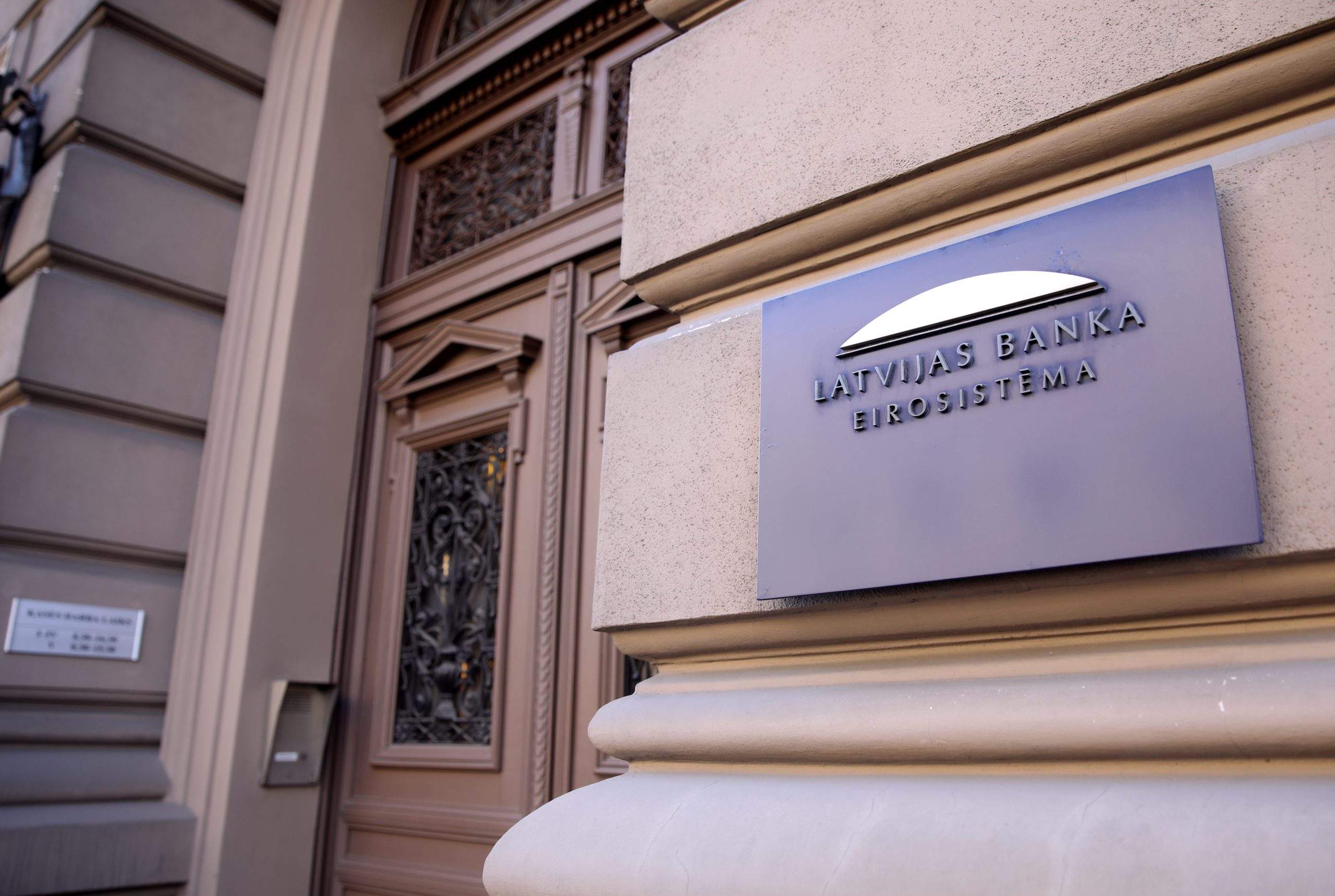
The Bank of Latvia, the country's central bank, held its Sustainability Advisory Forum on 29 October, bringing together representatives of agriculture, finance and other sectors. The aim was to present the European Union's (EU) sustainability requirements for the financial sector and to discuss how they are implemented in practice, what responsibility credit institutions bear, and how supervision works in this area.
Rules and banks' obligations
Kristīne Černaja-Mežmale, a member of the Bank of Latvia's council, said the EU has given the financial sector a special role in sustainability, with a large body of legislation whose requirements are being phased in. In her view, geopolitical events in recent years have slowed the pace of implementation, but the process continues.
Banks are already required to assess environmental, social and governance (ESG) risks. This stems from the Capital Requirements Regulation (CRR), the Capital Requirements Directive (CRD) and guidelines of the European Banking Authority. The European Central Bank has set out its supervisory expectations for managing these risks in its guide on climate and environmental risks.
Banks must judge how far ESG risks could affect their operations, taking into account their business model, strategy and loan portfolio. A proportionality principle applies, reflecting a bank's size, business model and the materiality of identified risks. If a risk proves material, deeper management will be required. The Bank of Latvia stressed that the existence of a risk does not automatically mean restrictions, and that several processes that would affect lending policy or individual clients have not yet begun.
Points from the discussion
Banking representatives said that in the near term attention will focus on implementing requirements for clients' transition plans. Assessing biodiversity-related risks is a longer-term task, requiring initial data and approaches suited to banks' models. The Bank of Latvia's recommendations for identifying economic activity that benefits or harms biodiversity are currently an early, informational research document.
Ģirts Krūmiņš, State Secretary of the Ministry of Agriculture, said nature, climate and sustainability initiatives currently run in parallel, each with its own methodology. He said the ministry will ask the Cabinet of Ministers to designate a responsible institution to develop a unified land policy, in order to reduce fragmentation and bureaucracy.
The forum also included representatives of the Ministry of Finance, the Ministry of Economics, the Ministry of Climate and Energy, industry associations, the Farmers' Saeima and banks.