AI-generated fake claims Lithuania will make Ukrainian a second official language
A fake story is circulating on Lithuanian social media saying the president and foreign minister are considering making Ukrainian a second state language. An investigation by Delfi.lt found it was created with artificial intelligence tools.
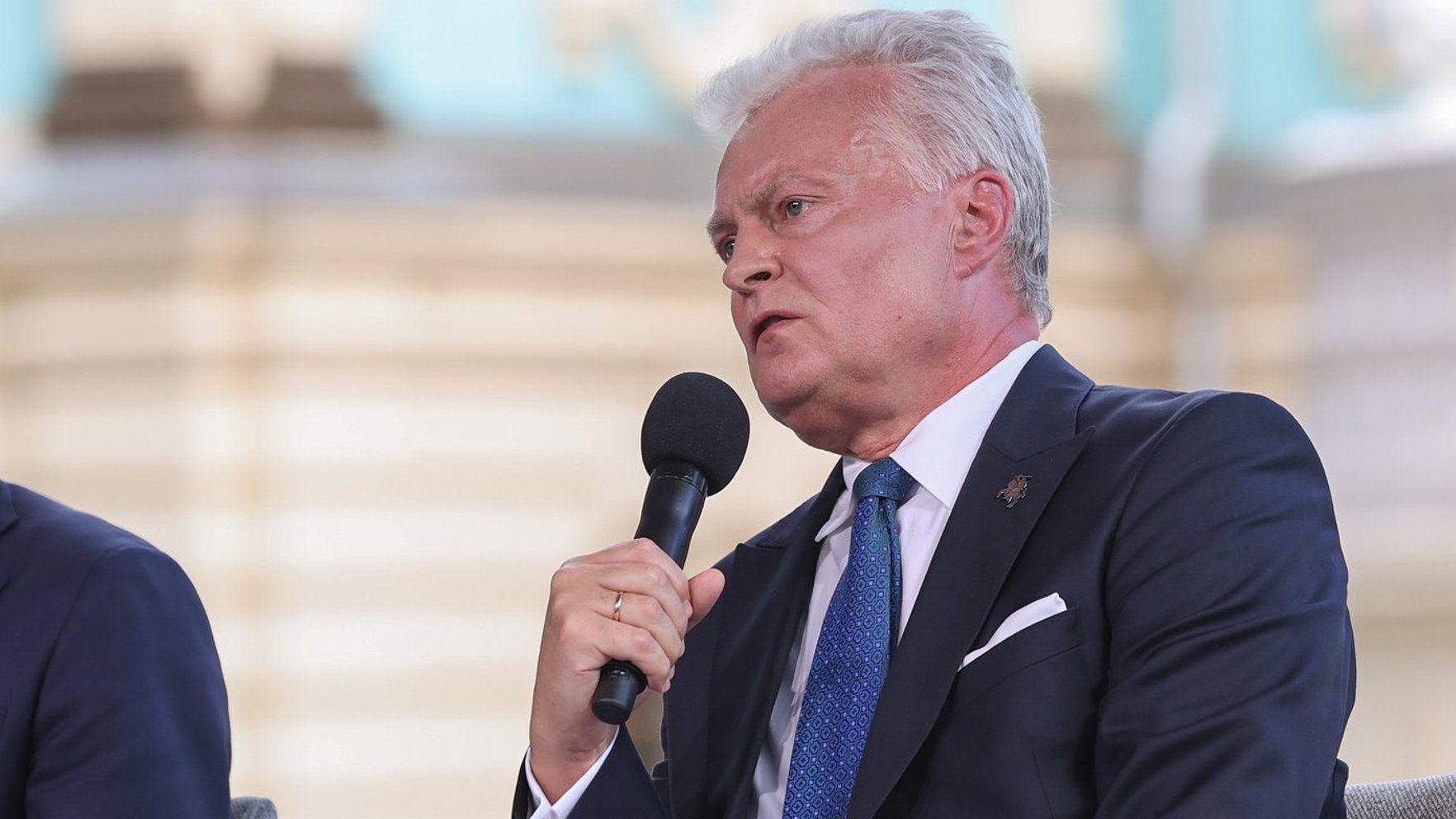
A fake news item is spreading on Lithuanian social media claiming that President Gitanas Nausėda and Foreign Minister Kęstutis Budrys do not rule out making Ukrainian a second official language of Lithuania and a compulsory subject in schools. An investigation by the Lithuanian news portal Delfi.lt found that the material was produced with artificial intelligence tools, and neither politician has publicly voiced such an idea.
How the fake was identified
The image circulating online tries to imitate an article from the news portal 15min. Delfi.lt notes that the man shown next to the president as the supposed foreign minister does not look like Budrys. The image also carries an embedded digital watermark.
The outlet ran the photo through a tool from the AI company OpenAI that is designed to detect forgeries made with the company's products. The tool found a digital watermark invisible to the naked eye, indicating the picture was created with OpenAI products. A search of the 15min site also turned up no such article, so it was never published. Neither Nausėda nor Budrys has spoken publicly about introducing a second state language in Lithuania.
Disinformation about Ukraine
Disinformation about Ukraine has been among the most common fake-news topics since Russia launched its full-scale invasion in February 2022. In late August, Delfi published a fact-check of a TikTok post by Jurijs Kļepakovs, a candidate in this year's Latvian parliamentary elections for the party "Stabilitātei!". He claimed that Ukrainian women wishing to stay in the EU must prove they are not subject to military service, otherwise they must leave and go to fight. The claim was untrue.
Narratives aimed at Ukraine often distort data on foreign aid and the use of donations, and Russian propaganda spreads unfounded myths about the Ukrainian army, such as organ trafficking. This spring, after Ukrainian drones strayed into Latvia, Russia claimed Latvia had opened its airspace to Ukrainian strikes. On 20 May, Latvia's National Security Council, chaired by President Edgars Rinkēvičs, rejected those claims and urged residents to assess information sources critically.