Lithuania to tighten checks on Russian and Belarusian grain in transit from 16 November
Lithuania's State Food and Veterinary Service will inspect every batch of Russian and Belarusian grain passing through the country from 16 November, and cargo will not be allowed to leave Klaipėda port before results arrive. The aim is to keep grain illegally taken from occupied Ukrainian territories out of international markets.
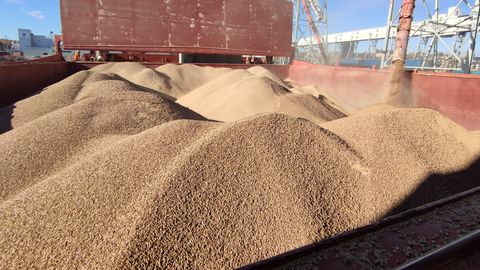
Lithuania's Ministry of Agriculture announced on Tuesday, 10 November, that the country will tighten controls on grain transported from Russia and Belarus starting 16 November. Every batch of grain carried through Lithuania will be checked, and cargo will no longer be able to leave the port of Klaipėda until inspection results are received. The checks will be carried out by the State Food and Veterinary Service.
The goal is to establish the true origin of the grain, prevent falsification of origin documents and stop grain illegally exported from occupied Ukrainian territories from reaching the international market.
What the new procedure involves
The rules apply to wheat, barley, maize and sunflower seeds coming from countries the Lithuanian government has designated as unreliable, when the cargo is transshipped or stored in customs-controlled warehouses. Each batch will undergo document and physical inspection, and samples will be taken for laboratory testing.
Carriers and transshipment companies must give the service information on each railway wagon no earlier than 24 hours in advance. If an origin discrepancy is found, transit of the cargo will be banned, and the batch will be sent back to the country of origin or destroyed under customs supervision. If a batch cannot be physically separated from others, the decision will cover all batches stored together. Other shortcomings must be fixed within three working days.
The operator responsible for the batch will cover the state fee, laboratory testing costs and the costs of returning or destroying the cargo.
Background
Since early September the service has already been checking feed and food grain from Russia and Belarus, but until now it has financed the testing itself, and cargo could leave Klaipėda before final results came in. In early October, Lithuanian President Gitanas Nausėda, Latvian Prime Minister Andris Kulbergs and Estonian Prime Minister Kristen Michal urged EU leaders to ban Russian grain transit.
Service head Audrone Mikalauskiene said origin would be confirmed not only by documents but also by inspection and laboratory data. Agriculture Minister Kęstutis Mažeika said he hopes other European Union states will take similar steps so that EU port infrastructure is not used for Russian grain exports.