Lithuania offers Latvia its experience in checking Russian and Belarusian grain transit
Lithuanian Agriculture Minister Ķēstutis Mažeika regrets that Latvia has not adopted a similar decision to restrict grain transit, and says Lithuania will offer Latvia and Estonia its experience in verifying grain origin.
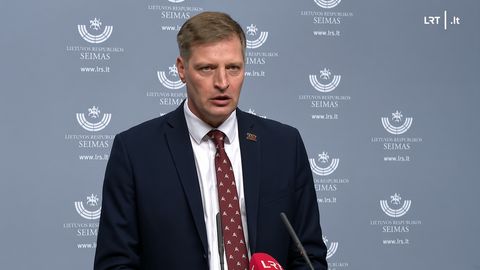
Lithuanian Agriculture Minister Ķēstutis Mažeika told journalists on Tuesday, 10 November, that Latvia is doing nothing on the issue of grain transit, and promised to offer Latvia Lithuania's experience in controlling grain shipments from Russia and Belarus. Lithuania will tighten these checks further from next week, which places the minister's remarks in the context of a common approach among the Baltic neighbours.
Mažeika said he wants to meet Latvian and Estonian counterparts as soon as possible. Estonia decided in early October to introduce national sanctions banning the transit of Russian and Belarusian grain, and such grain was not moved through Estonia even before that.
Latvia's approach
The minister's adviser, Justas Jaskonis, told the news agency BNS that Latvia currently does not check the origin of grain transported through its territory. Lithuania will therefore offer consultations on testing in foreign laboratories. In his words, it is up to Latvian politicians to decide whether to use this help.
Latvia's Food and Veterinary Service earlier told the agency LETA that by 14 October, samples of 23 consignments of Russian and Belarusian transit grain had been taken for laboratory analysis. The samples undergo isotope profiling and elemental composition analysis to establish the grain's origin and verify that it does not come from Russian-occupied Ukrainian territories. Prime Minister Andris Kulbergs (Progressives) promised last week that the public would be informed of the results once they are received.
Lithuania's new rules
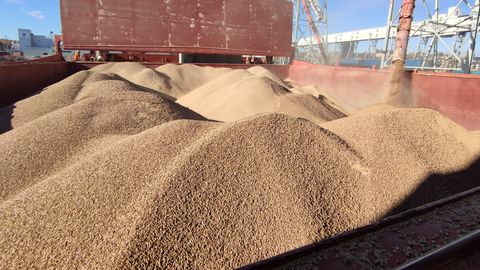
Since early September, Lithuania's State Food and Veterinary Service has been checking the origin of all feed and food grain transported from Russia and Belarus. The aim is to prevent the transit through Lithuania of grain possibly stolen in occupied Ukrainian territories. Until now the service has funded the testing, and cargo could leave the port of Klaipėda without waiting for final results.
From 16 November, businesses will pay for origin checks, and cargo will not be allowed to leave Klaipėda port until results arrive. Mažeika assured that the origin of every batch will be checked. According to him, analysing a single sample can take three to five weeks. The minister added that changes in flows will need to be monitored, along with the results, including how much of the grain is of Ukrainian origin.