Lithuanian parliament backs removing constitutional nuclear weapons ban
Lithuania's parliament passed in first reading a constitutional amendment that would lift the ban on weapons of mass destruction and foreign military bases on its territory. A final vote is scheduled for January 12, 2026.
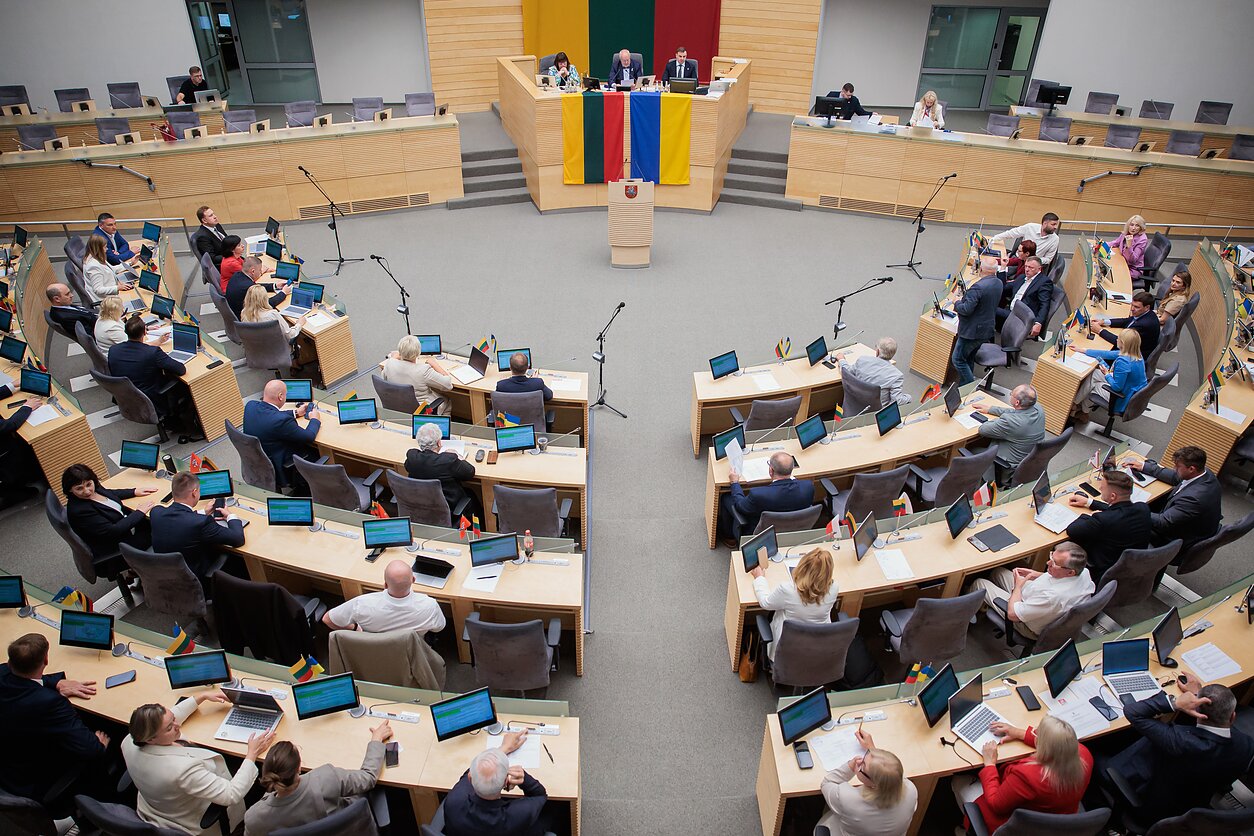
Lithuania's Seimas voted Tuesday 106 in favour, 18 against and six abstaining to advance a constitutional amendment in its first reading that could open the door to allied nuclear weapons being stationed on Lithuanian soil. Under parliamentary rules, the final vote cannot take place until at least three months after this vote and will need support from at least 94 of the Seimas' 141 members. Speaker Juozas Olekas said the final vote is set for January 12.
Olekas argued that removing the ban would strengthen Lithuania's resilience and deterrence capacity while erasing a legal distinction that currently sets Lithuania apart from other EU and NATO members. Opposition conservative leader Laurynas Kasčiūnas noted that neighbouring countries face no comparable restriction, and said the existing provision prevents Lithuania from being fully integrated into NATO's nuclear deterrence planning.
Defence Minister Robertas Kaunas said politicians should give the country access to every available security tool, noting that Lithuania is flanked by states holding strategic weapons — Russia's Kaliningrad region and Belarus. He framed the amendment as a direct response to Russian aggression, adding that the debate likely would not be happening without the war in Ukraine.
Article 137 of Lithuania's Constitution currently bars weapons of mass destruction and foreign military bases from being stationed on its territory; the amendment would remove this provision.
Opponents demand a referendum
The strongest resistance came from the opposition Nemunas Dawn party, with 14 of its members voting against and two abstaining. Party representative Aidas Gedvilas called for the matter to be settled by referendum instead, saying he was surprised parliament considered itself entitled to make such a fundamental change on its own. Three lawmakers from the mixed parliamentary group and one from the Farmers and Greens Union and Christian Families Alliance also voted no.
The debate unfolds against a broader European conversation about reinforcing nuclear deterrence. French President Emmanuel Macron proposed a new European nuclear deterrence framework in March, while the United States, according to the Financial Times, is reportedly considering deploying nuclear weapons in additional NATO countries. Kremlin spokesman Dmitry Peskov warned in September that Lithuania could become a target for Russia if it allowed allied nuclear weapons on its territory.
/nginx/o/2026/10/06/17958194t1h0617.jpg)

