Logistics Forces Command backs Syrskyi, says supply situation worsened, Fedorov's dismissal helped
The Logistics Forces Command of the Ukrainian Armed Forces publicly supported Commander-in-Chief Oleksandr Syrskyi and reported that the supply situation deteriorated in the first half of 2026, but the dismissal of Defense Minister Mykhailo Fedorov partially resolved the problems.
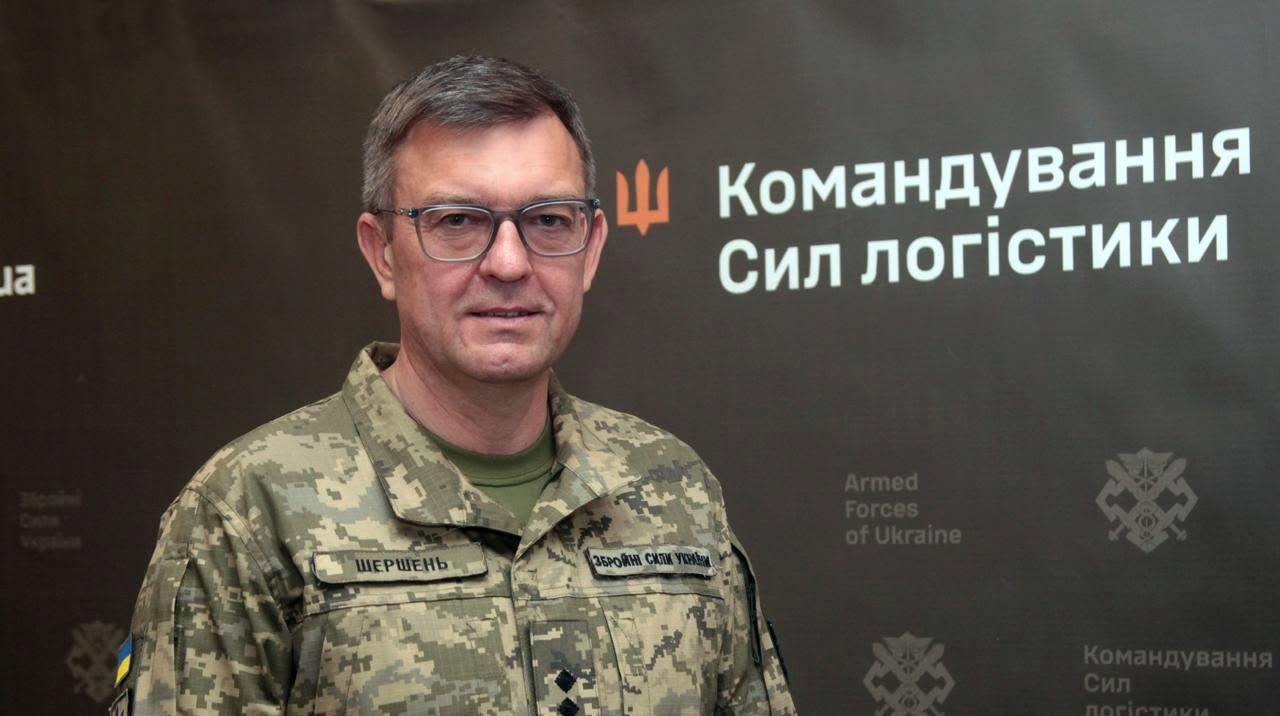
The Logistics Forces Command of the Ukrainian Armed Forces has expressed support for Commander-in-Chief Oleksandr Syrskyi and highlighted serious issues in military logistics. Lieutenant Colonel Valeriy Shershny, a spokesperson for the Command, stated that the supply situation worsened in the first six months of 2026 despite digitalization efforts and large procurement announcements. He emphasized that the situation was partly saved by the timely intervention of the Supreme Commander-in-Chief (President Zelenskyy), which led to the dismissal of Defense Minister Mykhailo Fedorov.
Shershny noted that the supply system is losing stability, and current needs are increasingly met using accumulated reserves or diverting funds from other critical areas. He criticized the slow decision-making on funding, partner assistance, and urgent procurement, adding that signed contracts and tenders do not guarantee that equipment, fuel, or other goods have reached units. Feedback from the front is not sufficiently considered, leading to the delivery of equipment of questionable effectiveness.
According to Shershny, at the end of 2025, the Defense Ministry promised to build stocks in advance, sign over 80% of contracts, and implement the DOT-Chain system for fuel and other supplies. However, in the first half of 2026, the system faced funding deficits, depleted stocks, irregular deliveries, bureaucratic delays, and quality control issues. Preliminary estimates indicate that an additional nearly UAH 37 billion is needed for major logistics directions by the end of the year, and another UAH 16 billion for repairing weapons and military equipment.
Fuel supplies were particularly problematic. Allocated funding proved insufficient, and additional funds were not provided on time despite repeated requests from military command. For some time, troop groupings were supplied from previously accumulated reserves, but after these were reduced, the deficit was compensated using funds intended for weapons and equipment purchases. Shershny stressed that transition reserves are meant for force majeure situations, not to cover daily planned needs.
Risks regarding winter clothing supply were also mentioned. Initial funding was insufficient for winter jackets, pants, body armor, and chemical warmers. Although savings were achieved in procurements, the decision to use those savings for an urgent order of winter gear was delayed. Shershny noted that production and delivery take time, and summer delays reduce the ability to prepare for winter.
As an example of the gap between announced procurements and actual supply, he cited the purchase of 5,000 pickup trucks announced by the Defense Ministry in May. Most vehicles under contract or procurement procedures have not yet reached the Armed Forces; major deliveries are expected in late autumn and early winter. Shershny also criticized the quality control system and supplier accountability. He claimed that proposals to strengthen penalties for food supply violations were only partially implemented, and the military does not receive information about sanctions imposed. Contracts continue to be signed with companies that previously breached their obligations. Moreover, 52% of the food supply budget is concentrated among 11 companies.
A separate issue was the procurement of RPG-75M disposable anti-tank grenade launchers. Despite repeated warnings about the quality of these munitions, the Defense Procurement Agency bought the cheapest and least effective shots. Some items produced in the 1980s were repackaged and presented as meeting contract requirements. Over 70% of feedback from the front regarding 1984-production shots was negative, yet their supply continued.
International military aid has also been delayed. Shershny reported that since the beginning of 2026, central supply services have not received annual assignments from the minister, which are necessary for signing free contracts with partners and end-user certificates. This has delayed the transfer of engineering equipment, generators, loaders, night vision devices, tactical clothing, and other items.
Shershny stressed that the problem lies not only with individual performers but also with the system of authority distribution. Logistics Forces formulate needs and technical requirements, organize storage, repair, transport, and distribution, but key decisions on funding, procurement, contracts, penalties, delegation, and accepting partner aid are made by the Ministry of Defense. This process is often lengthy and illogical. Responsibility is scattered: one body determines the need, another allocates funds, a third conducts procurement, a fourth controls quality, but information about results does not always return to those responsible for actual supply.
In conclusion, Shershny defended Commander-in-Chief Syrskyi, listing his achievements: defending Kyiv, Sumy, and Kharkiv; liberating Kharkiv region; the Kursk operation; and actions in the Pokrovsk and Zaporizhzhia directions. He expressed hope that this list of accomplishments will continue to grow with the full support of a professional Ministry of Defense team.
The Logistics Forces Command restricted comments on this Facebook post. This is the latest instance of top Ukrainian military leaders publicly backing Syrskyi, following similar statements by the commanders of the Air Force, Navy, Air Assault Forces, and Territorial Defense Forces. Since July 16, protests have taken place in Kyiv and other cities demanding Fedorov's return and Syrskyi's dismissal. President Zelenskyy acknowledged that the minister and commander-in-chief could not find common ground and that battlefield problems remained unresolved. On July 18, Zelenskyy said he had spoken with Fedorov and Syrskyi and promised "decisions on the army will be worked out."