LTA: Closure of Mere stores exposes government's double standards and hypocrisy
The Latvian Traders Association says the closure of the Russian chain MERE exposed the government's double standards, as national sanctions were avoided and the stores were shut only after an EU decision.
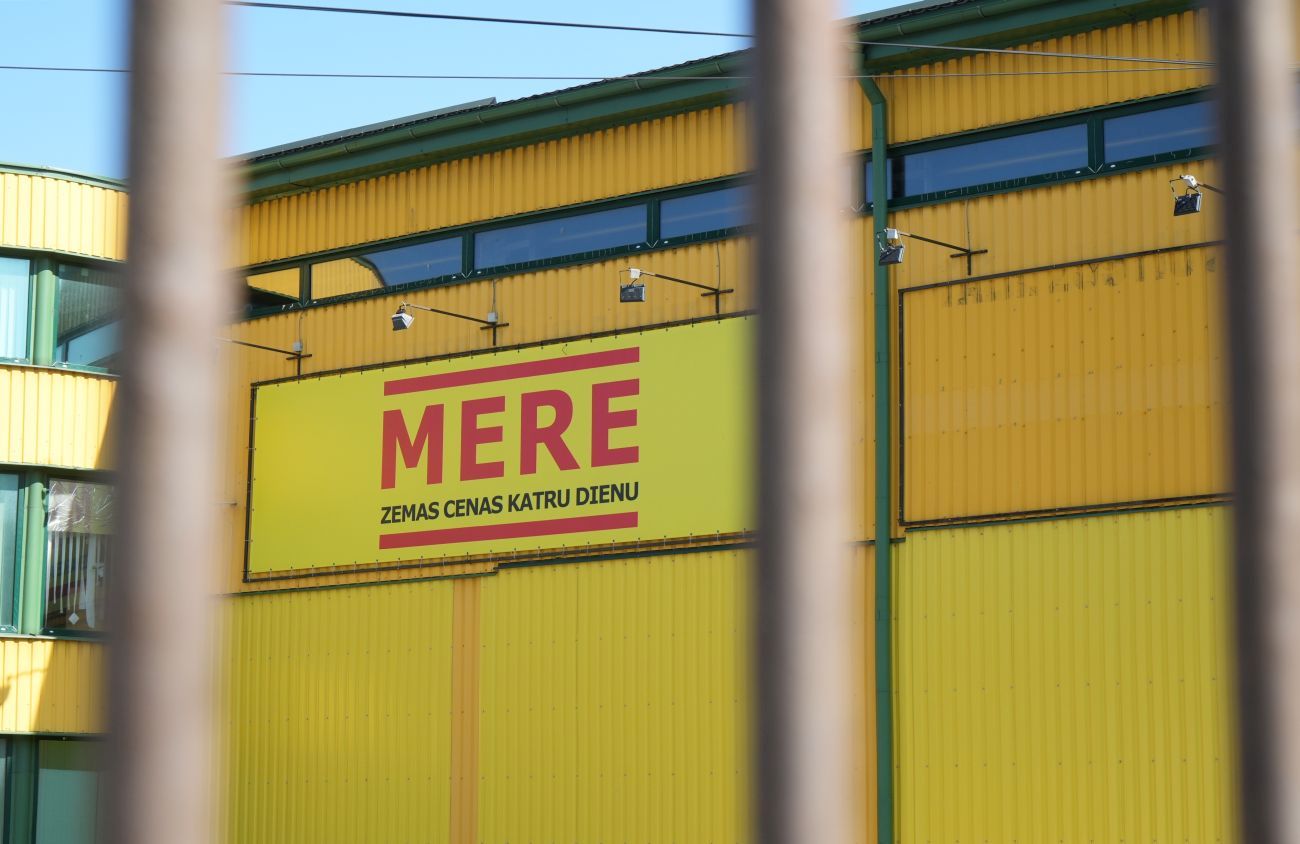
The Latvian Traders Association (LTA) says the closure of the Russian retail chain Svetofor's brand MERE in Latvia has revealed a system of politically superficial double standards in the government's work. According to the association, the inaction of the government and officials provided legal cover for a branch of a Russian business empire that daily channelled financial resources into the aggressor state's tax system.
LTA points out that Svetofor is one of the five largest food retail chains in Russia, operating thousands of stores and holding a monopoly position in the low-price hard-discount segment. While MERE was legally closed in Poland and other neighbouring countries already in 2025, Latvian ministries for months avoided imposing national economic sanctions. MERE was only removed from circulation in Latvia after an EU-wide decision.
The association recalls that it had asked the state administration for an explanation about MERE's operations. The Economy Ministry responded that the sanctions framework does not provide a general ban on cooperation with Russian companies and forwarded the matter to the Financial Intelligence Unit (FIU). The FIU, in turn, stated that under the Law on International and National Sanctions it is the only competent authority for implementing sanctions in Latvia. The Foreign Ministry limited itself to recommending against establishing trade relations. This created a bureaucratic deadlock.
LTA president Henriks Danusevičs accuses the government of hypocrisy. He says that administrative and repressive resources were used with the greatest severity against cultural figures, while in the economic sphere, where real money circulates, the government cowardly avoided imposing national sanctions. During the bureaucratic back-and-forth, MERE continued to operate unhindered until it was finally closed by the EU, not by Latvian officials.
LTA stresses that the closure will not reduce the availability of low-priced goods. Other traders are already taking over former MERE outlets and will try to offer a similar pricing policy. Cheaper goods from Ukraine are already widely available in almost all national retail chains, except LIDL and Rimi. According to an expert assessment, MERE's low prices were previously ensured by Svetofor's huge market weight and behind-the-scenes agreements with major suppliers, which artificially lowered prices on the Latvian market as well. LTA also notes that MERE's managers completely distanced themselves from corporate social responsibility, did not communicate with the industry association on trade issues, and were interested only in finding premises for new stores.