Lukashenka: By Putin's logic, Russia should be returned to Mongolia
Belarusian President Aliaksandr Lukashenka questioned, in an interview with French magazine Le Point, the historical grounds Russia uses to claim Ukrainian territory. He later softened his words, saying Putin is "misinterpreted".
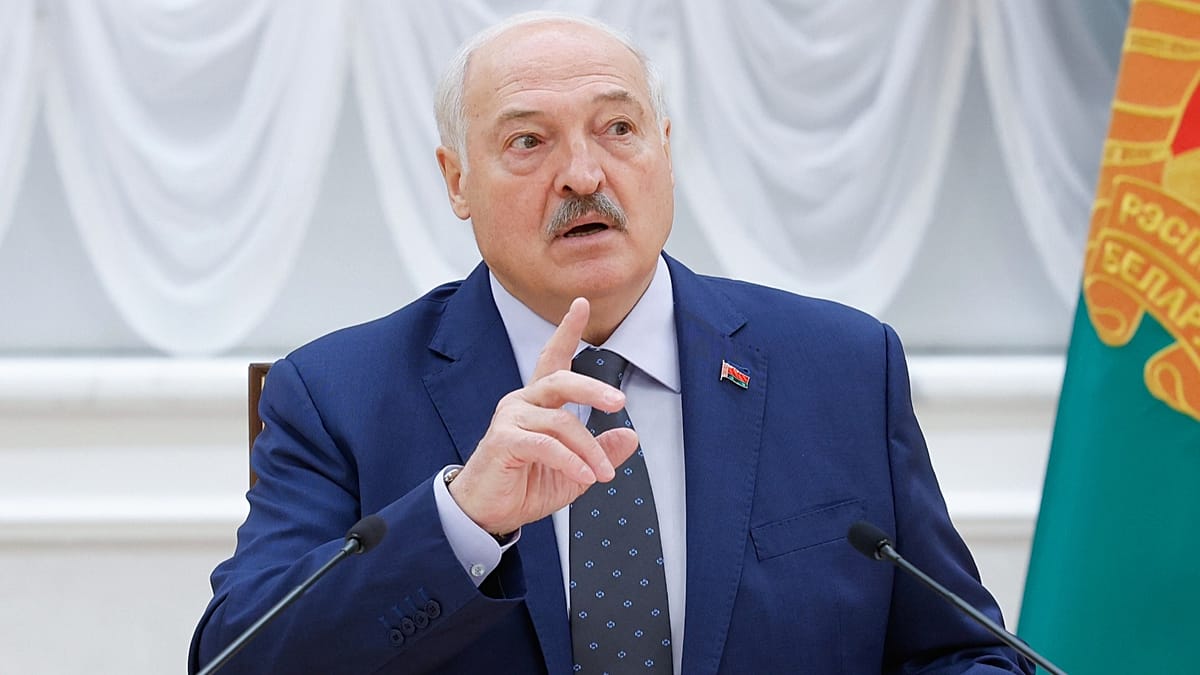
Belarusian President Aliaksandr Lukashenka has challenged the logic Russia uses to justify territorial claims on Ukraine through history, telling French magazine Le Point that by the same reasoning Russia itself would have to be handed back to Mongolia. The comment matters because Moscow's historical rhetoric has been a pillar of its war against Ukraine, and Lukashenka is one of the Kremlin's closest allies.
Lukashenka pointed to the period from the 13th to the late 15th century, when Russian principalities were under Mongol domination. He said the lands were Russian at some point, but that looking deeper, Russian lands were themselves once Mongol-Tatar. In his account, East Slavic statehood began in Kyivan Rus' in the 11th and 12th centuries, in what is now Ukraine, and later historical periods cannot justify claims on today's independent states.
He then appeared to soften his remarks. Lukashenka insisted that Putin "perfectly understands this", does not dispute the existence of the Ukrainian people or Ukrainian statehood, and is simply "misinterpreted". He added that he shares Moscow's position on "the need for a common future for the peoples of the region."
The comments echo a 2024 post on X by former Mongolian president Tsakhiagiin Elbegdorj. After Putin gave US conservative journalist Tucker Carlson an extended account of Russian history, Elbegdorj published a "Mongolian historical map" from 1471 showing a diminished Russia inside a vast Mongol domain. "Don't worry. We are a peaceful and free nation," he wrote.
Historical rhetoric in Kremlin policy
Putin's argument that parts of Ukraine are "primordially Russian" has been central to official Kremlin rhetoric since his 2021 article "On the Historical Unity of Russians and Ukrainians". On 24 February 2022, on the eve of the full-scale invasion of Ukraine, Putin invoked these claims to deny Ukraine's legitimacy as a state and to present the invasion as the correction of a historical injustice. Historians and international observers have described this use of history as selective and ahistorical.
Lukashenka has ruled Belarus since 1994, making him Europe's longest-serving leader. After the disputed 2020 presidential election, which triggered mass protests and a violent crackdown, he relied on Kremlin support to stay in power. The EU and Western governments did not recognise the result. Belarus let Russia use its territory to launch parts of the invasion of Ukraine, but has not committed its own troops to the war. Minsk has faced successive rounds of Western sanctions.