Magma deep underground may hold far more oxygen than previously thought
An international team of scientists has found in laboratory experiments that molten rock under high pressure can absorb extra oxygen. This suggests ancient volcanic eruptions may have influenced the development of Earth's atmosphere.
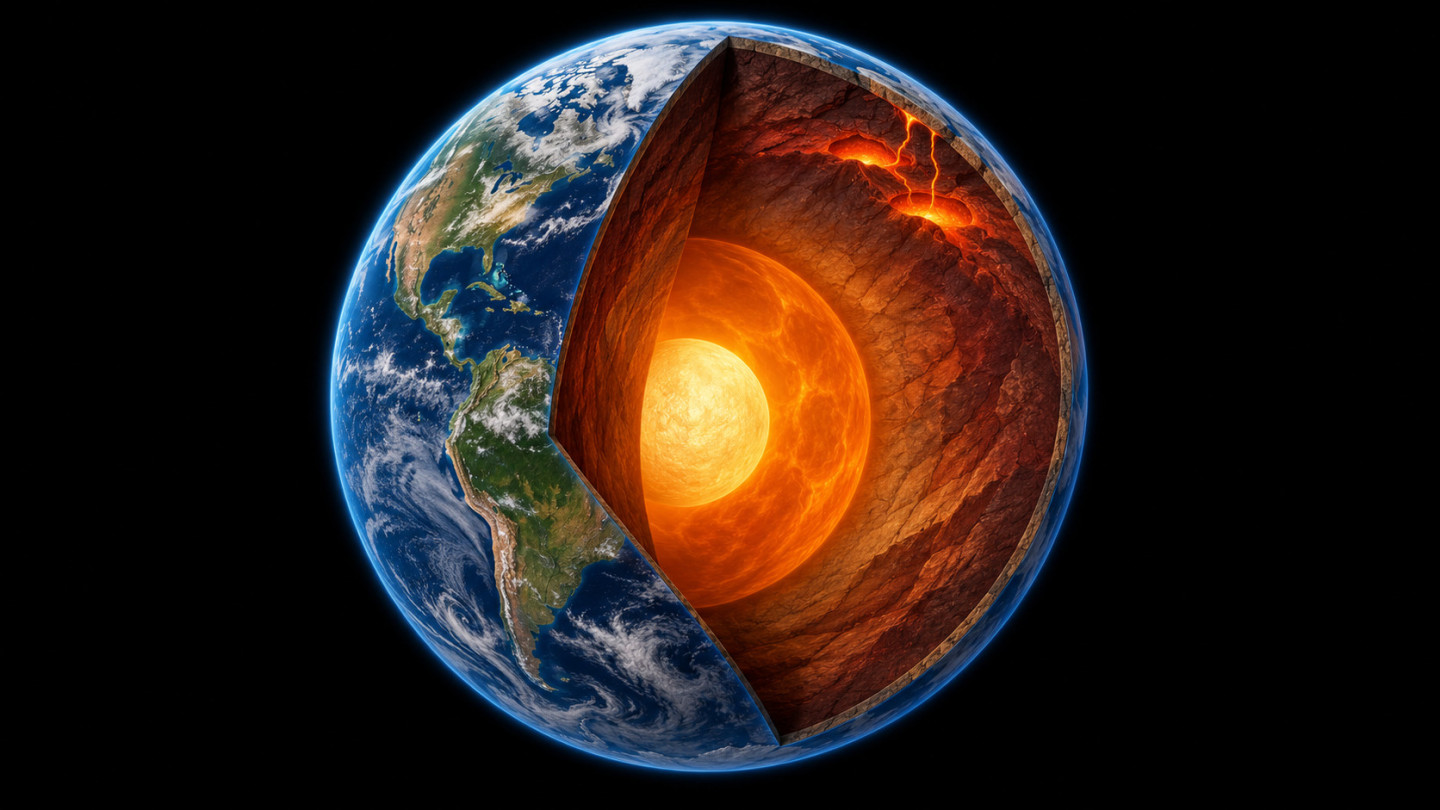
An international group of researchers has found that magma deep inside the Earth can store considerably more oxygen than was previously believed. The study, based on laboratory experiments and computer simulations, was published in the scientific journal National Science Review. The finding may help explain how the planet's interior is linked to the atmosphere we breathe.
How the experiments worked
The scientists tested how much additional oxygen molten rock can take up under conditions similar to those deep within the Earth. They heated synthetic basalt, a volcanic rock, to between 1,200 and 1,800 degrees Celsius and raised the pressure to seven gigapascals. To check how much oxygen the samples could absorb, they added an oxygen source, platinum oxide.
Results
Under high pressure, the molten rock absorbed oxygen in addition to the amount determined by its ordinary chemical composition. At a pressure of seven gigapascals, this extra oxygen exceeded five percent of the mass of the cooled sample. Magma can therefore be seen as a carrier of oxygen.
The researchers' explanation is that magma takes up extra oxygen at depth and releases part of it as it rises and the pressure falls. Such volcanic processes could have influenced the chemical evolution of the Earth's surface and atmosphere, and ancient eruptions may have carried oxygen from the depths closer to the surface.
What remains unknown
The study does not yet determine how large the oxygen reservoir is in nature or how much of it reaches the atmosphere. Still, the results point to a possible, previously underestimated link between the Earth's interior and the air we breathe.