Housing in Portugal: why €400,000 may no longer be enough
Portugal's average asking price for homes hit €430,500, driven by supply shortages, government-backed youth schemes, labour scarcity, and rising material costs. The IMF has recommended suspending some measures to ease market imbalances.
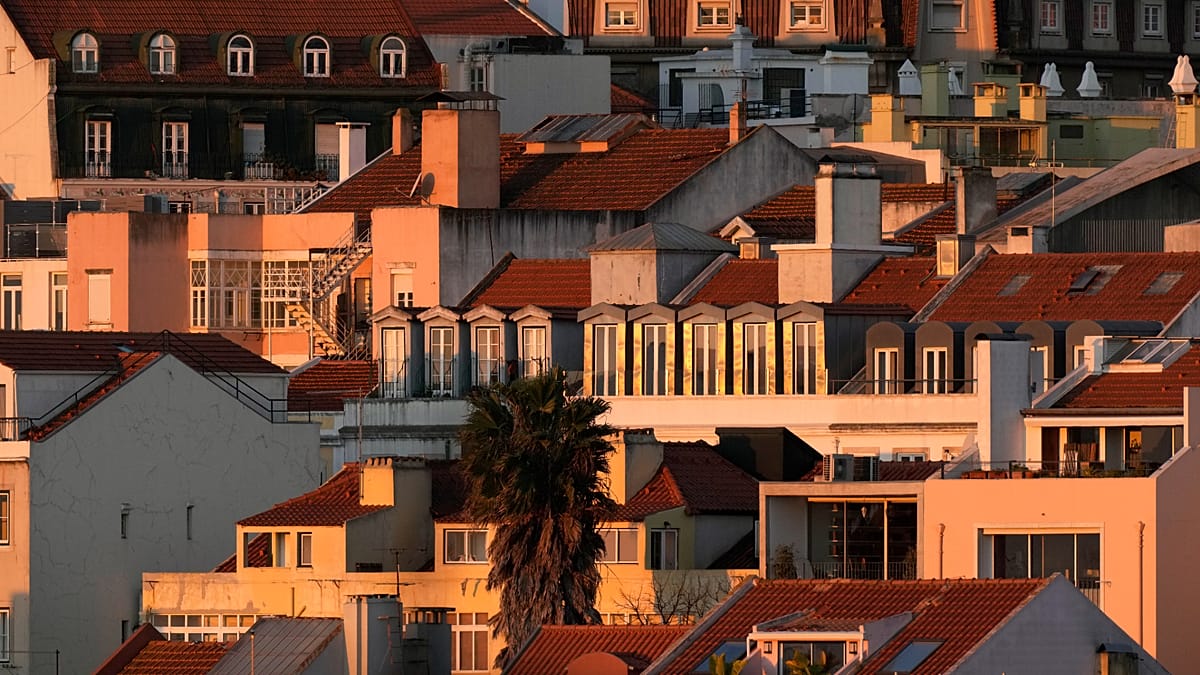
The average asking price for a home in Portugal reached €430,500 in May 2026, according to the latest Imovirtual Barometer. This figure, covering both new and existing properties, puts homeownership out of reach for many. The main factors are a lack of available properties and exceptionally strong demand.
Government support and side effects
Patrícia Barão, president of the Professional Association Representing Portugal's Estate Agents (APEMIP), says it is increasingly difficult for young people and families to buy their own home. Ricardo Vagarinho, CEO of construction firm MomentVM, highlights a government scheme that allows young people to buy a home with a state-backed guarantee for properties up to €450,000. The programme covers 85% to 100% of the property value, with the state guaranteeing up to 15%. Vagarinho argues this has pushed prices up across the market.
The International Monetary Fund (IMF), in a June report, recommended pausing some government measures, including the guarantee, as they have widened "market imbalances." Barão calls for a holistic approach, saying there is "no silver bullet" for housing.
Labour shortages raise costs
The construction sector suffers from a severe shortage of skilled workers, including bricklayers, electricians, plumbers, and formwork specialists. After Portugal's international bailout, investment in infrastructure fell, banks stopped granting credit, and many construction firms went bankrupt, triggering a "brain drain." An estimated 80,000 workers are missing from the sector, driving up labour costs. Large state projects, such as airports and railways, compete for the same workers. Recent storms in central Portugal have further increased demand for construction labour, leading to a fast-track "green lane" for migrant workers.
Materials, land, and permits
Construction materials have become more expensive since 2021, exacerbated by Russia's invasion of Ukraine in 2022. In March 2026, material costs rose 3.7% year-on-year, according to the National Statistics Institute. Energy prices heavily influence material costs. Land prices also rise with demand and account for about 20% of a project's budget. Delays in urban planning consent represent an additional cost, as investors see their capital sit idle for years.
Regional variations
As of 1 March 2026, the average asking price per square metre was €3,693. Lisbon is the most expensive district at €5,796, followed by Faro (€4,804), Madeira (€4,333), and Setúbal (€4,000). At the other end, Guarda is cheapest at €739 per square metre, then Bragança (€943) and Castelo Branco (€981).
Experts say new housing should be built outside city centres with efficient transport links, and that empty properties should be brought back to the market through public-private partnerships. Both Barão and Vagarinho stress the need for faster licensing and more specialised professionals to make housing more affordable.

/nginx/o/2023/12/20/15791292t1hc8f9.jpg)