AI can fuel biological weapons. We must harness its power for defense
Artificial intelligence is accelerating biology in two opposing directions, enabling both the creation of biological weapons and the rapid detection of disease outbreaks. According to Annie Jacobsen, the key challenge is deploying AI for defense faster than malicious actors use it for offense.
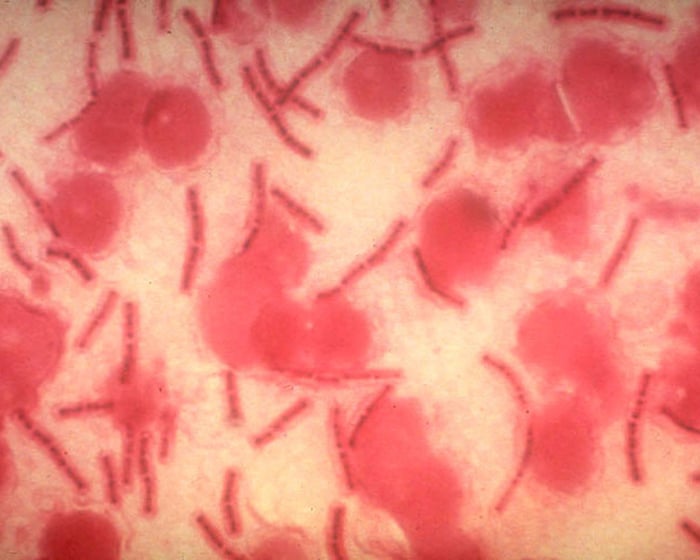
As artificial intelligence rapidly transforms the biological sciences, it is pushing the future of biology in two opposing directions. AI can help bad actors generate recipes for biological weapons with just a few keystrokes, while also tracking disease outbreaks and delivering critical public health information in real time – potentially stopping a deadly outbreak in its tracks.
Every infectious disease outbreak begins with a handful of cases. Public health wins by learning about an outbreak before it spreads wide. One of AI’s greatest values is its ability to compress the timeline between outbreak and detection. The World Health Organization (WHO) now uses AI to track the spread of infectious disease. At the WHO’s Hub for Pandemic and Epidemic Intelligence in Berlin, a computer-based system called Epidemic Intelligence from Open Sources (Eios) acts as a giant filter for the world’s minute-by-minute health information.
Eios focuses on unofficial reports, citizen chatter, local news reports, social media posts, and more. Proficient across multiple languages, it scans millions of websites, feeds, and platforms, searching for outbreaks as they happen. The goal of Eios is to pull signal from noise.
AI is a force multiplier, changing the biological sciences every day. The real question is not whether AI can do catastrophic harm – it most certainly can – but whether public health officials can deploy AI as a defensive tool faster than malicious actors deploy it as an offensive one.
The offensive potential is no longer theoretical. AI systems can already help researchers navigate enormous bodies of biological knowledge that once required years of specialized training. They can explain complex laboratory techniques, locate obscure scientific literature, troubleshoot technical problems, and suggest experimental designs. Together, these capabilities lower the barrier to entering what was once a highly specialized field.
The greatest concern is that AIs can help create genuinely novel forms of biology, from mirror-image life to organisms with capabilities not found in nature. Biology is unlike any other technology because what it produces can reproduce, spread across borders, mutate, and evolve on its own. A biological mistake can become self-propagating. Once a living organism is released, it cannot be switched off or recalled. That biological weapons are alive is what makes them fundamentally different from every other class of weapon.
The race has already begun. Biological weapons have an extremely low barrier to entry, as they can be built with widely available laboratory tools and increasingly powerful AI systems. The technology to engineer life is advancing faster than existing laws, treaties, and safeguards. This widening gap is where existential danger lives. The need is to develop AI systems to strengthen public health and accelerate disease detection as quickly as AI is accelerating biological design.