Artist Volodymyr Manzhos on Poltava's Shakespeare Statue and Ukraine's Public Art Crisis
Ukrainian artist Volodymyr Manzhos (WaOne) discusses why monuments like Poltava's controversial Shakespeare statue spark debate, and reflects on the state of visual art in public spaces during wartime Ukraine.
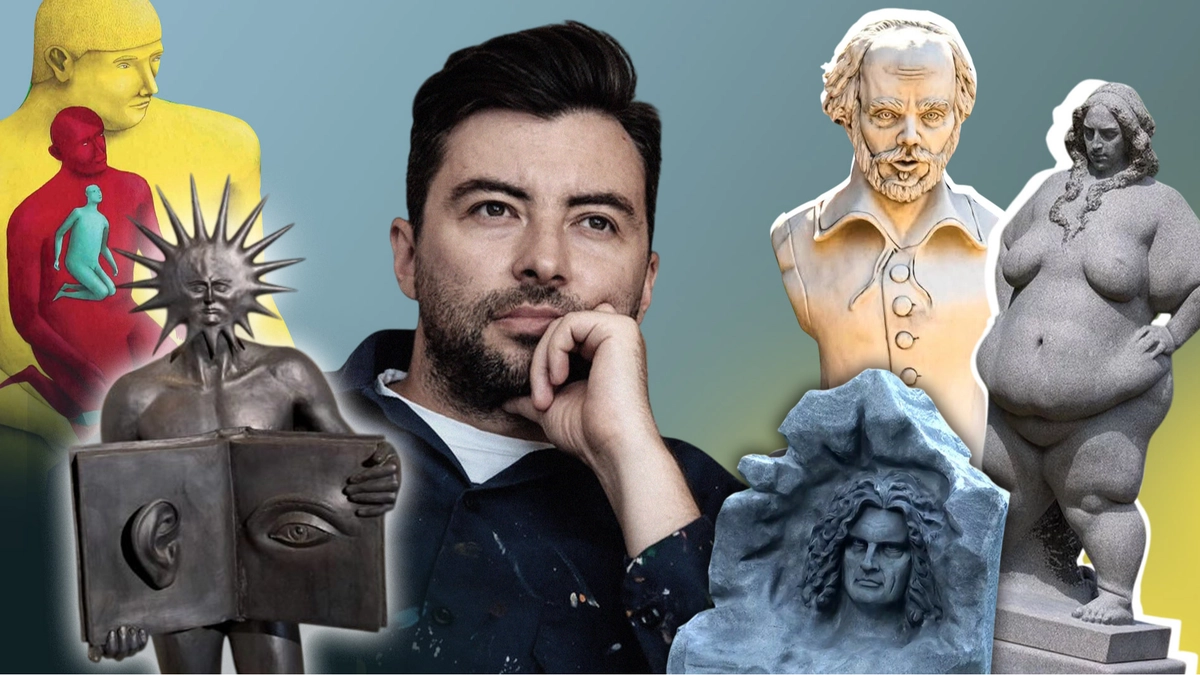
Ukrainian artist Volodymyr Manzhos, known by his creative name WaOne, spoke in an interview about the widely mocked Shakespeare monument unveiled in Poltava and, more broadly, about the condition of visual art in Ukraine's public spaces.
Manzhos recalled that upon first seeing the Poltava Shakespeare sculpture, he felt a mix of emotions — laughter first, followed by pain, and then the question of why such works appear at all. The monument was created by sculptor Yaroslav Shkarupa in just seven days; Shkarupa has said he now receives more commissions for cartoonish figures and garden ornaments like gnomes, but prefers working on human likenesses.
According to Manzhos, the war years have driven a sharp rise in demand for commemorative visual gestures, including murals, across Ukrainian society. This surge led authorities in Kyiv to ban unauthorized murals at one point and later introduce an approval procedure involving experts and city officials.
Manzhos explained that before the war, artists and art-world figures largely operated within a closed professional circle sharing similar values. Many of them left the country or fell silent after the invasion began, opening space for others who had previously been less prominent in public art.
The artist points to education as a root cause of the problem: Ukraine, he says, still relies on a Soviet-inherited "literature-centered" model of schooling, while visual art and design receive little attention — unlike in France, where he says children regularly visit exhibitions and museums as part of their education.
Manzhos also discussed his own career, tracing a path from graffiti to creating Ukraine's first mural, made together with another artist, and described his public works installed in several countries including Spain, Mexico and Australia. He noted that public attitudes toward street art have shifted during the war — while mural artists once faced criticism, most of society now supports them.