Merz's conservatives suffer heavy defeat in two German state elections
German Chancellor Friedrich Merz faces mounting pressure to resign after his CDU suffered a historic defeat in Mecklenburg-Western Pomerania and lost its majority in Berlin, though he has vowed to stay in office. Meanwhile in Russia, Putin's party secured a record supermajority in an election with no real opposition.
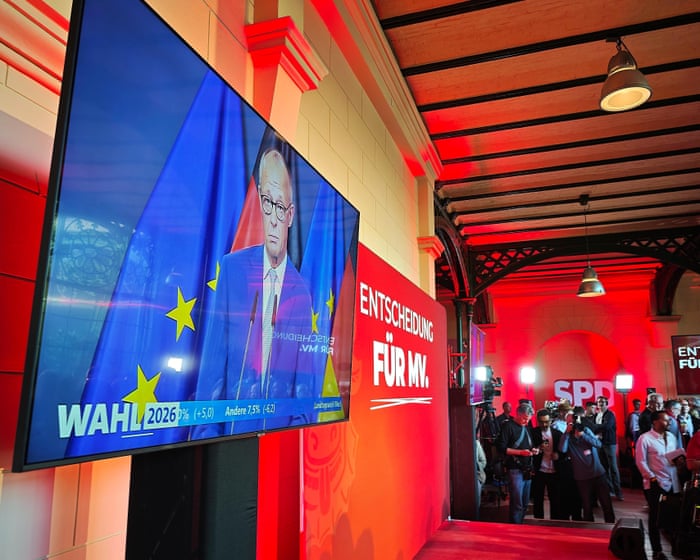
German Chancellor Friedrich Merz's CDU party suffered a heavy defeat in two state elections on Sunday night. In Mecklenburg-Western Pomerania, the home state of former chancellor Angela Merkel, the CDU failed to enter the state parliament for the first time in 77 years, scoring just 4.9% of the vote — more than half of its previous support lost.
Many of those voters shifted to the far-right, anti-migration Alternative für Deutschland (AfD), which won 38% of the vote, doubling its previous share to become the state's largest party. The result comes just two weeks after AfD swept to nearly 44% in Saxony-Anhalt, where the CDU scored only 17%. The CDU also lost its majority in Berlin, where the left-wing Die Linke party won 25.7% of the vote.
Merz called the outcome a "disaster" but vowed to press on with his government's reform agenda and remain in office. Analysts, however, say his political future looks precarious. Berenberg bank's chief economist Holger Schmieding said Merz is "fighting for his political survival" and will struggle to contain unrest within his own party. Education Minister and deputy CDU leader Karin Prien said, however, that replacing the leader would not solve the party's problems. Merz cancelled a planned trip to New York for the UN General Assembly to deal with the fallout in Berlin.
Putin's party retains majority in Russia
Separately, Russia's State Duma election has concluded with Vladimir Putin's United Russia party securing a record supermajority, on track for around 355 of 450 seats. It was the first such vote since the full-scale invasion of Ukraine began four and a half years ago, held without parties critical of the Kremlin or international observers. EU foreign policy chief Kaja Kallas called the result another setback for Russian democracy.