Mykhailo Fedorov out as Ukraine's defense minister after clash with General Staff
Ukrainian President Volodymyr Zelensky has decided not to reappoint Mykhailo Fedorov as defense minister, citing conflicts with Commander-in-Chief Oleksandr Syrsky over procurement and war strategy. Fedorov, known for digital reforms and securing Starlink, will not continue in the new government.
Ukrainian Defense Minister Mykhailo Fedorov, who served just six months, will not be reappointed to the new government. The change came after Prime Minister Yulia Svyrydenko resigned on July 14, automatically dismissing all ministers. While some will retain their posts, President Zelensky used the reshuffle to address the "rebellious" Fedorov.
Before taking over the Defense Ministry, Fedorov was minister of digital transformation, where he launched the popular Diia app and, after Russia's full-scale invasion, negotiated with Elon Musk to supply Starlink satellite communications to Ukrainian forces.
The primary reason for Fedorov's dismissal was a conflict with Armed Forces Commander-in-Chief Oleksandr Syrsky. During a meeting with lawmakers from the Servant of the People party, Zelensky cited two reasons: Fedorov's vision of the war differed from Syrsky's, and he failed to coordinate state procurement with the General Staff. Lawmakers speaking anonymously noted that Zelensky found it very difficult to discuss Fedorov's removal, as the minister had been considered a close ally.
Fedorov's reforms as defense minister drove the conflict. He initiated sweeping personnel changes, introduced open tenders for procurement, strict audits, and stopped automatically approving General Staff requests. A participant in the meeting quoted Zelensky: "They live in two different worlds. Misha wants to digitize everything, but the military just wants to be heard. I can't allow the Defense Ministry and General Staff to be at war in a country that is at war."
Zelensky also mentioned that Fedorov failed to implement the promised mobilization reform. At a press conference, Fedorov confirmed the clash with Syrsky, saying he proposed dismissing both Syrsky and Chief of General Staff Andrii Hnatov. After Zelensky refused to fire Syrsky, the Defense Ministry faced resistance from the Armed Forces.
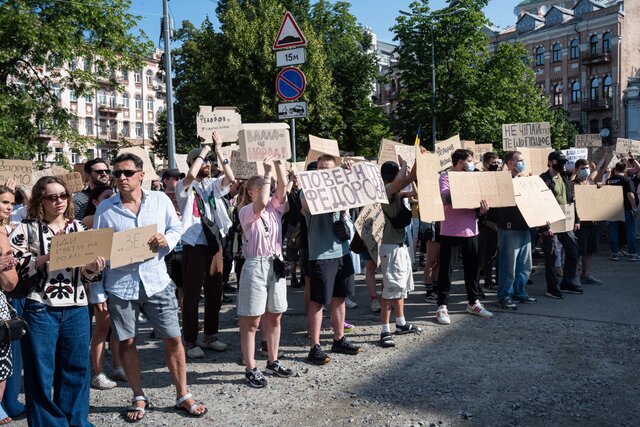
Fedorov's dismissal sparked protests across Ukraine. In Kyiv, crowds chanted "Bring back Fedorov!" and called for Syrsky's resignation. The media outlet United24 halted publication to join protests. Colonel Pavlo Yelizarov, deputy commander of the Air Force, resigned in protest, linking his decision to Fedorov's removal.
The European Union, which recently allocated tens of billions of euros for Ukraine's defense, expressed concern. Commissioner Andrius Kubilius called the decision unexpected, noting close cooperation with Fedorov that resulted in deep strikes on Russian regions.
International media, including The Financial Times, argued that Fedorov's dismissal could undermine Ukraine's defense capabilities, calling him the "most successful Ukrainian minister of the past four and a half years" and "architect of Ukraine's drone revolution." Russian pro-war bloggers welcomed the news, acknowledging Fedorov's success in combating corruption in defense procurement.