Lithuania’s First Prime Minister Kazimira Prunskienė Dies
Kazimira Prunskienė, the first prime minister of restored Lithuania and a signatory of the Act of Re-Establishment, passed away on Thursday, prompting former colleagues to reflect on her legacy as a state-builder and democratic leader.
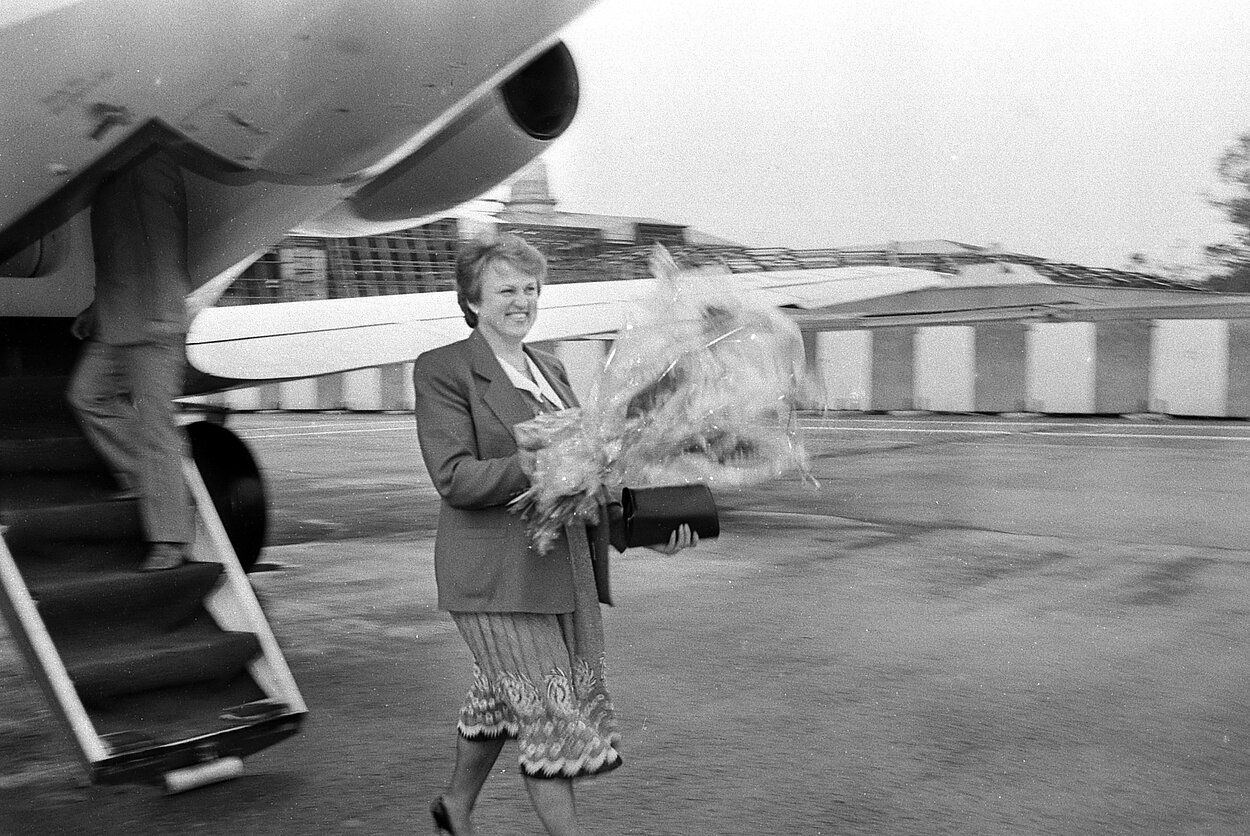
Kazimira Danutė Prunskienė, the first prime minister of restored Lithuania and a signatory of the 1990 Act of Re-Establishment, passed away on Thursday. Her death prompted reflection from former colleagues, including Darius Kuolys and Vytenis Povilas Andriukaitis, who served alongside her in the first post-independence government.
Prunskienė led a cabinet composed entirely of men, a rarity at the time. Andriukaitis described her as the most outstanding woman of Lithuania’s second national revival, drawing a parallel with Gabrielė Petkevičaitė-Bitė from the first revival. Kuolys recalled that the government she formed after March 11, 1990, brought together figures from opposing political camps, such as Sąjūdis leader Romualdas Ozolas and Communist Party leader Algirdas Brazauskas. Despite her own Sąjūdis background, she governed democratically, never imposing her will but encouraging debate.
Her diplomatic tour of Western capitals in 1990 earned her the nickname “Amber Lady” from the international press, a counterpart to Margaret Thatcher’s “Iron Lady.” She met US President George H.W. Bush, Thatcher, Helmut Kohl, and François Mitterrand at a time when Lithuania had not yet been internationally recognised. Andriukaitis noted that only Moldova recognised Lithuanian independence immediately after the declaration.
As Soviet troops remained stationed in Lithuania and no independent budget or currency existed, Prunskienė faced immense uncertainty. Kuolys remembered her as a woman of action and intellect, who could both build a team and lead it. Before the January 13, 1991 crackdown, she tearfully told ministers that their efforts had failed and that they were doomed. She resigned shortly before the events.
Her later career included four years as agriculture minister and a narrow loss to Valdas Adamkus in the 2004 presidential election. She founded the Women’s Party, the first such party in Lithuania, and later led the Lithuanian People’s Party, advocating a more pro-Russian policy in 2009. Both colleagues argued this should not diminish her legacy, as the geopolitical context was different then. Kuolys stressed the importance of honouring the builders of the state.
Prunskienė’s campaign quote, “I would be a tank in a skirt,” captured her energy. Andriukaitis said many communities referred to active women as “our Prunskienė.” Professor Vanda Zaborskaitė once thanked God for Prunskienė, saying she showed girls they could lead a country, not just do housework.
/nginx/o/2026/09/29/17944692t1hb062.jpg)