NASA's Swift space telescope set to fall to Earth after failed rescue mission
NASA's Neil Gehrels Swift Observatory, launched in 2004 to study gamma-ray bursts, is expected to re-enter the atmosphere uncontrolled on 4 November. Most of it will burn up, but some components may reach the surface.
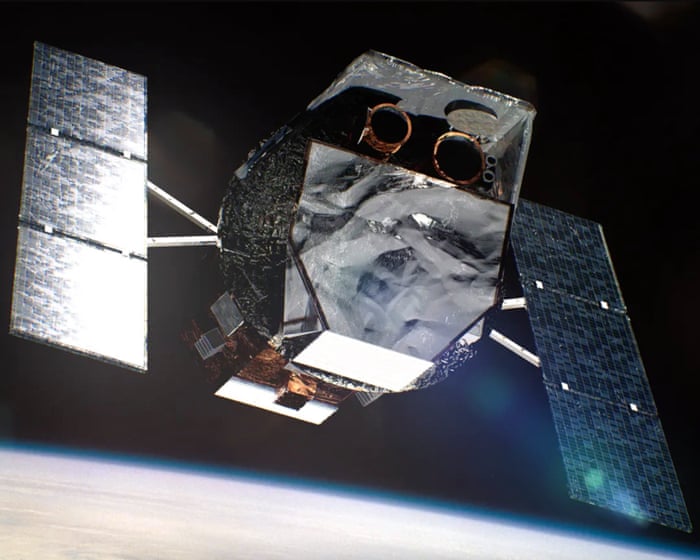
NASA's Neil Gehrels Swift Observatory, a space telescope that has spent two decades studying the most powerful explosions in the universe, is expected to re-enter Earth's atmosphere on 4 November. The satellite can no longer steer or observe, so its re-entry will be uncontrolled.
The US Space Force predicts the spacecraft, weighing about 3,200 pounds (roughly 1,450 kg), will hit the atmosphere at around 3.30am Eastern Time. NASA says most of it will burn up, though some components are expected to survive. Any surviving fragments are limited to the zone between 20.6 degrees south and 20.6 degrees north latitude. The agency puts the risk of harm to anyone on Earth at about 1 in 2,100, which it describes as unlikely.
Mission and discoveries
Swift was launched in 2004 to study gamma-ray bursts: brief but intense flashes of gamma radiation that occur roughly once a day, come from all directions and last from a few milliseconds to a few hundred seconds. Scientists still do not know what causes them. Hypotheses include the birth of a black hole in a massive stellar explosion or a collision of two neutron stars. Swift detected and tracked more than 2,000 such bursts. It was designed to work for only two years.
In July, the telescope observed a wandering supermassive black hole tearing apart a star. According to a paper in The Astrophysical Journal Letters, the event outshone its entire host galaxy in ultraviolet wavelengths, briefly radiating with the light of about 10 billion suns.
The failed rescue
Last year NASA tried to boost Swift into a higher orbit using a private space contractor, but the attempt failed because the vehicles did not manage to rendezvous. Last month the observatory was estimated to be orbiting about 171 miles (275 km) above Earth, and it was commanded to end operations in preparation for re-entry.