Nicaragua's president says country will not hold any more elections
Nicaragua's long-serving President Daniel Ortega announced that the country will hold no further elections to prevent the opposition from coming to power. Analysts describe this as a transition to a full-fledged family dictatorship.
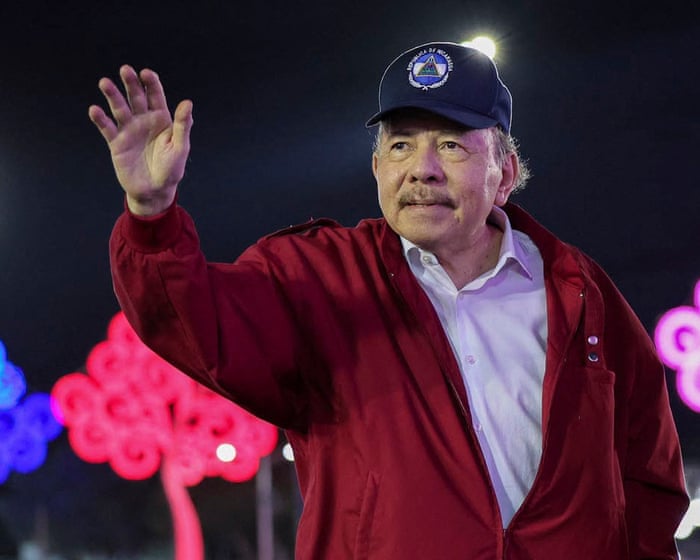
Nicaraguan President Daniel Ortega, in power since 2007, announced on Sunday that the country will no longer hold elections. The 80-year-old authoritarian leader made the statement during the official ceremony marking the 47th anniversary of the 1979 Sandinista revolution, in which he helped overthrow the brutal dictatorship of Anastasio Somoza.
Ortega said he would work with the congress he controls to pass new laws that would "build a wall" against the opposition. "There will be no more elections here so that they [the opposition parties] can try to seize the government, seize power," Ortega said. The elections were due to take place next year, but he gave no details on whether they would be cancelled or whether the opposition would be barred from participating – something that has already happened in practice. During the 2021 campaign, his regime outlawed parties and jailed all opposition presidential candidates.
Tiziano Breda, Latin America senior analyst at the NGO Armed Conflict Location and Event Data, said that with this decision, Ortega and Murillo have sealed the country's transition to a full-fledged family dictatorship. "Ortega and Murillo are evidently afraid of the idea that the slightest political opening could create the conditions for dissent to manifest and threaten their grip on power," Breda said, adding that instead of staging a rigged election, they have opted to eliminate electoral competition altogether.
Last year, Ortega pushed through a series of constitutional reforms that included extending the presidential term from five to six years and promoting his wife, then vice-president, to the position of "co-president." The US refers to their administration as the "Murillo-Ortega dictatorship."
During his speech, Ortega criticized the US over the January operation that abducted Venezuelan dictator Nicolás Maduro, calling it "monstrous." He also justified the decision to cancel elections by saying it was necessary to protect the country from the "coup plotters" behind the 2018 nationwide protests, when, according to the UN, his regime carried out a violent crackdown that killed more than 350 people and wounded hundreds.
According to organizations including Human Rights Watch, there are about 50 political prisoners in the country. The regime has stripped 546 people of their citizenship and shut down more than 5,600 non-governmental organizations, 29 universities, and 58 media outlets.