From Ēdole primary school to a professorship at the University of Latvia
Geologist and geomorphologist Normunds Stivriņš has come a long way from a small rural primary school to a professorship at the University of Latvia. In an interview he recalls his school years, describes his research routine and shares memories of expeditions.
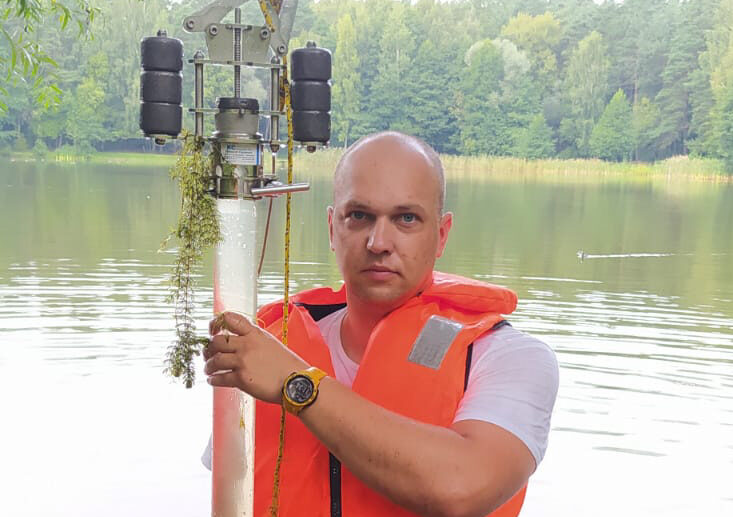
Normunds Stivriņš, a geologist and geomorphologist, has travelled from the small Ēdole primary school to a professorship at the University of Latvia. He remembers the school as being in a scenic location, with a daily walk there on foot. The small rural school had a special atmosphere: everyone knew each other, and there was a strong sense of home.
His favourite subjects included history, taught by Gunita Meiere, and geography. His father was a land surveyor, so Stivriņš often accompanied him on trips around Ēdole. Mathematics, however, was not to his liking. His first teacher was Dzidra Sedola, and his second was Inta Rūdolfa. At primary school, he did not yet know what he wanted to become, but the subjects that interested him pointed the way.
Path to professorship
His first choice at university was geology, and later also history. In his view, geology is in a way historical research; cooperation with archaeologists has allowed him to study Latvia’s history, including the Iron Age. After the ninth grade, he moved to Jelgava, where his grandmother and cousin lived. He completed gymnasium there and then studied geology at the University of Latvia, earning bachelor’s and master’s degrees. He later spent four years in doctoral studies at Tallinn University of Technology and did a three-year postdoctoral stint at the University of Helsinki. Since 2021, he has been a professor of geology and geomorphology at the University of Latvia.
A scientist’s daily life
The scientist describes his daily routine as dynamic and based on long-term planning. Research begins with collecting samples from lakes and bogs, followed by laboratory work that can last a year or even a year and a half. The process includes analysing sediments, entering and interpreting data, comparing results with other scientists, and finally publishing articles. During the active phase of a career, papers are mostly written in English; later, scientists may turn to books for local readers. Stivriņš stresses that patience, desire and interest are essential – without interest, routine work cannot be sustained.
Expeditions and hobbies
His fieldwork has taken him on a three-week expedition to Iceland, where glaciers were studied and a volcano crater was drilled, as well as to Karelia in Russia for two weeks of sampling in dense forests. He has also worked in Lapland, Sweden, Poland and Lithuania. His hobby is golf, which he says helps him switch off from research and avoid burnout. Although office hours are officially from eight to five, thoughts about work often continue on the way home and after dinner.
Ēdole remains important in his memory; when visiting, he goes to Lake Pinku, Piņķu grava near the primary school, and Stumbru hill. His advice to those choosing a profession is to listen to themselves and notice the interests that were already present in childhood.