Lab-Grown Mini Brains from Patient Cells May Predict Responses to Alzheimer’s Treatments
Johns Hopkins researchers created hindbrain organoids from Alzheimer’s patients’ blood cells, revealing variable responses to an SSRI drug and suggesting potential for personalized medicine.
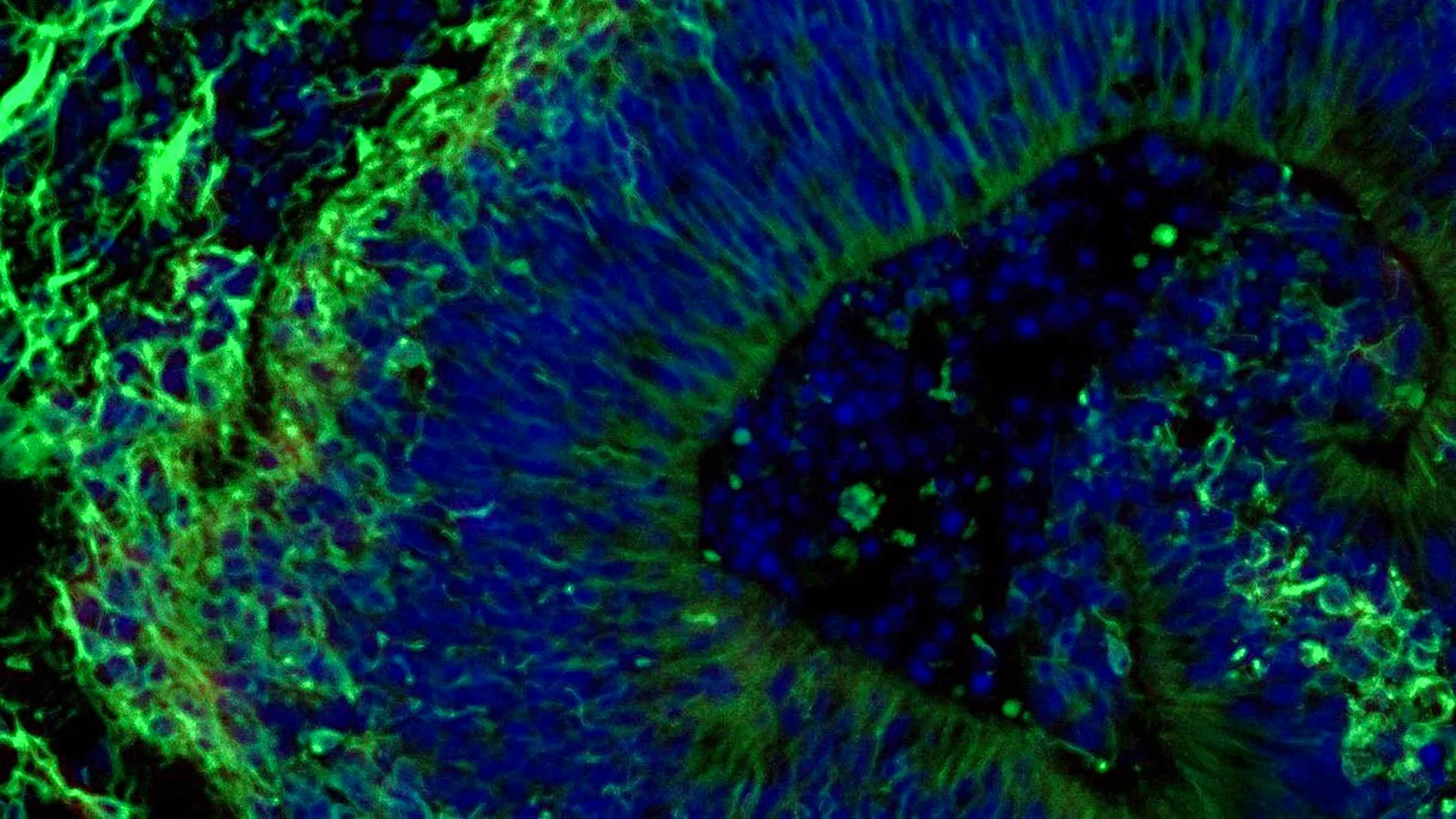
Scientists at Johns Hopkins Medicine have found new evidence that small clusters of brain tissue grown from the cells of people with Alzheimer’s disease could help predict how different patients may respond to medications used to manage psychiatric symptoms. The research focused on laboratory-grown brain tissues called organoids, specifically hindbrain organoids that control functions like breathing, sleep, and heart rate.
The team began with blood samples from Alzheimer’s patients and reprogrammed the cells into induced pluripotent stem cells, which were then guided to form hundreds of pea-sized hindbrain organoids containing serotonin-producing neurons. These organoids reproduced key molecular features of Alzheimer’s, including differences in proteins related to cell communication, inflammation, and disease pathways.
The researchers treated the organoids with escitalopram oxalate, a commonly prescribed antidepressant (SSRI). Some organoids showed increased proteins involved in serotonin signaling and synaptic communication, while others showed little or no response. This variation suggests the model could help identify patient subgroups likely to benefit from specific drugs.
Additionally, the organoids released extracellular vesicles—tiny particles carrying cellular information. Analysis of these vesicles revealed changes in disease-associated proteins, such as lower levels of RAB3A, NSF, and ATCAY in Alzheimer’s organoids. After treatment, some samples showed increases in proteins linked to serotonin and synaptic pathways, indicating potential biomarkers for drug response.
Lead researcher Vasiliki Machairaki, Ph.D., associate professor of genetic medicine, stated that larger-scale patient-derived organoids could help stage Alzheimer’s, investigate disease mechanisms, and assess subgroup responses. The study, partially funded by the National Institutes of Health, was published in Alzheimer's & Dementia. Machairaki plans to develop more advanced organoids with immune cells and vascular-like networks, and hopes extracellular vesicles might one day serve as a liquid biopsy for diagnosis and staging.